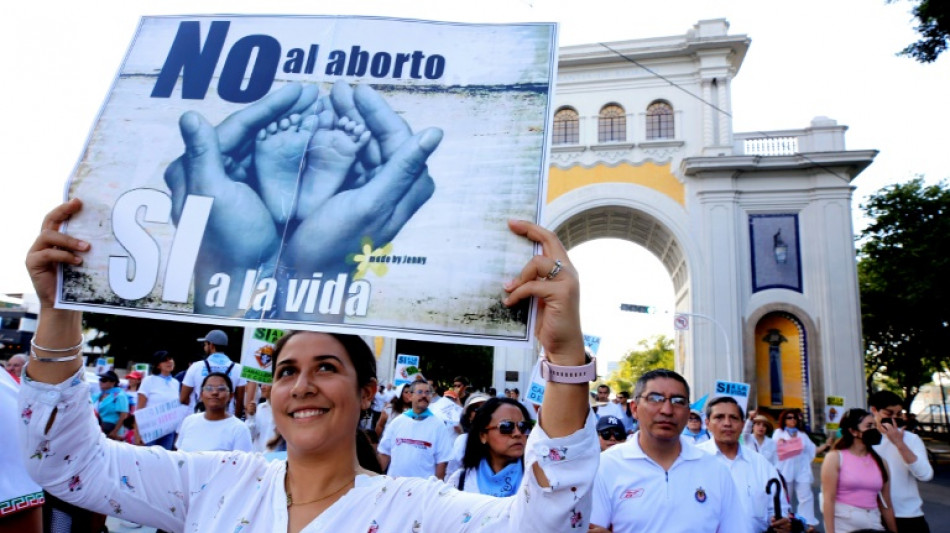
Top Mexican court decriminalizes abortion nationwide / Photo: Ulises Ruiz - AFP/File

 Hear'Say and Liberty X Cancel Comeback Tour Due to Low Ticket Sales

 How to Recover a Banned WhatsApp Account: Review Process and Steps

 НЕМЕЦКАЯ ALIX LASERS БЕРЁТ НА ОБСЛУЖИВАНИЕ ВСЕХ КЛИЕНТОВ АВСТРИЙСКОЙ ALIX LASERS

 British Couple Spends £3,500 on Gender-Selective IVF in Egypt to Ensure Daughter

 Games Inbox: Reader Debates GTA 6 PC Release, Graphics, and Monster Hunter Choices

Mexico's Supreme Court on Wednesday decriminalized abortion across the conservative Latin American country, moving in contrast to the United States where federally guaranteed abortion rights were overturned last year.
The court said on social media "that the legal system that penalizes abortion in the Federal Penal Code is unconstitutional, since it violates the human rights of women and people with the capacity to gestate."
It follows a similar Supreme Court ruling two years ago that abortion was not a crime, de facto authorizing it throughout Mexico.
That declaration followed a constitutional challenge to the penal code of the northern state of Coahuila, opening the way for women across the country to access the procedure without fear of prosecution.
The Information Group on Reproductive Choice (GIRE), which campaigns for abortion rights, welcomed the latest step decriminalizing abortion at the national level.
"Federal health institutions throughout the country will have to provide abortion services to women and people with the capacity to gestate who request it," the group said on social media.
Mexico's reforms go in the opposite direction to the United States, where a Supreme Court ruling in June 2022 overturned the landmark 1973 "Roe v. Wade" decision guaranteeing the right to abortion nationwide
The situation has led to some women from the United States seeking help to have an abortion from activists across the border in Mexico.
Previously abortion had been decriminalized in a dozen of Mexico's 32 states, starting with Mexico City in 2007.
But in addition to a lack of facilities to carry out the procedure, "many women don't know that they have this right because local governments have not carried out publicity campaigns about it," women's rights activist Sara Lovera said.
"That's why today's decision of the Supreme Court is important," Lovera told AFP.
In Catholic-majority Mexico, women's rights issues have generated some divisions, while both sides of the abortion debate regularly hold street protests.
The Church has previously objected to the abortion reforms.
There have also been reported cases of health workers reporting women for having had illegal abortions, leading to their arrest.
In Latin America, elective abortion is legal in Argentina, Colombia, Cuba and Uruguay, though Argentine presidential frontrunner Javier Milei wants to ban the procedure.
In several nations it is allowed in certain circumstances, such as rape or health risks, while outright bans apply in El Salvador, Honduras, Nicaragua, Haiti and the Dominican Republic.
S.Pimentel--PC