-
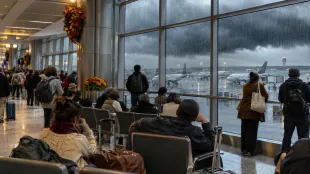 Thanksgiving storms disrupt thousands of US flights
-
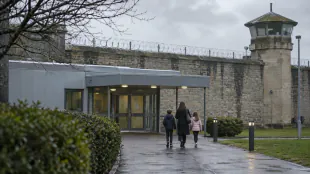
Laura Brand visits Russell Brand in prison with their children
-
 T.J. Lang criticises Aaron Rodgers over comments about Mike McCarthy
-
Black Friday beauty offers span skincare, fragrance and wellness devices

-
 Qatar Tourism and Uber Sign Five-Year Mobility Partnership
-
Biography details Johnny Depp’s efforts to leave 21 Jump Street

-
 U2 pays tribute to Dolly Parton during Thanksgiving Eve NFL show
-
Youth Congress Challenges Meta's Automated Blocking of Rahul Gandhi Posts in Delhi High Court

-
 Rare yellow-bellied sea snake found on Southern California beach
-
Toyota Innova Hycross and Kia Sorento hybrids compared in top trims

-
 Second-generation Mini Cooper SE set for India launch with 402km range
-
Constitutional Court Hears Landmark Cases on Medical Negligence Compensation

-
 Filmasia 2026: 16 Films Across Prague, Brno, and České Budějovice
-
Malaysia Sues Google for $146m Over Harmful Content

-
 Kojey Radical Launches Burger Collaboration at Dallas Burger Joint in Shoreditch
-
Black Wind Turbine Blades Reduce Bird Deaths by 74% in Spain Study

-
 Kelly Stafford Reflects on Matthew's Lions Thanksgiving Era Ahead of Rams' Netflix Debut
-
Brazil’s Landless Movement Partners with China to Build Affordable Tractors for Family Farms

Strong quake in west Afghanistan kills 'about 120'
The death toll from a magnitude 6.3 earthquake in western Afghanistan on Saturday has risen to "about 120", disaster relief authorities said, with more than 1,000 others being treated for injuries.
The United States Geological Survey said the epicentre was 40 kilometres (25 miles) northwest of the region's largest city Herat, and was followed by eight aftershocks with magnitudes between 4.3 and 6.3.
"So far, more than 1,000 injured women, children, and old citizens have been included in our records, and about 120 people have lost their lives," Herat province disaster management head Mosa Ashari told AFP.
Crowds of residents fled buildings in Herat at around 11:00 am (0630 GMT) as the quakes began.
"We were in our offices and suddenly the building started shaking," 45-year-old resident Bashir Ahmad told AFP.
"Wall plasters started to fall down and the walls got cracks, some walls and parts of the building collapsed," he said.
"I am not able to contact my family, network connections are disconnected. I am too worried and scared, it was horrifying."
Men, women and children stood out in the wide streets, away from tall buildings, in the moments after the first quake and remained wary of returning to their homes as aftershocks rumbled for hours.
"The situation was very horrible, I have never experienced such a thing," said 21-year-old student Idrees Arsala, the last to safely evacuate his classroom as the quakes began.
- 'Buried under the rubble' -
Early on Saturday evening, disaster management authority spokesman Mullah Jan Sayeq told AFP that the number of fatalities was expected "to rise very high".
"There are some areas that are totally collapsed and all the houses are damaged," he said. "People are still buried under the rubble. The aid agencies are trying to reach the area."
Hundreds of fatalities were possible, according to a USGS preliminary estimate.
"Significant casualties are likely and the disaster is potentially widespread. Past events with this alert level have required a regional or national level response," it said.
The USGS had earlier reported the first quake's magnitude as 6.2. It had a shallow depth of just 14 kilometres, it said.
Herat -- 120 kilometres east of the border with Iran -- is considered the cultural capital of Afghanistan.
It is the capital of Herat province, which is home to an estimated population of 1.9 million, according to 2019 World Bank data.
Afghanistan is frequently hit by earthquakes, especially in the Hindu Kush mountain range, which lies near the junction of the Eurasian and Indian tectonic plates.
In June last year, more than 1,000 people were killed and tens of thousands left homeless after a 5.9-magnitude quake -- the deadliest in Afghanistan in nearly a quarter of a century -- struck the impoverished province of Paktika.
In March of this year, 13 people were killed in Afghanistan and Pakistan by a magnitude 6.5 quake, which hit near Jurm in northeastern Afghanistan.
Afghanistan is already in the grip of a grinding humanitarian crisis, following the widespread withdrawal of foreign aid since the Taliban returned to power in 2021.
G.Teles--PC