-
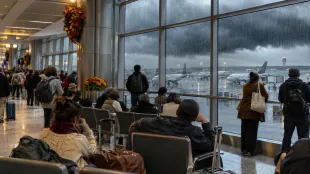 Thanksgiving storms disrupt thousands of US flights
-
Laura Brand visits Russell Brand in prison with their children
-
 T.J. Lang criticises Aaron Rodgers over comments about Mike McCarthy
-
Black Friday beauty offers span skincare, fragrance and wellness devices

-
 Qatar Tourism and Uber Sign Five-Year Mobility Partnership
-
Biography details Johnny Depp’s efforts to leave 21 Jump Street

-
 U2 pays tribute to Dolly Parton during Thanksgiving Eve NFL show
-
Youth Congress Challenges Meta's Automated Blocking of Rahul Gandhi Posts in Delhi High Court

-
 Rare yellow-bellied sea snake found on Southern California beach
-
Toyota Innova Hycross and Kia Sorento hybrids compared in top trims

-
 Second-generation Mini Cooper SE set for India launch with 402km range
-
Constitutional Court Hears Landmark Cases on Medical Negligence Compensation

-
 Filmasia 2026: 16 Films Across Prague, Brno, and České Budějovice
-
Malaysia Sues Google for $146m Over Harmful Content

-
 Kojey Radical Launches Burger Collaboration at Dallas Burger Joint in Shoreditch
-
Black Wind Turbine Blades Reduce Bird Deaths by 74% in Spain Study

-
 Kelly Stafford Reflects on Matthew's Lions Thanksgiving Era Ahead of Rams' Netflix Debut
-
Brazil’s Landless Movement Partners with China to Build Affordable Tractors for Family Farms

Frantic digging for families still trapped after Afghan quakes
Rescue workers were digging Monday for families still trapped in the rubble of their ruined homes, two days after a series of earthquakes that killed more than 2,000 people in rural western Afghanistan.
"People are trying to search and get their family out of debris," disaster management ministry spokesman Mullah Janan Sayeq told a news conference in the capital, saying reports from the field described "a very bad situation".
Volunteers in trucks packed with food, tents and blankets flocked to hard-to-reach areas 30 kilometres (19 miles) northwest of Herat city, capital of the same-named province, hit by a magnitude 6.3 quake Saturday and eight powerful aftershocks.
They also brought shovels to help dig through the rubble of flattened villages as hope dwindled that anyone may still be buried alive.
"Many people have come from far-flung districts to get people out from the rubble," said Khalid, 32, at Kashkak in Zenda Jan district.
"Everyone is busy searching for bodies everywhere, we don't know if there are others as well under the debris."
Local and national officials gave conflicting counts of the number of dead and injured, but the disaster ministry said Sunday that 2,053 people had died.
"We can't give exact numbers for dead and wounded as it is in flux," Sayeq said Monday.
The World Health Organisation said more than 11,000 people had been affected from 1,655 families, whilst the UN said "100 percent" of homes in 11 villages were totally destroyed.
As winter draws in, providing shelter for residents will be a major challenge for Afghanistan's Taliban government, which seized power in August 2021 and has fractious relations with international aid organisations.
- 'Crisis on top of crisis' -
Taliban authorities have banned women from working for UN and non-governmental organisations (NGOs) in the country, making assessments of family needs in deeply conservative parts of the country difficult.
Save the Children called the quake "a crisis on top of a crisis".
"The scale of the damage is horrific. The numbers affected by this tragedy are truly disturbing," said the group's country director Arshad Malik.
In Sarboland village, an AFP reporter saw gutted homes, with personal belongings flapping in the wind as women and children camped out in the open.
Most rural homes in Afghanistan are made of mud, built around wooden support poles, with little in the way of modern steel reinforcement.
Multi-generational extended families generally live under the same roof, meaning disasters such as Saturday's quake can devastate local communities.
Afghanistan is already suffering a dire humanitarian crisis, with the widespread withdrawal of foreign aid following the Taliban's return to power.
Herat province -- home to around 1.9 million people on the border with Iran -- has also been hit by a years-long drought that has crippled many hardscrabble farm communities.
Afghanistan is frequently hit by earthquakes, especially in the Hindu Kush mountain range, which lies near the junction of the Eurasian and Indian tectonic plates.
More than 1,000 people were killed and tens of thousands left homeless last June after a 5.9-magnitude quake struck the impoverished province of Paktika.
E.Paulino--PC