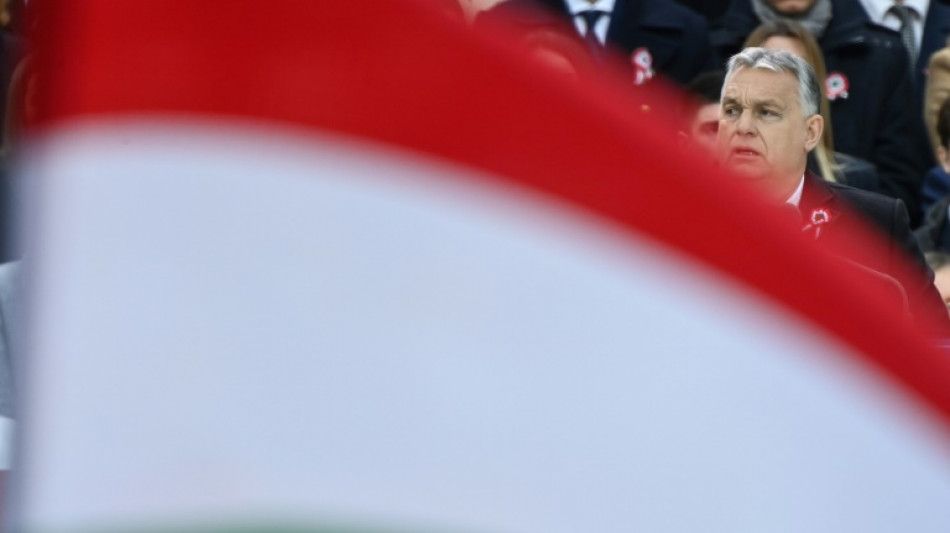
Five fates that tell the story of Hungary under Orban

 South Africa Test series a lot tougher than a World Cup says All Blacks coach Rennie
 Coventry sign Nigeria striker Awoniyi from Forest
 TripleDart tops $7 million ARR with AI-led growth, reports 50 per cent EBIT margin

 Bipartisan backlash as Trump scales back US-South Korea drills
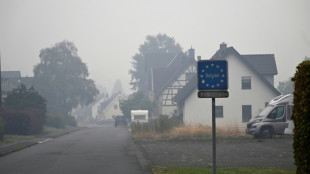 'Never seen one like it': German pensioners flee wildfire
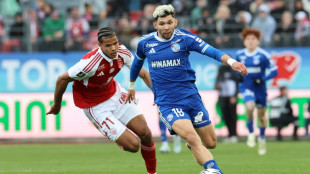 Ipswich sign Enciso and Ouattara in double raid on Strasbourg
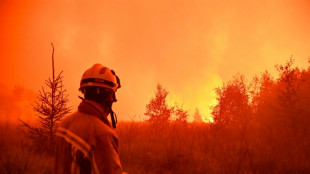
 UN laments 'unacceptable' toll of 350 aid workers killed in 2025

 Former child star actress Hayden Panettiere dead at 36
 Pakistan captain Babar Azam doubtful for England opener
 Pentagon inks Tomahawk deal amid reports of missile shortfall

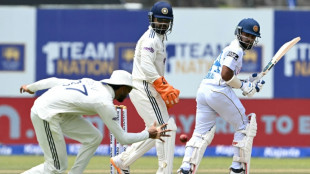 Rain halts India push after Dinusha century lifts Sri Lanka
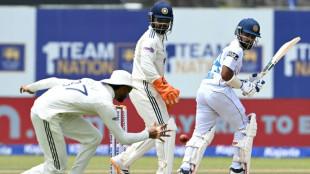 Dinusha hits century as Sri Lanka post 284 in first India Test
 Stocks steady as investors weigh US rate path
 Taiwan's leader says government to propose record defence spending for 2027
 Cambridge head slams 'feeding frenzy' over dead academic
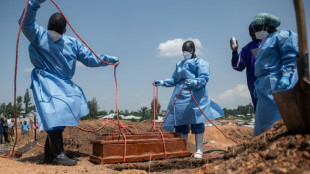 Ebola outbreak now DR Congo's deadliest ever
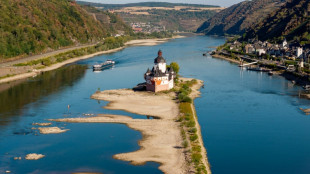 Germany's coalition split over putting climate in constitution

 Ukraine badminton star: 'How can you feel normal when bombs are falling?'
 Rain brings respite as Belgium wrestles massive wildfire
 Most stocks rise as US data ease rate fears but fuel economic worries
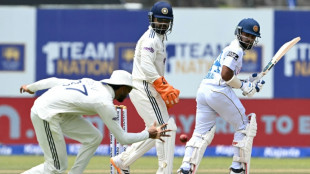 India take control of Galle Test as Sri Lanka slump to 99-5
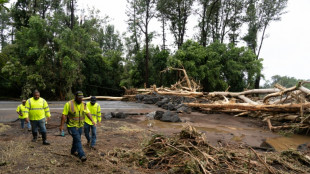
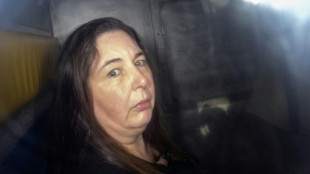 Australia's mushroom murderer appeals conviction
 The Nigerian fishing community being eaten up by the Atlantic
 Kushner to meet Netanyahu after talks with Hamas on Gaza plan
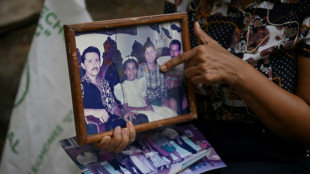 Photos, memories all that remain for Colombia's bereaved after quake
Hungary's Prime Minister Viktor Orban calls his 12 years in power a "conservative revolution", transforming his country into an "illiberal democracy".
His critics -- including many in Brussels -- accuse the nationalist strongman of neutering all opposition.
Hungary is now the only European Union country considered merely "partly free" by the US think tank Freedom House.
To illustrate the changes Orban hopes to set in stone by winning a fourth consecutive term on April 3, AFP approached major figures in Hungary's judiciary as well as its business, media and religious worlds.
Four who have found themselves on the wrong side of Orban's revolution agreed to talk.
But of the winners, neither Orban himself nor several of his ministers responded to repeated interview requests.
Zsolt Andras Varga, who was appointed to head Hungary's Supreme Court despite criticism that he had no relevant experience, agreed to speak but only after the election.
Only one of the six figures we approached whose stars we have risen under Orban would be interviewed, an MEP for his Fidesz party.
He batted away Brussels' claims of an authoritarian slide, saying Hungary was just trying to take back "its sovereignty".
- The sacked judge -
Viktor Orban swept back to power in 2010 with a large majority after switching Fidesz's liberal stance in the early post-communist years into a conservative nationalist one.
Buoyed by the emphatic victory, Orban -- who was previously premier between 1998 and 2002 -- turned his attention to the judiciary.
"That's the first obstacle to absolute power," said Andras Baka, the former head of the Supreme Court, known in Hungary as "the judge who said no" to Orban.
"They made me leave because I criticised reforms which were incompatible with European law," said Baka, 69.
"It was a political decision clearly" he told AFP.
Baka was suddenly sacked in 2012 after he claimed that lowering the retirement age of judges from 70 to 62 was actually a purge in disguise.
The law European Court of Justice deemed his dismissal illegal, and Baka won another case against the government in the European Court of Human Rights, which said his removal was a violation of freedom of expression.
Nevertheless, Orban has not backed down.
- The cast out pastor -
Gabor Ivanyi, a widely respected 70-year-old Methodist pastor, was once part of Orban's inner circle. He officiated at Orban's wedding and baptised his first two children.
Known for his decades of activism against the former communist regime, he fell out of favour when he refused to back Orban politically.
His sharp condemnation of the government's "indifference to the poor... apparently wasn't appreciated," he said.
The Fidesz government has faced criticism for its treatment of the Roma minority and its crackdown on homeless people.
Then a 2011 law on religious institutions, cut the number of recognised communities from some 300 to just 14.
Ivanyi's was not one of the chosen few.
The law was "tailor-made" to strangle his church financially, he claimed, and ended up costing him his health.
Deprived of public funds, Ivanyi has been reduced to dodging bailiffs to keep his homeless shelter open.
In late February his offices were raided by the tax authorities over alleged fraud.
While churches across Hungary are being renovated as part of Orban's drive to "re-Christianise" the country, Ivanyi says "every month I don't know if I can pay my 10 staff."
- The journalist forced off air -
In 2013, Orban made headlines by attacking Western media for vilifying his dream of a new conservative Hungary as "Orbanistan".
"In the media, everyone is liberal," he said.
"If you don't want to be dependent on how they depict you, then build your own structures," he said.
"Find businessmen with more traditional opinions to create media outlets," he said.
Ever since, more and more independent Hungarian media outlets have shut down or been taken over by those close to Orban, according to press freedom watchdog Reporters Without Borders (RSF).
"Can we even talk about media (in the plural) when 500 of them say the same thing, word for word?" said Andras Arato, head of Klubradio, whose radio frequency was taken away last year by Hungary's media regulator NMHH.
They said the station had broken administrative rules, but Arato believes it was revenge for Klubradio's often critical tone.
Forced to become an online-only operation, it has lost 90 percent of its advertising.
"We can count our advertisers on the fingers of one hand," said Arato, 68.
"If you take out ads with us, you can expect a nice tax inspection and you won't get any more public contracts," he claimed.
The station is still on air thanks to twice yearly fundraising drives and the generosity of its listeners, but Arato worries for its future.
Hungary was 25th in RSF's world press freedom rankings in 2009. It has since slid to 92nd behind Kyrgyzstan and Haiti.
- The targeted businessman -
Billionaire Laszlo Bige -- Hungary's "Fertiliser King" -- believes he is being targeted by prosecutors "under orders" from Orban's government.
"Police occupied one of our factories" three years ago saying it was causing pollution. Deliveries across the world were disrupted, he said.
"There still haven't been any charges."
Last year his company Nitrogenmuvek was fined, along with seven others, for allegedly running a cartel.
Bige denies wrongdoing. He claimed the moves are part of a campaign to try to get him to sell up to an oligarch linked to the government.
In its last report on the rule of law in Hungary, the European Commission denounced rampant "clientelism", "favouritism" and "nepotism" in "the links between the private sector and political circles" in Hungary.
"Everyone has fallen into line, I don't know anyone who would dare say two honest sentences now," Bige said.
"Afterwards they would have to face consequences for that," he added.
He refuses to give in, saying he wants nothing to do with "the mafia that runs Hungary".
As for the vitriolic articles that regularly appear about him in the Hungarian press, he claimed "they're written in advance and sent to the newsrooms.
"They've given the green light to target me, they destroy people's lives," he sighed.
- The grateful MEP -
Fidesz MEP and longtime Orban supporter Balazs Hidveghi said noses were always going to be put out of joint.
"After 12 years of government with a solid majority and an unshakeable desire to reform, the fact that there has been a renewal of the elites is totally logical," he said.
A member of the party since he was 18, Hidveghi rose rapidly through the ranks after 2010, becoming an assistant secretary of state and party communications director before being elected to the European Parliament.
A 52-year-old father of four, Hidveghi comes from a long line of politicians and is grateful to Orban for turning the page on Hungary's communist past.
After the 1956 uprising was crushed by the Soviet Union, Hidveghi's father was imprisoned for a year.
"Everything had to be rebuilt, especially conservative thought" after the fall of communism. The Catholic bourgeois intelligentsia had been dispossessed or pushed into exile and were again marginalised by liberals in the post-1989 transition from communism, he argued.
Hungary was forced "to run behind whatever the West was doing," Hidveghi said.
But Orban has given he country back its independence, he insisted, freeing it from European tutelage and "speaking directly" to Russia and China.
"The quest for sovereignty is a keystone of our politics and that explains why we are so misunderstood" abroad, the MEP argued.
As for the complaints of Orban's critics, they are no more than "the frustrations of the opposition, who are sore losers."
O.Gaspar--PC