-
 Antonelli 'mad' about crash in Azerbaijan qualifying
-
Concerns over 'missing' UK explorer Ranulph Fiennes

-
 'Perfect lap' gives Russell pole for Azerbaijan GP as Antonelli crashes out
-
Suspected Paris killer of Argentine rugby star begs forgiveness

-
 UN Security Council condemns Houthi attacks on Saudi Arabia
-
Oil prices fall on cautious hopes for US-Iran progress
-
 China swimmer makes Asian Games history as Thai wins 100m sprint
-
Noskova, Muchova take Czech Republic into BJK Cup final

-
 Top French literary prize drops best-selling novel over AI claims
-
Thai sprinter Puripol breaks own Asian Games record to win 100m gold

-
 US 'must choose' whether to end war: Iran president
-
Russell takes pole for Azerbaijan GP, Antonelli crashes out
-
 Pope warns against losing humanity in AI-driven 'paradise of machines'
-
Williams boss hails Chadwick as F1 inspiration for women

-
 Pope warns against losing humanity in 'paradise of machines'
-
World No.1 Sinner delays return with China Open withdrawal

-
 From FBI warning to literary acclaim: the Russian journalist who took on Putin
-
South Lebanon children return to school destroyed by Israel strike

-
 China swimmer in Asian Games first as North Korea lifters reign
-
Jewish group urges Berlin far-left vote winners to tackle antisemitism

-
 French literary prize removes novel from longlist after AI claims
-
European stock markets climb as oil prices drop
-
 China's Zhang wins record seventh Asian Games swimming gold
-
Trump accuser E. Jean Carroll finally has her damages

-
 Verstappen edges Russell in final practice in Azerbaijan
-
Germany's Havertz, Musiala ruled out of Greece match with injury

-
 English, Spanish, Italian, German football leagues call for FIFA reform
-
Ireland's Gaza stance spills from Eurovision into football

-
 Pope arrives in France on first official visit in 18 years
-
Welcome aboard the Costa Serena, the Asian Games floating hotel

-
 Pope arrives in France on first state visit in 18 years
-
Asian markets mixed after recent oil surge
-
 Heavy fighting, internet disruption as Ethiopia conflict rages
-
Cash for nature protection: hotelier's offer to Principe islanders
-
 From transit to consumption: drug use surges in Mozambique
-
US miner KoBold bets on AI to gain edge in DR Congo mineral hunt
-
 Chicago teams, Guardians and Padres all book MLB playoff berths
-
Internet disrupted in Ethiopia as conflict rages

-
 Bijan Robinson destroys Packers in 35-14 win for Falcons
-
Asian markets mixed after oil gains
-
 Harimoto hails new era as Japan dethrone table tennis kings China
-
'Genius' Ohashi bids for third Asian Games gold after world record

-
 India rape cases turn focus back onto women's safety
-
India's 'Tree Father' plants for a greener future

-
 Rebellious Afghan taxi drivers defy ban on music
-
Hopping mad: New health warning stirs up Belgian brewers

-
 Brazil candidates mount digital armies for fierce online campaign
-
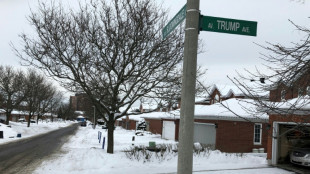
Canadian capital to rename 'Trump Ave'
-
 Nepal PM says floods 'a warning to the world' about climate change
-
Pope heads to France on first state visit in 18 years

Japan lifts 'megaquake' warning, tells people to 'go back to normal'
Japan lifted on Thursday a warning that a "megaquake" potentially causing colossal damage and loss of life could strike, with the government telling people to "go back to normal".
The week-old alert that such a catastrophe might hit the archipelago of 125 million people prompted thousands to cancel holidays and stock up on essentials, emptying shelves in some stores.
"The people of Japan are free to go back to normal lifestyles," disaster management minister Yoshifumi Matsumura said as he announced the lifting of the advisory at 5:00 pm (0800 GMT).
However, he said people should not forget measures such as securing furniture, ensuring family members know the location of evacuation shelters, and stockpiling emergency foods.
"The special call for attention ended but it doesn't mean the risk of a major earthquake has been eliminated," Matsumura told reporters.
"We ask (people) to continue to be mindful of these daily precautions and remain vigilant for a megaquake that can happen anytime, anywhere," he said.
Japan's weather agency said last Thursday the likelihood of a megaquake was "higher than normal" following a magnitude 7.1 jolt that day that injured 15 people.
That was a particular kind of tremor known as a subduction megathrust quake, which has occurred in pairs in the past and can unleash massive tsunamis.
The advisory concerned the Nankai Trough between two tectonic plates in the Pacific Ocean.
The 800-kilometre (500-mile) undersea gully runs parallel to Japan's Pacific coast, including off the Tokyo region, the world's biggest urban area and home to around 40 million people.
All segments of the Nankai Trough ruptured at once in 1707, unleashing an earthquake that remains the nation's second-most powerful on record.
That quake, which also triggered the last eruption of Mount Fuji, was followed by two powerful Nankai megathrusts in 1854, and one each in 1944 and 1946.
- Slower trains -
Japan's government has said the next magnitude 8-9 megaquake along the Nankai Trough has a roughly 70 percent probability of striking within the next 30 years.
In the worst-case scenario, 300,000 lives could be lost, experts estimate, while some engineers say the damage could reach $13 trillion, with infrastructure wiped out.
However, experts said the risk was still low and the agriculture and fisheries ministry urged people on Saturday "to refrain from excessively hoarding goods".
The statement came after supermarkets put limits on purchases including bottled water and as demand soared online for emergency items such as portable toilets and preserved food.
The megaquake warning even prompted Prime Minister Fumio Kishida to cancel a four-day trip to Central Asia last weekend.
Some bullet trains reduced their speed as a precaution and nuclear plants were instructed by authorities to double-check their disaster preparations.
- 'Convincingly scary' -
Japan sits on top of four major tectonic plates and experiences around 1,500 quakes every year, most of them minor.
The impact is generally contained even with larger tremors thanks to advanced building techniques and well-practised emergency procedures.
The Japan Meteorological Association warning was the first under new rules drawn up after a 2011 quake, tsunami and nuclear disaster that left around 18,500 people dead or missing.
The 2011 tsunami sent three reactors into meltdown at the Fukushima nuclear plant, causing Japan's worst post-war catastrophe and the world's most serious nuclear accident since Chernobyl.
"The history of great earthquakes at Nankai is convincingly scary," geologists Kyle Bradley and Judith A. Hubbard wrote in their Earthquake Insights newsletter last week.
However, there was only a "small probability" that last week's magnitude 7.1 earthquake was a foreshock.
"One of the challenges is that even when the risk of a second earthquake is elevated, it is still always low," they said.
R.Veloso--PC