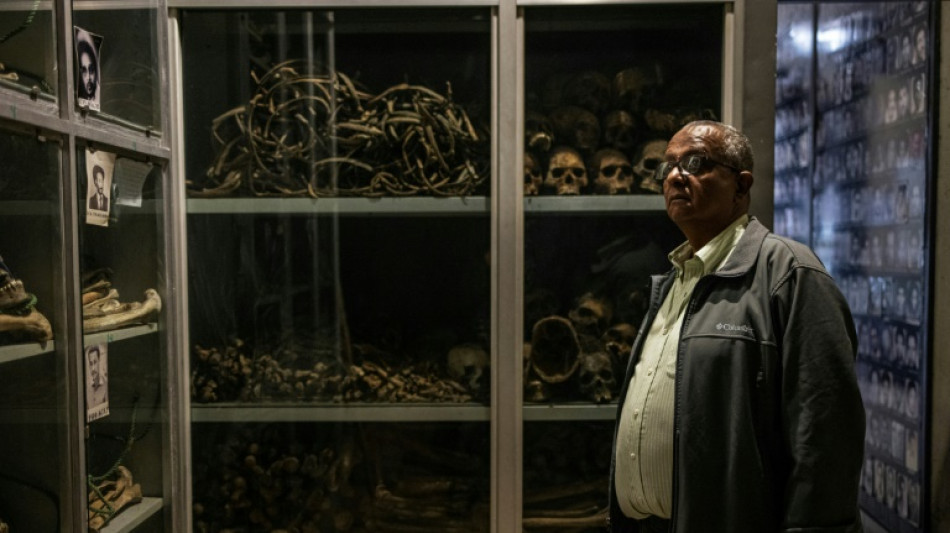
'Justice not done' 50 years after Ethiopia revolution / Photo: Michele Spatari - AFP

 Verstappen edges Russell in final practice in Azerbaijan
 English, Spanish, Italian, German football leagues call for FIFA reform

 Pope arrives in France on first official visit in 18 years

 Pope arrives in France on first state visit in 18 years

 Heavy fighting, internet disruption as Ethiopia conflict rages

 From transit to consumption: drug use surges in Mozambique
 Chicago teams, Guardians and Padres all book MLB playoff berths
 Bijan Robinson destroys Packers in 35-14 win for Falcons

 Harimoto hails new era as Japan dethrone table tennis kings China
 India rape cases turn focus back onto women's safety
 Rebellious Afghan taxi drivers defy ban on music

 Brazil candidates mount digital armies for fierce online campaign
 Nepal PM says floods 'a warning to the world' about climate change
 Trump hosts Xi for state dinner as pomp masks tensions
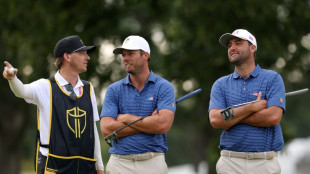 Scheffler and Burns give US 3-2 Presidents Cup lead
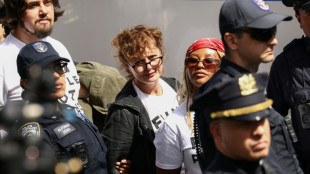 Hollywood stars among 100 arrested in NY anti-Netanyahu protest

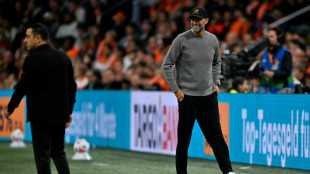 Klopp denied on Germany debut as Portugal win in Nations League
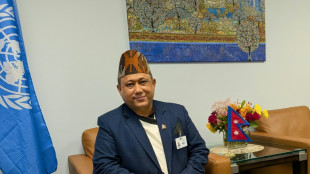 Rich nations should foot climate bill, says Nepal minister
 Wellalage and Mendis star as Sri Lanka level England series in thriller
 Felix gives Portugal win over Wales as Ronaldo misfires
 Wellalage and Mendis star as Sri Lanka level England ODI series
 Guyana urges Venezuela at UN to respect ICJ's ruling on Essequibo region
 Argentina coach says Messi deserves to go out on own terms
 Xi sets red lines for Trump despite lavish White House welcome

 Cowboys, Ravens happy with footing for first Rio NFL clash
In his apartment in Ethiopia's capital, Ermias Woldeamlak stares at the photos of his three older brothers, all of them killed during a period of military terror a generation ago.
"Elias was 20 or 21, Thomas was 19, Berhan was 18," he says.
Half a century has passed, "but I still feel very sad," Ermias adds. "I remember it as fresh as something that happened yesterday."
Thursday marks 50 years since a Marxist-Leninist military junta known as the Derg seized power in Ethiopia, overthrowing Emperor Haile Selassie and a monarchy that had ruled Ethiopia for 700 years.
Tens of thousands died at the hands of the new regime, which ruled with callous brutality until its own overthrow in 1991.
Its 87-year-old leader Mengistu Haile Mariam lives on quietly in Zimbabwe despite being convicted of genocide and sentenced to death in absentia in 2008.
For Ermias, that impunity is impossible to stomach.
Without the extradition of the regime's "greatest criminal", and without financial reparations for the victims' families, "justice has not been done", said the 64-year-old documentary filmmaker.
- 'I saw a lot of killing' -
Ermias was just a teenager when the revolution happened.
Initially led by left-wing students, it was quickly overtaken by the army which established the Provisional Military Administration Council (its local acronym spells Derg) on September 12, 1974.
Ermias's brothers were among the young rebels in the Ethiopian People's Revolutionary Party (EPRP) who tried to seize back control from the army.
The clashes triggered the rise of Mengistu, a hardline colonel, to the leadership in 1977, and unleashed a two-year period of brutal repression that became known as the "Red Terror".
Ermias's oldest brother, Elias, was arrested in November 1976 after being found in their grandmother's home with red paint -- illegal because it was used for rebel slogans.
Elias spent months in prison and was tortured, his brother says.
The family would regularly bring him food and clothes until one day in March 1977, the prison guards said they should no longer bother coming.
The next brother Thomas was executed on the steps of a church in Addis Ababa and his body put on public display as a warning.
The family only learned of the death of Berhan, who had been in hiding, after the fall of the Derg in 1991.
Ermias says he was also imprisoned and tortured after being caught with pro-rebel leaflets.
He was often left hanging with his feet and hands bound to a wooden stick, an excruciating position that left him with pain in his arms for years afterwards.
"I saw a lot of killing," he recalls. "I remember seeing bodies of people who were with me the night before (who had been) taken out and killed.
"Those things, you can't forget."
- 'Tens of thousands' murdered -
The exact scale of the Derg's crimes remains unknown.
Jacob Wiebel, a historian at Durham University in Britain who specialises in the subject, says "tens of thousands" were murdered, and many more tortured.
Dozens of the junta's leaders were later convicted for rights abuses, but the trials "were insufficiently funded, drawn out and lacking in due process," Wiebel told AFP.
Zimbabwe refuses to extradite Mengistu and in 2011, many Derg leaders saw their death sentences commuted to life imprisonment, including such notorious figures as Legesse Asfaw, known as the "Butcher of Tigray", a region in northern Ethiopia that suffered particular repression.
Ermias says he wishes that Ethiopia could follow the example of Rwanda where trials over the 1994 genocide encompassed not just leaders, but many lower-level perpetrators.
Nor, he says, have Ethiopian leaders made any real effort to help victims work through their trauma with a Truth and Reconciliation Commission or offer any kind of financial compensation.
He worries this has allowed Ethiopia to fall back into war and ethnic division in recent years.
"The extent and the way it's happening is different, (but) if people don't learn from history, they repeat the same mistakes," he said.
A.Silveira--PC