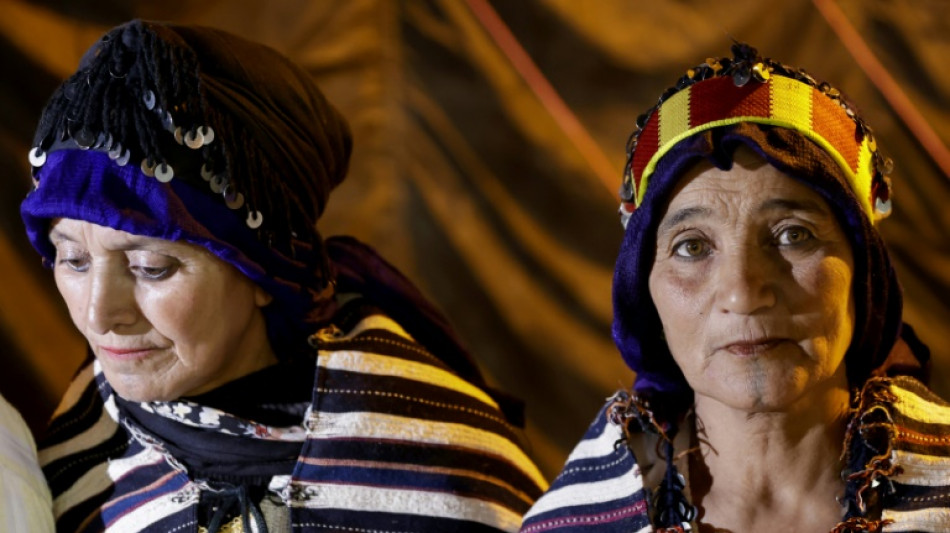
Morocco's tribeswomen see facial tattoo tradition fade / Photo: - - AFP

 India's 'Tree Father' plants for a greener future

 Hopping mad: New health warning stirs up Belgian brewers

 Canadian capital to rename 'Trump Ave'
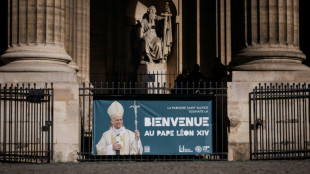 Pope heads to France on first state visit in 18 years

 Bacteria suspected in deaths of hundreds of baby whales off Argentina

 US 'must choose' whether to end war: Iran president to Fox News
 UN approves resolution on dealing with rising sea levels

 Yalcouye makes dream debut as Ivory Coast beat Ghana in AFCON qualifier
 Chicago's White Sox and Cubs book MLB playoff berths

 Last-gasp Gakpo strike snatches Dutch draw to sour Klopp debut

 Global stocks mostly fall as oil prices and bond yields rise

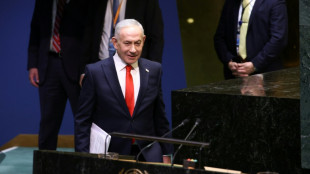 Israel's Netanyahu denounces enemies, allies in fiery UN speech
 Hollywood stars among arrests in NY anti-Netanyahu protest

 Losing start in AFCON qualifying for 78-year-old coach Le Roy

 Italy bans burqas in schools, caps numbers of foreign students per class

 Israel policies threaten 'life and existence' of Palestinians, Abbas says

 Paolini steers Italy past China in BJK
 Zidane admits emotion on eve of first game as France coach
 Breetzke and Maharaj sink Australia in first one-day international
 Zelensky broke confidentiality with North Korea POWs disclosure: South's president

 Former Liverpool star Carroll reveals he was sexually assaulted
 Dominican Republic calls for Haiti force to be strengthened
 Dolly Parton's nephew ordered to stay away from estate staff, properties

 Early exit for Philippine darling Eala at Singapore Open

 Hurricane Polo triggers huge waves in coastal Mexican city

As a young girl growing up in the Atlas mountains, Hannou Mouloud's family took her to have her chin tattooed with the cherished lines that generations of Moroccan Amazigh tribeswomen wore.
"When I was six, they told me tattoos were pretty adornments," recalled the 67-year-old from Imilchil village of the once-common practice among women in North Africa's Amazigh groups.
Long referred to as Berbers, many tribespeople from the area prefer to be called Amazigh, or Imazighen, which means "free people".
Today, like in many of the Indigenous cultures across the world where facial tattoos were long prevalent, the practice has largely faded.
Many attribute the near-disappearance of facial tattoos to Morocco's changing religious attitudes in recent decades, with interpretations of Islam where inked skin and other body modifications like piercings are prohibited taking hold.
"We would use charcoal to draw the designs on our faces, then a woman would prick the drawing with a needle until blood came out," Mouloud told AFP, adding that they would rub the wound daily with a chewed green herb to deepen the tattoo's colour.
The markings vary in design between the minority's tribes and were used to signify the wearer's origin while offering beauty and protection.
Being tattooed would hurt, said Hannou Ait Mjane, 71, and "we couldn't hold back our tears" but it "remains a tradition that our ancestors passed down to us".
- Fundamentalism -
Morocco has the largest Amazigh population in North Africa, with Tamazight, the community's language, recognised as an official language alongside Arabic.
According to the most recent census in 2014, more than a quarter of Morocco's 35 million inhabitants speak at least one dialect -- Tarifit, Tamazight or Tachelhit.
Abdelouahed Finigue, a geography teacher and researcher from Imilchil, told AFP that women often had their chins, foreheads or hands tattooed.
"Some women had intimate areas tattooed as a wedding gift, expressing their love for their husband," he added.
The designs held different meanings to the different communities.
"The woman, through her tattoos, expresses her beauty and her value as an individual independent of the man," he said, explaining what the different shapes can mean.
"The circle, for example, represents the universe and beauty, just like the moon and the sun which occupied an important place in local rites," he said.
But changing religious trends means fewer women are getting inked.
"In recent years, this custom has been tainted by preconceived ideas from Salafist currents," he added, referring to a Sunni Islamist movement that seeks to return to the practices and teachings of the Prophet Mohammed.
Bassou Oujabbour, member of local development association AKHIAM, said women with the markings have faced social pressure.
"Fundamentalists sometimes describe tattooing as the devil's book or as the first thing to be burned on the human body," he said.
"Some women even removed the tattoos long after getting them for fear of punishment after death."
R.Veloso--PC