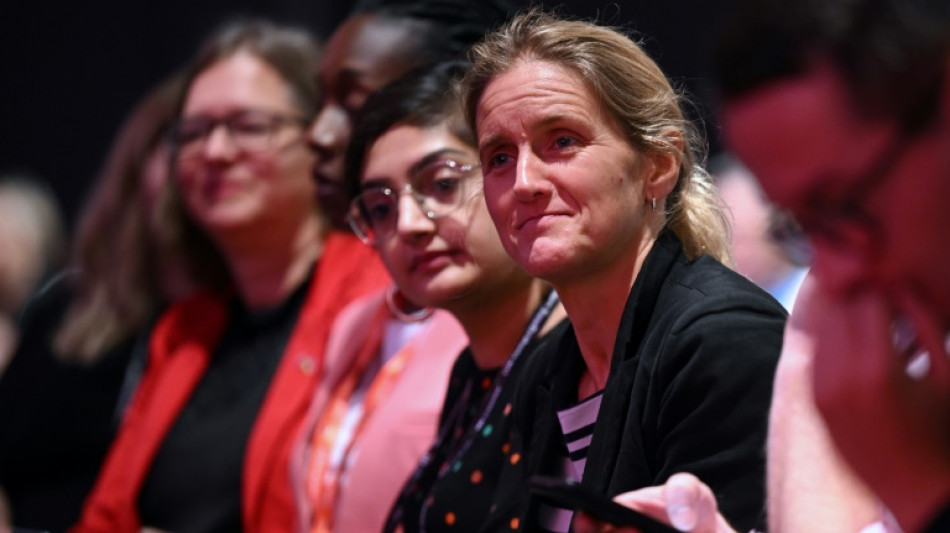
New assisted dying bill introduced in UK parliament / Photo: Oli SCARFF - AFP

 India's 'Tree Father' plants for a greener future

 Hopping mad: New health warning stirs up Belgian brewers

 Canadian capital to rename 'Trump Ave'

 Pope heads to France on first state visit in 18 years

 Bacteria suspected in deaths of hundreds of baby whales off Argentina

 US 'must choose' whether to end war: Iran president to Fox News

 UN approves resolution on dealing with rising sea levels

 Yalcouye makes dream debut as Ivory Coast beat Ghana in AFCON qualifier

 Chicago's White Sox and Cubs book MLB playoff berths

 Last-gasp Gakpo strike snatches Dutch draw to sour Klopp debut

 Global stocks mostly fall as oil prices and bond yields rise

 Israel's Netanyahu denounces enemies, allies in fiery UN speech

 Hollywood stars among arrests in NY anti-Netanyahu protest

 Losing start in AFCON qualifying for 78-year-old coach Le Roy

 Italy bans burqas in schools, caps numbers of foreign students per class

 Israel policies threaten 'life and existence' of Palestinians, Abbas says

 Paolini steers Italy past China in BJK

 Zidane admits emotion on eve of first game as France coach

 Breetzke and Maharaj sink Australia in first one-day international

 Zelensky broke confidentiality with North Korea POWs disclosure: South's president

 Former Liverpool star Carroll reveals he was sexually assaulted

 Dominican Republic calls for Haiti force to be strengthened

 Dolly Parton's nephew ordered to stay away from estate staff, properties

 Early exit for Philippine darling Eala at Singapore Open

 Hurricane Polo triggers huge waves in coastal Mexican city

A UK lawmaker was Wednesday to introduce into parliament legislation that would legalise assisted dying, setting up the first vote on the emotive issue in almost a decade.
Euthanasia is illegal in Britain, but if Labour MP Kim Leadbeater's bill becomes law it would give terminally ill people "choice" at the end of life.
It would also align Britain with some European countries where assisted dying is in place to varying degrees.
Assisted suicide is banned in England, Wales and Northern Ireland, with a maximum prison sentence of 14 years.
In Scotland, it is not a specific criminal offence but assisting the death of someone can leave a person open to a charge of murder or other offences.
Previous attempts to legalise it have been voted down, but public opinion is shifting and attempts to change the law are under way in Scotland, which has a separate legal system and powers to set its own health policy.
An assisted dying bill was last debated -- and defeated -- in the House of Commons in 2015.
Since then, surveys have shown increased support for helping terminally ill people end their lives and Prime Minister Keir Starmer pledged to make parliamentary time for the subject during his Labour party's successful election campaign in July.
The debate has been given impetus by a campaign led by high-profile TV broadcaster Esther Rantzen, who has terminal cancer.
Leadbeater said the current law, which "hasn't changed for more than 60 years," can be "cruel and unjust, not only to terminally ill people but to their families and loved ones, too.
"(I) strongly believe that we should give people facing the most unbearable end to their life a choice about what that end is like," she wrote in the Guardian earlier this month.
Opponents of the legislation include the UK's highest-ranking Roman Catholic cleric, Cardinal Vincent Nichols, who has urged followers to write to MPs to oppose the proposed change.
- 'Dangerous' -
Alistair Thompson, from anti-euthanasia group Care Not Killing, said changing the law could set Britain on a "very dangerous route", citing Belgium and the Netherlands which has extended assisted dying to minors.
"We know that introducing an assisted suicidal euthanasia bill would put a lot of people under pressure to end their lives prematurely," he told AFP.
The precise details of Leadbeater's legislation are believed to be similar to a separate bill proposed recently in the upper chamber House of Lords.
That bill would allow terminally ill people with six months or less to live to end their lives with the approval of two doctors.
MPs are expected to debate and vote on Leadbeater's legislation on November 29.
She is introducing it as a private member's bill, meaning it is not part of the government's legislative agenda.
Starmer's administration has promised its 400-plus lawmakers in the 650-seat parliament a free vote, making predictions of the outcome difficult.
The legislation would only apply to England and Wales.
A bill to make assisted dying legal in Scotland was introduced in the Scottish Parliament earlier this year.
The Isle of Man and Jersey -- self-governing British Crown Dependencies which are not part of the UK -- are also moving towards passing laws to give terminally ill people the right to die.
Belgium, along with the Netherlands, in 2002 became the first EU countries to allow euthanasia.
Spain in 2021 authorised euthanasia and medically assisted suicide for people with a serious and incurable illness, followed by Portugal in 2023.
T.Resende--PC