
Nigerian scammers accused in AI-driven fake Brad Pitt fraud / Photo: Marco BERTORELLO - AFP/File

 North Sitra sewage expansion lifts capacity to 30,000 cubic metres daily

 Jennifer Barreto wins Miss Universe 2026 in Puerto Rico
 Bahraini law allows crypto assets to pass to heirs

 Bangladesh garment workers clash with police after wage increase

 Breytenbach confirms recommending Sibiya for Johannesburg post
 Celebrities mark Thanksgiving in turkey-themed photo gallery

 German fashion model Veruschka dies in Berlin at 87

 Thanksgiving storms disrupt thousands of US flights
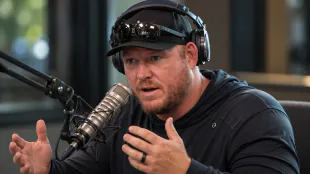 T.J. Lang criticises Aaron Rodgers over comments about Mike McCarthy

 Qatar Tourism and Uber Sign Five-Year Mobility Partnership

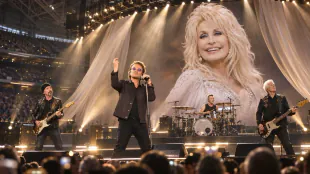 U2 pays tribute to Dolly Parton during Thanksgiving Eve NFL show

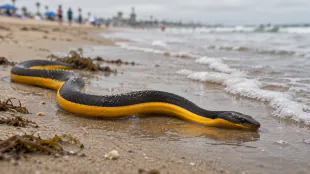 Rare yellow-bellied sea snake found on Southern California beach

 Second-generation Mini Cooper SE set for India launch with 402km range

 Filmasia 2026: 16 Films Across Prague, Brno, and České Budějovice

 Kojey Radical Launches Burger Collaboration at Dallas Burger Joint in Shoreditch
A French woman who lost her life savings to scammers pretending to be American actor Brad Pitt is seeking to unmask at least three Nigerians her legal team accuses of defrauding her.
The scammers tricked the victim, identified as 53-year-old Anne by French broadcaster TF1, into believing she was in a romantic relationship with the 61-year-old Hollywood star by using AI-generated photos.
The case illustrates how Nigerian scammers, already known for a variety of internet schemes including "romance" scams, are pivoting towards new technologies to swindle victims.
Anne told TF1 she was first targeted on Instagram by someone posing as Pitt’s mother after she shared pictures of herself skiing in the resort of Tignes.
The scammers claimed that the actor urgently needed money to pay for kidney treatment, alleging that his bank accounts had been frozen due to ongoing divorce proceedings with his ex-wife Angelina Jolie.
Anne's lawyer Laurene Hanna said her client lost 830,000 euros ($850,000) to the scammers.
Anne has been in touch with Marwan Ouarab, the founder of the FindmyScammer.com website, in a bid to find the fraudsters, the attorney said on X.
According to French daily Le Parisien, which quoted Ouarab, the scammers -- three men in their 20s -- are located in Nigeria.
Nigeria’s Economic and Financial Crimes Commission (EFCC) anti-graft agency said it can only investigate the claim if a petition is submitted.
"It is a petition that authorises the EFCC to act," spokesman Dele Oyewale told AFP.
‘Yahoo Boys’
Africa's most populous country is saddled with a reputation for internet fraudsters known in local slang as "Yahoo Boys".
The influence of internet fraudsters in popular culture has risen steadily since Afrobeats star Olu Maintain in 2007 released ‘Yahooze,’ a song eulogising fraudsters.
Several Nigerian songs referencing cyberfraudsters -- also known locally as "419" in a reference to Nigeria's criminal code for fraud -- enjoyed mainstream success.
Nigerian authorities, in 2019 and in a case due to resume in March, briefly arrested a popular local musician known as Naira Marley on conspiracy and credit card fraud charges.
Another musician, Shallipopi -- real name Crown Uzama -- and his manager were arrested in May 2023 for "internet-related fraud," EFCC said.
In November 2022, a US court sentenced Ramon Abbas, a Nigerian fraudster once popular with politicians and celebrities, to a 135-month jail term and was ordered to pay $1,732,841 in restitution to two victims.
US authorities said Abbas "conspired to launder tens of millions of dollars through a series of online scams".
The use of AI is a new twist to an old crime, one expert told AFP.
Romance scams, sextortion and the once popular emails from a "Nigerian prince" have been used to swindle victims in the past.
The "use of AI and deepfake" will "erase the huge gains made already and set us back over 20 years," cybercrime expert Timothy Avele told AFP.
Last July, Instagram and Facebook parent company Meta deleted 63,000 Instagram accounts linked to sextortion scams from the West African country and blamed "Yahoo Boys" for the scam accounts.
Sextortation cases often involve young male or teen victims being persuaded to send compromising photos to fraudsters posing as young women. They are then blackmailed.
"We’ve banned Yahoo Boys under Meta’s Dangerous Organizations and Individuals policy —- one of our strictest policies -— which means we remove Yahoo Boys’ accounts engaged in this criminal activity whenever we become aware of them," Meta stated in July.
Weeks after the Meta clampdown, two Nigerian brothers, Samuel Ogoshi, 24, and Samson Ogoshi, 21, were jailed to 210 months in prison each after they "sexually exploited and extorted more than 100 victims," including 11 minors.
‘Foreign syndicates’
Foreign "cybercrime syndicates" are also exploiting Nigeria’s weakness in cybersecurity systems, and find it a "profitable place to set up their operations centres," Avele said.
EFCC's Oyewale said the agency is ready to "tackle every emerging crime, including AI-enabled crimes."
Last month, EFCC said it had arrested 792 suspects in a single operation in the affluent Victoria Island area of Nigeria's commercial hub of Lagos.
At least 192 of the suspects were foreign nationals, 148 of them Chinese, the agency said.
EFCC spokesman Oyewale said in a statement the foreign gangs recruited Nigerian accomplices to find victims online through phishing, targeting mostly Americans, Canadians, Mexicans and others in European countries.
The anti-graft agency has busted several hideouts where young criminals learn their trade and also arrested 25 people at a "cybercrime training centre" in southern Edo state on January 16.
Those arrests followed a slew of others last year
T.Batista--PC