New generation of Afghan women shift from burqa / Photo: Atif ARYAN - AFP

 Alex Bodi and Prof. Dr Stefan Haupt agree to collaborate on a legendary art collection in Romania
 Stocks dip, oil rises as traders eye chances of Iran deal
 Israel squeezing UN Palestinian refugee agency ahead of polls: chief

 Dutch to resume Eurovision with new broadcaster
 Man Utd losses jump despite record revenues

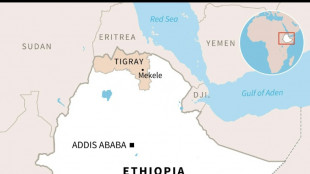 Ethiopia's Tigray rebels seize airports, clash with govt forces
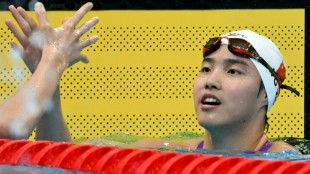 China prodigy wins third Games gold as North Korea weightlifters roar

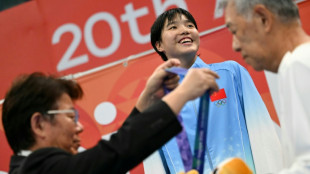 China's Yu, 13, wins third Asian Games gold but has 'some regrets'

 Oil falls, stocks steady as Trump hails 'good' Iran talks
 UK sets up unit to combat disinformation from Russia, AI

 ICC convicts C.Africa rebel leader
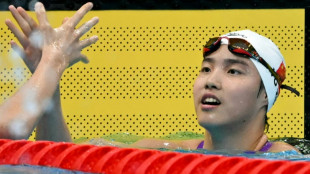
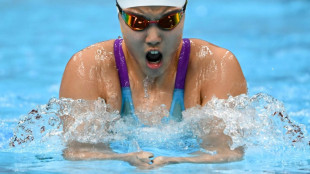 China's Yu, 13, wins third gold with latest Asian Games record

 UK says will revisit Chagos deal after latest Trump criticism
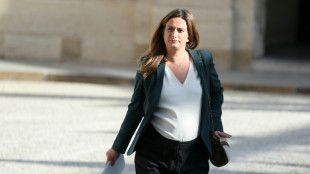 In first, French presidential candidate gives birth during campaign

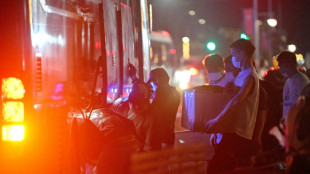 Cambodia no 'safe haven' for cyberscams, PM says
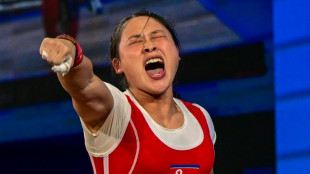 North Korea weightlifter sets three world records for Asian Games gold
 A Full Moon for Every Child: STARTRADER's STARCARES Brings Support to SOS Children's Village Ho Chi Minh City

 Meta leans into AI, smart glasses amid privacy pushback
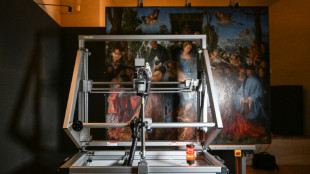 Battered Duerer masterpiece up for five-year revamp
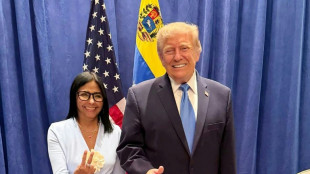 Trump met with Venezuela's interim leader at UN
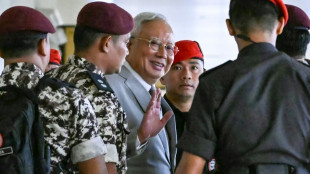 Malaysia furore after Najib wins conditional house arrest
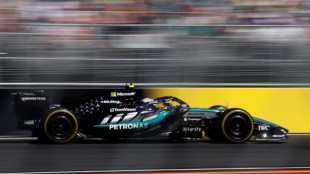
 Italy hope for new dawn under Mancini

 Mongolian herders enlist new tech against harsher, drier climate
 Tata turmoil shines light on India succession woes
 World Cup 'not enough' as Spain begin next chapter
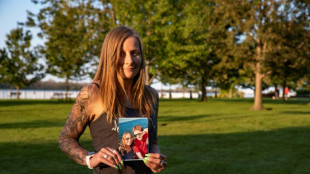
Young, urban women in Afghanistan are increasingly ditching the all-enveloping blue burqa with a face mesh that has become a symbol of the Taliban's oppression of women.
Since their return to power in 2021, the Taliban have imposed an ultra-strict vision of Islamic law, modelled on their previous rule from 1996 to 2001.
But while women must still have their bodies and faces covered, restrictions from the feared religious police do not specifically mention the burqa.
So young women are instead following fashions seen in many Gulf nations.
Many prefer a flowing abaya robe, worn with a hijab headscarf and often a face covering as well -- sometimes a medical mask, or a Saudi-style cloth niqab veil that exposes only the eyes.
"The new generation would never accept wearing a burqa, because of the design and colour," said 23-year-old Tahmina Adel in the capital Kabul.
With social media, "everybody follows the trends", Adel added, who was forced to quit her economics degree because of the Taliban government's ban on women's education.
"I prefer wearing an abaya because I am comfortable in that," she said.
Young women in Kabul and the northern city of Mazar-i-Sharif said that abayas and headscarves offer more freedom of expression than burqas, with a variation in colour, material and pattern.
"Only elders wear a burqa," said Razia Khaliq, as she embroidered one at a workshop in Mazar-i-Sharif.
Khaliq began wearing the billowing head-to-toe burqa aged 13, like her mother and grandmother before her.
But her daughter, in her 20s, prefers the abaya.
"Young people wear the abaya because it is more comfortable," Khaliq said.
- 'Stifling' -
The burqa has long roots in Afghanistan.
It was strictly enforced during the first Taliban government rule of Afghanistan, when women were lashed for failing to wear one in public.
But the abaya and hijab headscarf combination grew in popularity during the time of the foreign-backed government.
When the Taliban recaptured Kabul in 2021, they had promised to be more flexible than during their first rule, when women were deprived of almost all their rights.
They have gradually erased Afghan women from public space, imposing what the United Nations has called a "gender apartheid".
They outlawed the loose headscarves commonly worn by urban women.
Billboards were erected ordering women to once again wear the burqa -- or an abaya, headscarf and a face covering.
A law in August confirmed restrictions imposed on men and women by the religious police.
It stipulates that, while women can go out "in case of necessity", they must cover up.
"Whether a burqa or hijab, there is no difference," said Saif ul Islam Khyber, spokesman for the morality police, known officially as the Ministry for the Propagation of Virtue and the Prevention of Vice.
Nasima, in her 40s, insisted that "showing your face is a sin".
But she admitted to sometimes wearing an abaya and headscarf to free her nose and mouth from the "stifling" burqa.
- 'Very strange' -
Niha, 22, said she was reprimanded for not wearing a burqa in public buildings, which are guarded by the Taliban authority's security forces.
It is common to be asked to readjust the headscarf, or ordered to add a medical mask.
"As soon as we enter offices, we are mistreated," said Niha, who did not give her surname.
Hayatullah Rafiqi, a specialist in Pashtun culture, said the burqa was "strictly imposed" under the first Taliban government -- when some women were "whipped if they did not wear it" -- but that "today it is worn less."
Burqas vary only in colour according to province, from blue to light brown, and green to pink.
Gul Mohammad has been selling burqas in Kabul for 40 years, and said many now come from China -- made of nylon rather than cotton, making them cheaper and stronger but less breathable.
"The Chinese burqa is very cold in winter, and it is like fire in summer," said Gul. "This makes the women sweat."
For Sabrina, 23, from the Taliban's spiritual cradle of Kandahar, life under a burqa is fraught with pitfalls.
She is regularly lectured if she does not wear it.
The first time she wore it was after the Taliban government seized back control in 2021, and it was not her choice.
"I couldn't see my way, I didn't know if I was going right or left," she said. "It was very strange."
O.Gaspar--PC