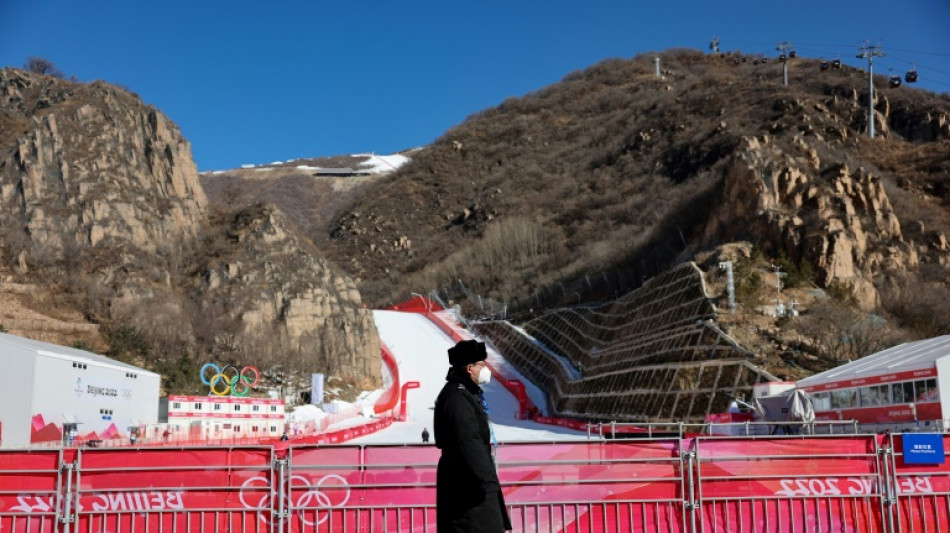
Sports set to start at Beijing Olympics but controversies weigh heavy

 Germans vote in elections threatening fresh blow to Merz

 US fears rapid escalation in Mideast after Houthis attack Riyadh

 Japan triathlete Hojo wins first gold of Asian Games

 IOC president impressed by 'beautiful' Asian Games wooden huts

 First Asian Games gold goes to Japan as China's 13-year-old Yu lights up pool

 Data centre command hub keeps AI up and running

 Pope Leo in France: the issues on the table

 Packing for a pope: behind the scenes on foreign trips

 Republicans find transgender issues a powerful political weapon in midterm campaigning

 German state elections threaten new shock waves for Merz

 Chile's Bachelet quits race to be next UN chief

 Raphinha treble fires perfect Barca to win at Sevilla

 Thiam makes winning heptathlon return at Decastar meet

 Czechs beat USA to qualify for Davis Cup finals

 Dortmund sink Stuttgart to climb to Bundesliga summit

 Trump says will not tolerate attempts to slow AI growth

 'It has to stop': runners protest women's murders in S.Africa district

 Fire erupts near Riyadh airport as Houthis claim strikes

 Cuba works to restore power after another blackout

 England thrash Sri Lanka again to return to top of T20 rankings

 Arsenal thrashed by Brighton, sorry Spurs lose again
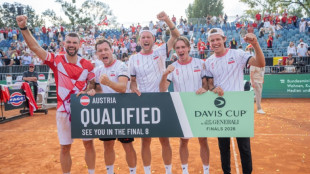 South Korea, Austria qualify for Davis Cup finals
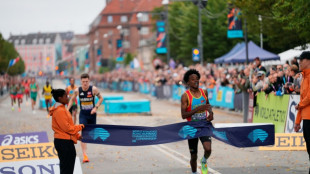 Seare shocks Ingebrigtsen to win world 5km gold
 Brigitte Bardot widower slams sale of star's belongings

 Aston Villa compound Tottenham's misery despite late rally
The sporting action gets under way at the Beijing Winter Olympics on Wednesday, two days before the opening ceremony of a Games overshadowed by diplomatic boycotts and concerns about human rights and Covid.
Added to the controversy are fears for the safety of Peng Shuai, warnings about snooping by the Chinese government and the environmental impact of an Olympics which will rely almost entirely on man-made snow.
Adopting the catchphrase "Together for a shared future", China, its ruling Communist Party and the International Olympic Committee hope all the rancour will be forgotten once the Games get into full swing.
China has been keen to stress that its capital will make Olympic history, becoming the first city to host both a Summer and Winter Games, and saying the Games will be "safe and splendid".
The Olympics officially launch on Friday but the sports start later Wednesday with mixed-doubles curling.
Beginning its journey to the "Bird's Nest" stadium for the opening ceremony, a low-key torch relay got going under blue skies despite earlier warnings about pollution.
If the 2008 Summer Games were the country's coming-out party, these Olympics will take place in a China under President Xi Jinping which is increasingly belligerent on the global stage and boasting the world's second-largest economy.
When Washington said it would stage a diplomatic boycott because of rights concerns -- with Australia, Britain and Canada among those following suit -- China warned the United States would "pay the price".
The Biden administration will not send diplomatic or official representation over what it called China's "ongoing genocide and crimes against humanity" against Muslim Uyghurs in the region of Xinjiang.
Athletes of the boycotting countries will compete at the Games, which run until February 20, but a US rights monitor sounded the alarm this week over athletes' safety after the hosts threatened "punishment" for anti-Beijing comments.
The Congressional-Executive Commission on China -- a group of Washington lawmakers and White House officials -- asked US Olympics authorities for an "urgent effort" to protect their stars if they speak out.
- Surveillance -
There are other controversies. IOC president Thomas Bach says that while in Beijing he will meet Peng, a Grand Slam-winning tennis player who alleged in November that she had been sexually assaulted by a former vice-premier.
Peng was not heard from for nearly three weeks, only to reappear, but there are concerns about how free she really is.
Fearing surveillance, some Western nations have told their athletes to leave their personal devices at home and use temporary burner phones.
There are signs that China is tightening the noose on anyone daring to spoil the party, with human rights activists and some academics having their WeChat messaging app accounts restricted in recent weeks.
Then there is the coronavirus. Last summer's pandemic-delayed Tokyo Olympics were in a "bubble" to thwart the virus, but it was more relaxed than the no-nonsense system in place in Beijing.
China, where the coronavirus emerged towards the end of 2019, has pursued a zero-Covid policy nationwide and is taking the same approach at the Olympics by cocooning all participants inside a "closed loop".
The highly infectious Omicron variant presents a new challenge, both to the Games and the country, putting already jittery authorities further on edge. Cases in Beijing have been ticking upwards, albeit from a low base number.
Organisers say they expect cases in the bubble -- nearly 250 have already been recorded -- but their goal is to keep the spread to a minimum.
They hope the bubble will be impregnable, keeping the nearly 3,000 athletes together with tens of thousands of support staff, volunteers and media cut off from the outside world.
China barred overseas spectators because of the pandemic but there will be a limited number of spectators and organisers say the venues could be up to 50 percent full.
- Face of the Games -
The Games will be held in three zones and make use of new venues and some from 2008, including the distinctive "Bird's Nest".
In addition to downtown Beijing, the two other areas are outside the capital and will rely on artificial snow to cover what would otherwise be brown mountainsides.
American ski ace Mikaela Shiffrin is chasing a third slalom gold, while Japan's Yuzuru Hanyu is looking to make it a hat-trick of figure-skating Olympic titles.
There will be huge interest in Chloe Kim, the American snowboarder who melted hearts when she won gold aged 17 at the Pyeongchang Olympics in 2018, while Eileen Gu looks like being the face of the Games.
The 18-year-old grade-A student, born and raised in California, switched from the United States to represent China and is hot favourite in freestyle skiing.
E.Paulino--PC
