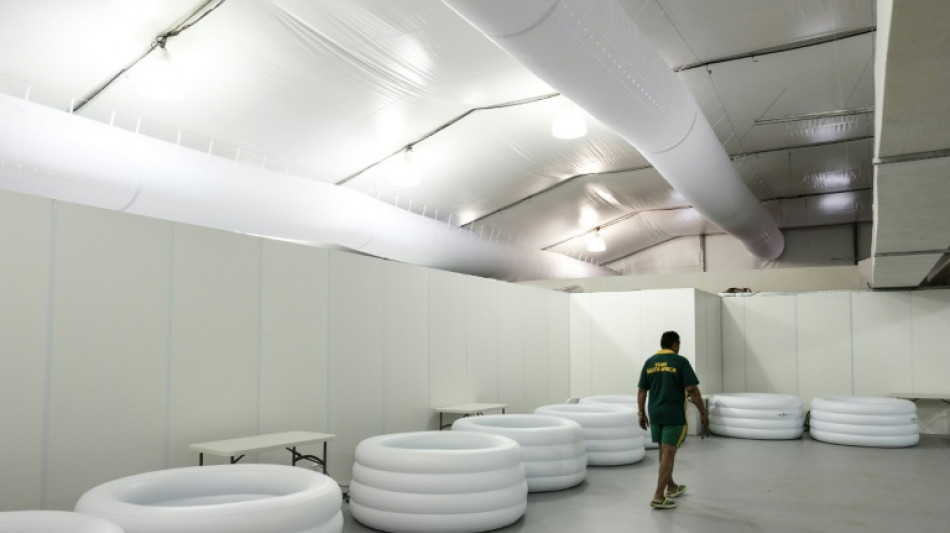
Client brain-dead after Paris cryotherapy session goes wrong / Photo: YASUYOSHI CHIBA - AFP

 Outgoing UN chief makes climate push at New York summit
 AI risks, Iran war to take center stage at UN

 Badminton no.1 An tells dad to keep it down at Asian Games

 Runaway leader Antonelli eyeing third straight win

 Schoolgirl Yu, 13, fastest again in bid for third Asian Games gold

 Oil prices fall after Trump hails 'good' talks with Iran

 AI political ads warp reality ahead of US midterms

 Kenneth Branagh embraces action hero role -- to get in shape

 'New one' Klopp promises fresh approach as Germany reign begins

 Milne returns to New Zealand squad for India T20 series

 US-led Americas coalition backs sanctions against crime groups

 'Star Wars' fans and art lovers line up for new Lucas museum

 Trump renames AI 'super intelligence' as leaders jostle over dangers

 Oil prices retreat as markets welcome US-Iran talks

 US refusing to give Sudan's de facto leader visa for UN: diplomatic sources, UN

 Macron urges world to choose UN over 'law of the jungle'

 All-rounder Jacks stars as England beat Sri Lanka in 1st ODI

 Man City peg back Bayern to start Women's Champions League

 Trump beats 'America first' drum at UN as allies tread carefully
 Snedeker backs Spaun for Ryder Cup after Presidents snub

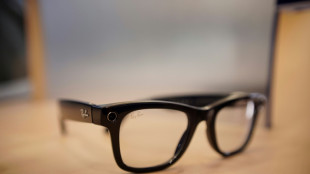 French prosecutors probe secret filming of women with smart glasses

 Trump renames AI "super intelligence," rejects international oversight

 Trump rejects international regulation of AI
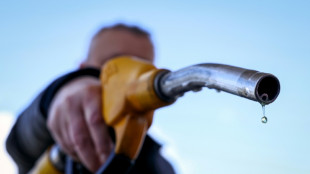 How is the EU approaching record fuel prices?

 Sri Lanka's Colombage strikes on debut as England dismissed for 265 in first ODI

A woman injured during a fatal cryotherapy session at a gym in France's capital earlier this week is now brain-dead, the prosecutor's office said Friday.
The client, in her early thirties, was admitted to hospital in a critical condition after the accident late Monday claimed the life of an employee in her late twenties.
The client has been brain-dead since Thursday, the Paris prosecutor's office said.
An autopsy on the first victim showed she suffocated due to a lack of oxygen, it added, which might confirm the theory of a nitrogen leak into the cryotherapy chamber.
Cryotherapy uses vaporised liquid nitrogen or nitrous oxide to lower the skin's surface temperature to below minus 100 degrees Celsius (minus 148 Fahrenheit) for a recommended time of no more than three minutes.
Nitrogen is a colourless, odourless gas. It makes up around 80 percent of the air we breathe, while oxygen accounts for 20 percent.
But a nitrogen leak in a closed space could lead to oxygen depletion.
Advocates say whole-body cryotherapy is effective in reducing muscle soreness, stress, rheumatism and various skin conditions -- like ice baths.
But many experts warn that the treatment has not been proven to be medically sound and are urging further research to determine the short- and long-term effects.
Cryotherapy sessions came under scrutiny in the United States in 2015 after a woman froze to death at a Las Vegas spa.
The 24-year-old woman was believed to have entered one of the spa's cold chambers after business hours to relieve some aches, and was discovered the next day by a co-worker.
J.Pereira--PC