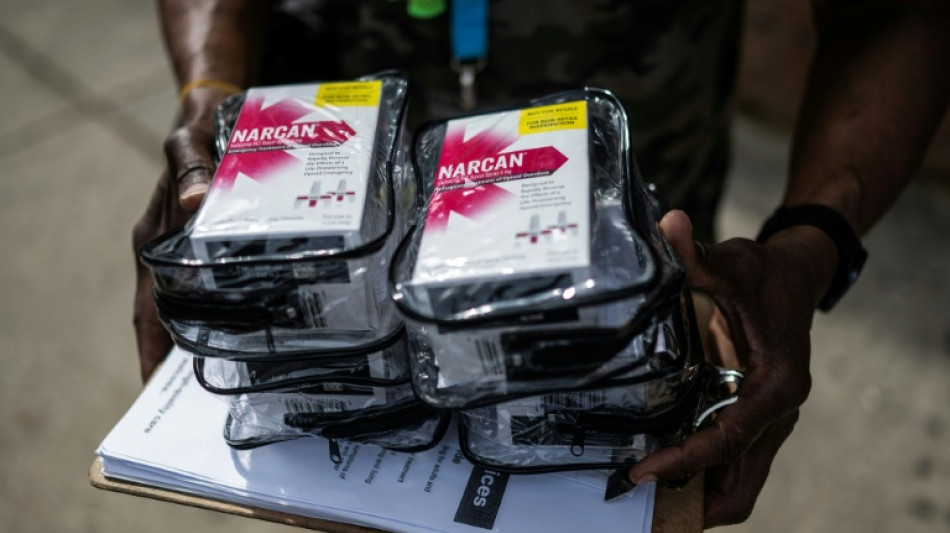
US overdose capital Baltimore on long road to recovery / Photo: ANDREW CABALLERO-REYNOLDS - AFP

 Hurricane Polo strengthens to top category 5 off Mexico

 11 hurt as teen opens fire outside school in western Turkey

 UN chief says 'Big Oil' treats atmosphere as open sewer

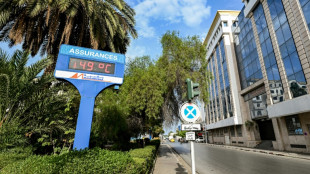 Tunisia says 2026 summer hottest on record

 England's Rashid out of Sri Lanka ODIs with hand injury

 Houthis accuse Saudi Arabia of deadly strikes as thousands flee

 Stocks climb as oil slides, AI buzz returns

 India cricketers win in style as Afghan savours 'special' Games silver

 La Liga president hits out at Real Madrid refereeing 'conspiracy' claims

 MEXC Launches “Real Stocks, Real Friends” with Rewards for Bringing Friends to Wall Street

 Mbappe continues media push for Ballon d'Or recognition

 Stocks rise on AI buzz, oil prices cool

 India narrowly survive huge scare against minnows Japan

 Missing F-35 fighter parts 'not sensitive', says Australia minister

 Cambodia showcases scams crackdown with global conference

 Afghan cyclist who disguised herself as man wins Asian Games silver

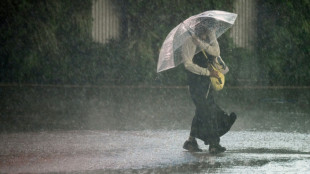 Typhoon Dujuan leaves four dead in Japan, 45,000 houses without power

 G7 leaders condemn Houthi strikes on Saudi Arabia
 Google data centre sparks protests in Austria

 Shin Ohashi: Junk food-loving teen and Japan's next big swimming hope

 Stocks rise on AI buzz, drop in oil prices

 China's robot dancers limber up for America's Got Talent final

 Despite military might, Saudi struggles to crush the Houthis
 Trump to tout deals, defend Iran war in UN speech
 Sri Lanka to issue verdict in landmark Easter attack trial

Carrying a bag filled with the overdose-reversing drug naloxone, Adam Trionfo roams the brick-lined streets of one of America's oldest port cities, Baltimore.
The 40-year-old and his small team visit neighborhoods considered "hot spots" for drug trafficking to hand out the precious antidote, sold under the brand name Narcan.
The easy-to-use nasal spray has become a key tool in the fight against the deadly US opioid crisis, claiming 750,000 lives between the late 1990s and 2022.
"Just over the past week, we distributed 200 Narcan kits," Trionfo, who oversees an addiction assistance program with the local branch of Catholic Charities, told AFP.
On their route, the team spots a man sprawled out amid a pile of rubbish in the corner of a stairwell. They hand him a box of Narcan and a brochure about their organization.
The man takes it with one hand, as he awkwardly hides a syringe behind his back.
Their last Narcan kit goes to another man, legs covered in brown scars, who is waiting near a dilapidated building.
These scenes are not uncommon in this East Coast city, which is located about 50 kilometers (31 miles) from Washington and is renowned for endemic crime.
Baltimore was the setting of the hit television series "The Wire" in the early 2000s, depicting its burgeoning drug scene from a variety of angles.
And last year, the New York Times dubbed the city the "American overdose capital."
Between 2018 and 2022, the drug-related mortality rate was nearly twice as high as in any other major American city. The leading killer: fentanyl.
- 'Tremendous efforts' -
Since the height of the opioid crisis in 2021, the outlook has improved in much of the country, including in Baltimore.
The number of fatal overdoses in the city plummeted by 35 percent last year, to 680 down from 1,043 in 2023.
The city's proactive policies, coupled with preventative work done by Catholic charities in Baltimore's communities have helped make a dent in the problem.
"We've had tremendous efforts throughout the city to get people into treatment, and then we've also had tremendous efforts in getting Naloxone out there," said Michael Fingerhood, head of addiction medicine at Johns Hopkins Bayview Medical Center.
Distributed broadly for about a decade, Narcan has worked like a "fire extinguisher," Fingerhood said.
In Baltimore, Narcan is now available everywhere: pharmacies, vending machines throughout the city, even in libraries.
- Funded by restitution -
The drop in mortality in Baltimore is also linked to the composition of the fentanyl being sold there, Fingerhood said.
"The drug supply has less potent fentanyl and has additives that are less likely to cause overdose."
Awareness of the risks associated with the powerful synthetic opioid has also grown among users, pushing them to be more "cautious," said Bakari Atiba, community engagement director at Charm City Care Connection.
The nonprofit assists addicts in Baltimore -- known as Charm City -- and recently received funding from a restitution program fueled by lawsuits against opioid manufacturers and distributors.
"I'm not saying people are going to stop using," Atiba said. "That's not even our goal."
"It's about meeting people where they are, making sure they're safe, making sure they're supported, and making sure they have pathways to recovery if they want it."
A.P.Maia--PC