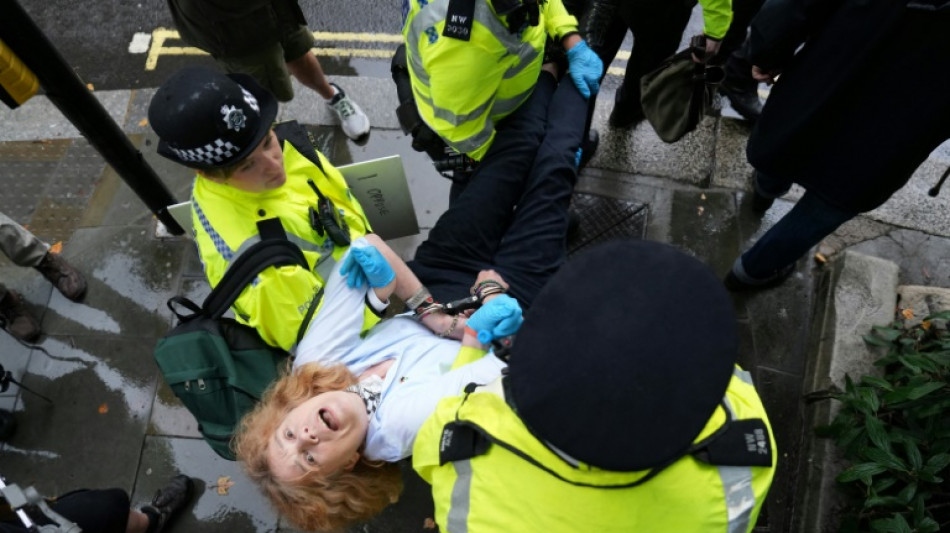
Palestine Action wins bid to challenge terror ban in London court / Photo: CARLOS JASSO - AFP

 China and Gabon Elevate Ties to 'Shared Future' Amid State Visit

 World Golf Awards 2026 to be Hosted at Egypt’s Madinaty Golf Club

 12 Billion Gallons of Raw Sewage Discharged into Chicago River Despite Deep Tunnel Infrastructure

 Edmund Richardson Wins Baillie Gifford Prize for 'Alexander' Biography

 BYD Drops Rotating Screens in New Models Due to Tech Limits
The co-founder of pro-Palestinian activist group Palestine Action can launch a court bid to overturn the UK government's decision to ban the group under anti-terrorism laws, a judge ruled Wednesday.
The government earlier this month banned the group days after activists broke into an air force base in southern England.
Prosecutors have said they caused £7 million ($9.3 million) of damage to two aircraft at the base.
Being a member or supporting the group is now a criminal offence punishable by up to 14 years in prison.
Co-founder Huda Ammori asked a judge to allow her to launch a High Court challenge over the ban, calling it an attack on free speech.
And judge Martin Chamberlain on Wednesday ruled that it was "reasonably arguable" that the ban amounted to a "disproportionate interference" of Ammori's right to freedom of expression and freedom of assembly.
He also said the claim that the government was "in breach of natural justice" by failing to consult the group beforehand was also "reasonably arguable".
Police have arrested over 100 people in London and other cities for supporting Palestine Action during protests over the government's decision to ban the activist group.
Since the Palestine Action ban kicked in on July 5, police have warned that expressing support for the group was now a crime, after a last-ditch High Court challenge failed to stop its proscription becoming law.
C.Cassis--PC