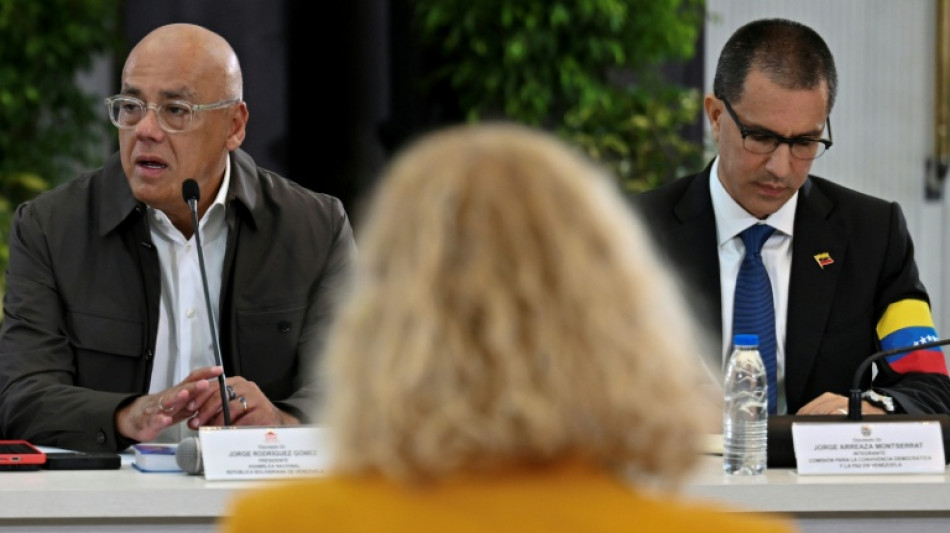
Venezuela amnesty bill excludes gross rights abuses under Chavez, Maduro / Photo: Juan BARRETO - AFP

 Germany's Merz vows to stay course despite new vote losses

 Man City outgun Sunderland despite Brobbey hat-trick, Man Utd rescue Fulham draw

 Mourinho blames ref committee for Real Madrid derby defeat

 Maresca craves a 1-0 win after eight-goal Man City thriller
 Atletico Madrid beat Real Madrid in tense derby clash
 Reusser retains world time-trial title

 Man City outgun Sunderland despite Brobbey hat-trick, Liverpool win at Bournemouth

 Top US, Chinese economic officials meet ahead of Trump-Xi summit
 Erdogan's LGBTQ crackdown 'first step of election campaign': activist

 Mass drone barrage on Moscow kills two

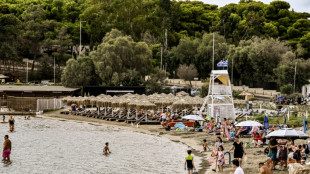 82-year-old dies after beach fight in Greece over sun lounger

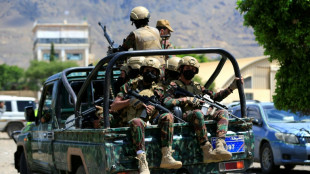 US warns of rapid escalation in Mideast war

 Iran 'put hearts on the court' to win Asian Games basketball bronze

 School girl Yu helps China dominate in Asian Games swimming openers

 Myanmar win first Asian Games teqball gold as Spain great Puyol watches

 China's 13-year-old Yu scorches to first major gold at Asian Games

 Russians vote on last day of parliamentary elections

 Hong Kong pays final respects to former city leader Tung

 Typhoon put people off Asian Games opening ceremony, official says

 China's 13-year-old Yu cruises as Asian Games swimming begins

 AI 'warning shots' focus Beijing on national security risks

 Philippine tribe in limbo over US-led tech hub

 Leo XIV, first US pope transcends his restrained style

 Singer Ed Sheeran says Gaza situation 'unjustifiable' following controversy

 In 'Tenzing', a Sherpa mountaineer gets his due

Venezuelan MPs on Thursday started examining an amnesty bill which will cover "treason" and other charges used to lock up dissidents, but not "serious violations" committed over 27 years of socialist rule, a draft showed.
The bill is an initiative of interim president Delcy Rodriguez, who stepped into the shoes of long-term leader Nicolas Maduro after he was deposed in a US military operation one month ago.
Rodriguez, who has been working with US President Donald Trump on access to Venezuelan oil, has been under pressure to end a system of repression that saw hundreds of government critics thrown in jail.
The "Amnesty Law for Democratic Coexistence," of which AFP obtained a copy, covers "treason," "terrorism" and spreading "hate" -- charges frequently used in the past to imprison dissidents.
Significantly, it lifts bans on several opposition members, including Nobel Peace laureate Maria Corina Machado, from running for office.
It covers events such as the failed 2002 coup against then-president Hugo Chavez, various cycles of protests between 2004 and 2024, and it ends sanctions for criticism posted on social media or messaging services.
"It is recognized that it is important not to impose vengeance, retaliation or hatred, but to open a path toward reconciliation," said the text.
While warning against a desire for vengeance, the bill does not grant amnesty for serious rights abuses committed under the administration of Maduro and his firebrand predecessor, Chavez.
"Excluded from its benefits" are offenses such as "serious violations of human rights, crimes against humanity, war crimes, intentional homicide, corruption, and drug trafficking," which, under the constitution, cannot be included in a pardon or amnesty.
It does however cover unspecified "offenses" committed by judges, prosecutors and other officials.
- Turning the page -
The announcement last week of the amnesty bill triggered scenes of rejoicing across Venezuela, fueling hopes for the speedy release of hundreds of political prisoners still languishing in prison a month after Maduro's ouster.
The director of the country's leading human rights NGO, Foro Penal, welcomed the draft law as a major step towards reconciling a deeply divided country.
"Amnesty is the framework that will ensure... that the past does not serve to halt or derail transition processes," Alfredo Romero told AFP.
Responding to fears expressed by some Venezuelans that its wording is vague enough to pardon crimes committed by "Chavismo" -- the hardline socialist policies of Chavez and Maduro -- he said: "A reconciliation, a transition, cannot be a process of persecution against those who previously held power."
- 'Forceful message' -
The head of Venezuela's parliament Jorge Rodriguez -- the interim president's brother and a staunch Chavista -- said Wednesday he hoped the law would "send a powerful, forceful message of the intention of a new political moment."
The Socialists have an absolute majority in the unicameral parliament, meaning the bill is expected to easily pass.
The start of the parliamentary debate coincided with a new round of talks between the government and a faction of the Venezuelan opposition that has distanced itself from a majority wing led by Machado, a Nobel Peace prize laureate.
The opposition is seeking fresh elections to replace those held in July 2024, and which Maduro claimed to have won despite no official figures ever being released. Much of the world considers he stole the vote.
Maduro acolytes were left in power after American troops whisked him away in cuffs to stand trial on drug charges in New York.
But Delcy Rodriguez's government has come under pressure from the United States, which has agreed to work with her in the short term while speaking of an eventual transition to democracy.
Rodriguez, despite being a close Maduro ally, has indicated a willingness to cooperate.
Her government has released hundreds of political prisoners and taken steps towards restoring diplomatic ties with Washington, which were severed in 2019.
V.Fontes--PC