Race to find port for hantavirus-stricken cruise ship / Photo: Handout - World Health Organization/AFP

 Germans vote in elections threatening fresh blow to Merz

 US fears rapid escalation in Mideast after Houthis attack Riyadh

 Japan triathlete Hojo wins first gold of Asian Games

 IOC president impressed by 'beautiful' Asian Games wooden huts

 First Asian Games gold goes to Japan as China's 13-year-old Yu lights up pool

 Data centre command hub keeps AI up and running

 Pope Leo in France: the issues on the table

 Packing for a pope: behind the scenes on foreign trips

 Republicans find transgender issues a powerful political weapon in midterm campaigning

 German state elections threaten new shock waves for Merz

 Chile's Bachelet quits race to be next UN chief

 Raphinha treble fires perfect Barca to win at Sevilla

 Thiam makes winning heptathlon return at Decastar meet

 Czechs beat USA to qualify for Davis Cup finals

 Dortmund sink Stuttgart to climb to Bundesliga summit

 Trump says will not tolerate attempts to slow AI growth

 'It has to stop': runners protest women's murders in S.Africa district

 Fire erupts near Riyadh airport as Houthis claim strikes

 Cuba works to restore power after another blackout

 England thrash Sri Lanka again to return to top of T20 rankings

 Arsenal thrashed by Brighton, sorry Spurs lose again

 South Korea, Austria qualify for Davis Cup finals

 Seare shocks Ingebrigtsen to win world 5km gold

 Brigitte Bardot widower slams sale of star's belongings

 Aston Villa compound Tottenham's misery despite late rally

Health authorities were racing to find a port for a cruise ship battling a suspected hantavirus outbreak Tuesday, as it remained off Cape Verde with passengers isolating after three people died.
The MV Hondius will head to Spain's Canary Islands, the World Health Organization said, though Spanish authorities said no decision would be made on which port would receive the ship until epidemiological data on board had been analysed.
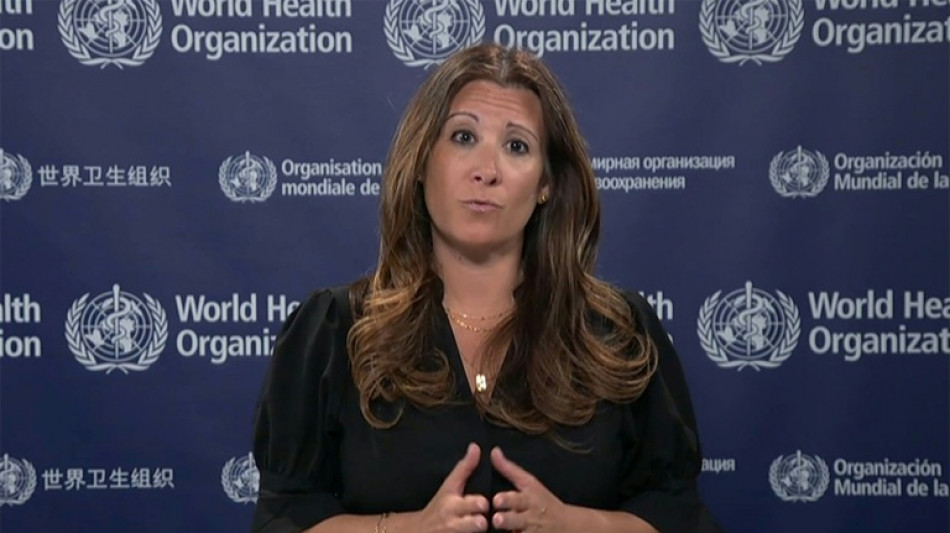
The priority is to evacuate two crew members who require urgent care -- potentially to the Netherlands -- and "then the ship can move", the WHO epidemic and pandemic preparedness and prevention director Maria Van Kerkhove told reporters in Geneva.
So far, two hantavirus cases have been confirmed and there have been five other suspected cases among the 147 people who were on the cruise from Ushuaia in Argentina to Cape Verde off west Africa, the WHO said.
Three of those people had died, while one was critically ill and three others had reported mild symptoms, it said.
Two of those who had died and one who was sickened had left the ship, with one woman flying to Johannesburg before dying on April 26, spurring a search for people she may have come in contact with on the flight.
Passengers and crew have meanwhile been in isolation on the Hondius, operated by Dutch company Oceanwide Expeditions, after Cape Verde authorities barred the ship from docking.
- Human-to-human transmission? -
The WHO is working with Spanish authorities who "have said that they will welcome the ship to do... a full epidemiologic investigation," Van Kerkhove said.
They would also conduct a "full disinfection of the ship and of course, to assess the risk of the passengers that are actually on board," she added.
Spain's health ministry said a decision on where to send the boat would be taken based "on the epidemiological data collected from the ship during its stopover in Cape Verde".
The United Nations' health agency was scrambling for answers about how hantavirus had emerged on the Hondius, which set off from from Ushuaia on April 1.
Human hantavirus infection is a rare but potentially deadly disease that is primarily spread via infected rodents, the WHO said.
However, human-to-human transmission has also been reported in previous outbreaks involving one specific species of hantavirus called Andes virus, which circulates in South America.
Van Kerkove said the species of virus had yet to be confirmed.
"The sequencing is currently under way by the South Africans, and we hope to have a result soon," she said, adding though that "our working assumption is that it is the Andes virus".
Although investigation was required, she said "we do believe that there may be some human-to-human transmission that is happening among the really close contacts".
- Contact-tracing -
Among those close contacts was likely the first two people to die: a Dutch couple -- a husband who died on board on April 11 and his wife who died after she disembarked the boat in Saint Helena to accompany his body.
The WHO said that the wife, who left the ship with her dead husband on April 24, had been suffering from "gastrointestinal symptoms".
"She subsequently deteriorated during a flight to Johannesburg" on April 25, it said, adding that she died a day later.
Now, Van Kerkhove said, "contact tracing has been initiated" for anyone the woman may have come in contact with on the flight.
She stressed that human-to-human transmission of hantavirus typically only happened "among very close contacts".
Passengers from Britain, Spain and the United States, as well as crew from the Philippines, were among 23 nationalities aboard the MV Hondius.
The ship's operator said a British passenger was in intensive care in Johannesburg. The two crew members needing urgent care were British and Dutch, it said.
- Likely infected off-ship -
Van Kerkhove said the typical incubation period for the hantavirus was between one and six weeks, leading the WHO to believe that the Dutch couple, who had joined the boat in Argentina, "were infected off the ship".
The Hondius, she highlighted, was an expedition vessel, with passengers going ashore on a number of islands in the Atlantic Ocean to do birdwatching and other activities -- meaning there could be "some source of infection on the islands".
The WHO has the risk to the global population from outbreak as "low".
L.Carrico--PC