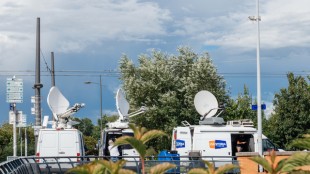
Natural disasters caused $135 bn in economic losses in first half of 2025: Swiss Re / Photo: JOSH EDELSON - AFP/File

 China and Gabon Elevate Ties to 'Shared Future' Amid State Visit

 World Golf Awards 2026 to be Hosted at Egypt’s Madinaty Golf Club
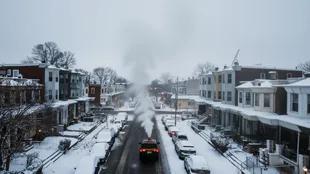
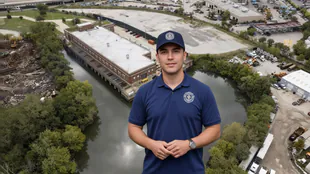 12 Billion Gallons of Raw Sewage Discharged into Chicago River Despite Deep Tunnel Infrastructure

 Edmund Richardson Wins Baillie Gifford Prize for 'Alexander' Biography

 BYD Drops Rotating Screens in New Models Due to Tech Limits
Natural disasters caused $135 billion in economic losses globally in the first half of 2025, fuelled by the Los Angeles wildfires, Swiss Re said Wednesday.
Swiss Re, which serves as an insurer of insurance companies, said first half losses were up from the $123 billion in the first half of 2024.
The Zurich-based reinsurance giant estimated that of this year's first half losses, $80 billion had been insured.
The Los Angeles blazes in January constitute the largest-ever insured wildfire loss event by far, reaching an estimated $40 billion, said Swiss Re.
It said the "exceptional loss severity" of the fires was down to prolonged winds, a lack of rainfall and "some of the densest concentration of high-value single-family residential property in the US".
The March earthquake in Myanmar figured among the major natural disasters in the first six months of the year, with the tremors felt in neighbouring Thailand, India, and China.
In Thailand alone, insured losses reached $1.5 billion.
The second half of the year is usually more costly for insurers due to damage during the North Atlantic hurricane season.
"The strongest lever to increase the resilience and safety of communities is to double down on mitigation and adaptation. It's here that everyone can help reduce losses before they occur," said Swiss Re's group chief economist Jerome Haegeli.
"While mitigation and adaptation measures come at a price, our research shows that, for example, flood protection measures such as dykes, dams and flood gates are up to 10 times more cost-effective than rebuilding."
L.Torres--PC