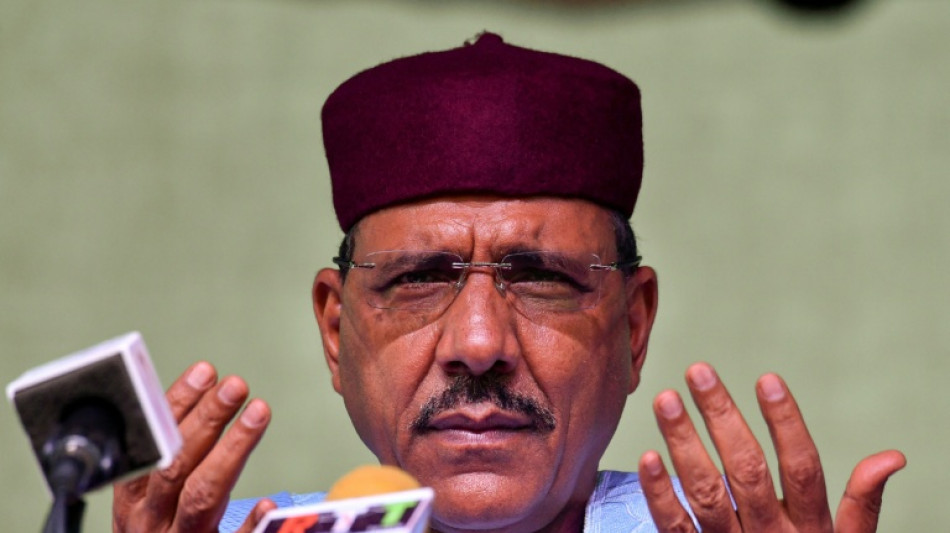
Deposed and detained: Niger president's fate unclear nearly three years on / Photo: Issouf SANOGO - AFP/File

 Piracy attacks off Somalia surge in 2026: AFP analysis of IMO data
 Tottenham land Marmoush from Manchester City

 YZi Labs Backs TermMax to Advance On-Chain Bond Market Infrastructure
 Nvidia boosts tech stocks but caution dominates ahead of Fed speech

 Pogacar holds off Mas to claim Vuelta stage six victory

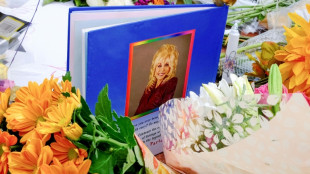 A lasting Dolly Parton legacy: childhood literacy

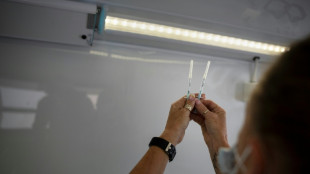 S.Africa sounds alarm as infant vaccinations plummet
 Toulouse have salary cap fine reduced on appeal
 Tech stocks lifted by Nvidia but caution dominates ahead of Fed speech
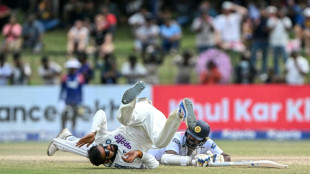 'Smart cricketer' Dinusha helps Sri Lanka draw second India Test
 Zambia opposition leader surrenders to police: state media

 Alleged 9/11 mastermind to go on trial in June 2028
 Abbas's treble strike rocks England in second Test
 'Butcher of Bosnia' Ratko Mladic dead: Serbian state media

 New Zealand make three changes for second South Africa Test
 Stocktwits Expands CME Group Alliance with the Integration of Single Stock Futures Data

 'Mature' Colapinto extends contact with Alpine through 2027

 Atletico rule out any talks with Barcelona over Alvarez
 Tech stocks lifted by Nvidia as broader markets struggle
 Delap joins Nottingham Forest in club-record deal
 ICC President Akane Warns U.S. Sanctions Threaten Court's Future
 Delays in Cancer Radiotherapy and Surgery Target Times
 Acrid stench, charred walls reveal devastation of Pakistan infant ward fire
 Norway holds its breath as King Harald's health deteriorates
 Germany reports record 15,800 heat-related deaths this summer
The presidential term of Niger's overthrown leader Mohamed Bazoum officially ends Thursday, but he faces little prospect of freedom from detention or even a trial, making what comes next uncertain.
Bazoum, 66, was sworn in as president on April 2, 2021 after democratic elections in which he won 55 percent of the vote.
He has been held in a wing of the presidential palace in Niamey with his wife since the junta led by general Abdourahamane Tiani seized power in the west African country on July 26, 2023.
Since being toppled he has refused to step down.
His lawyers argue that April 2 should no longer mark the formal end of his term in office, given he has not been allowed to carry out the role for nearly three years.
"His term was interrupted and did not resume. If Mr Bazoum returns to power tomorrow, the duration of his detention will not be taken into account in the exercise of his duties," Moussa Coulibaly, a member of a lawyers' collective representing Bazoum, told AFP.
Political researcher Valery Ntwali, who specialises in sub-Saharan coups d'etat, said that, based on Niger law, the deposed head of state had however "lost his legality since the constitution on which he was elected was suspended".
The junta halted the constitution and replaced it with a charter adopted in March last year that allows it to stay in power for another -- and renewable -- five years. No elections have been held since the coup.
It remains unclear which law prevails -- that of the military junta that took power by force, or the one in place before the putsch.
"There's no international authority imposing its view. Rather, there are national authorities who will negotiate with the junta and others that do not recognise it," Ntwali said.
- 'Failure' -
While Niger's junta -- like those in its neighbours and allies Burkina Faso and Mali -- has made sovereignty its watchword and has adopted a hostile stance towards some Western nations, it is not entirely isolated on the international stage.
It recently resumed contact with the United States on security cooperation, two years after forcing US soldiers involved in the anti-jihadist battle to leave Niger, while forging closer ties with Russia.
Ties remain cool with former colonial power France, which was swift to call for Bazoum's release, while relations with the European Union are similarly testy.
The European Parliament earlier this month adopted a resolution demanding the immediate release of Bazoum, prompting anger from the Sahelian juntas and demonstrations in both Niamey and to a smaller extent in Ouagadougou.
"It's a failure on the part of the international community, I don't know how we were unable to secure the release of this democratically elected president," French MEP Christophe Gomart, who initiated the resolution at the European Parliament, said.
"Europe carries weight in Africa, it gives money to a number of African countries; the European Union should have exerted pressure," said Gomart, a general and former commander of French special operations including in the Sahel.
The European Union helps fund development programmes and the battle against jihadists, who for years have waged violence in Sahelian countries, including regularly striking in Niger.
Bazoum's presidential immunity was lifted in 2024 but his lawyers believe it unlikely that the official end of his term in office will accelerate him being put on trial.
"For the junta, it's less a question of law than security: what matters to them is that president Bazoum serves as a human shield" in the event of a possible armed intervention, as was once weighed by west African countries, another of his lawyers Mohamed Seydou Diagne said.
After nearly three years, Bazoum is "still held in the same place and in the same conditions" with no windows, doors or visits apart from his doctor, Coulibaly, the lawyer, said.
P.Mira--PC