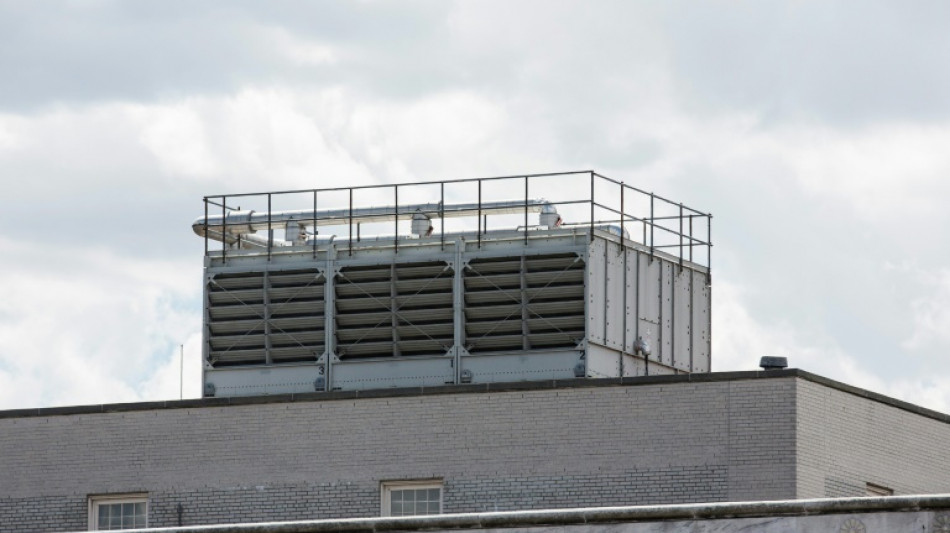
NYC Legionnaires' disease outbreak kills 5 / Photo: Andrew Burton - GETTY IMAGES NORTH AMERICA/AFP/File

 China and Gabon Elevate Ties to 'Shared Future' Amid State Visit

 World Golf Awards 2026 to be Hosted at Egypt’s Madinaty Golf Club

 12 Billion Gallons of Raw Sewage Discharged into Chicago River Despite Deep Tunnel Infrastructure

 Edmund Richardson Wins Baillie Gifford Prize for 'Alexander' Biography

 BYD Drops Rotating Screens in New Models Due to Tech Limits
An outbreak of Legionnaires' disease in New York City's Harlem neighborhood thought to have originated in contaminated cooling towers has killed five people and put 14 in the hospital, health officials said on Monday.
"The NYC Health Department is currently investigating a community cluster of Legionnaires' disease in Central Harlem," the New York City health department said in a statement.
"As of August 18, there are 108 confirmed cases, five deaths, 14 currently hospitalized."
Legionnaires' disease, which is not directly contagious from person to person, is caused by bacteria that can multiply in water and air conditioning systems.
Spreading through contaminated droplets, the bug can cause fever and pneumonia, especially among people with weak immune systems.
The disease takes its name from the first known outbreak, which occurred in 1976 at a hotel in Philadelphia where the American Legion military veterans' association was holding a conference.
More than 220 people fell ill, of whom 34 died.
"The Health Department has sampled and tested water from cooling towers in the investigation zone. Any cooling towers with initial positive results for Legionella bacteria have completed the treatment required by the Health Department," New York's health department said in its statement.
"This community outbreak is not related to a building's hot or cold water supply."
Nogueira--PC