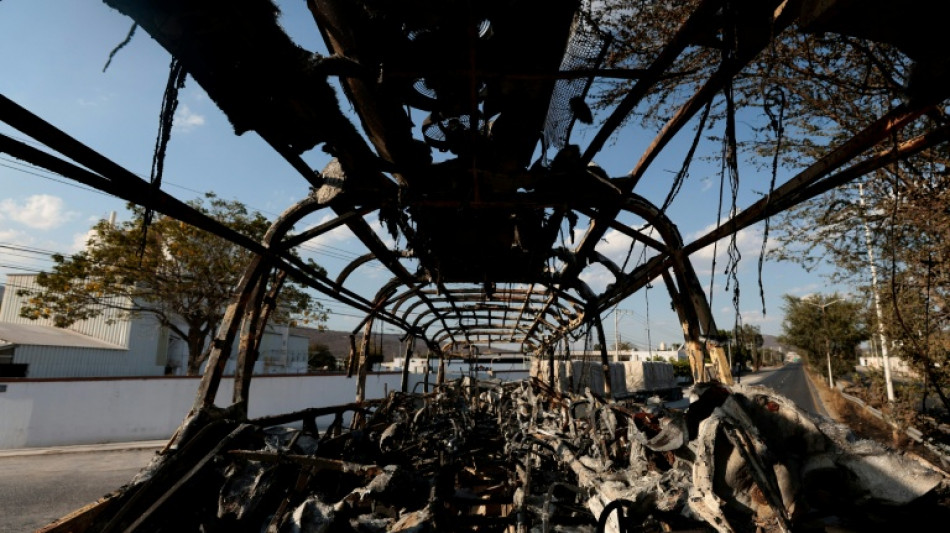
Nemesio Oseguera, the brutal Mexican drug lord known as 'El Mencho' / Photo: Ulises Ruiz - AFP

 Germany's Merz vows to stay course despite new vote losses
 Man City outgun Sunderland despite Brobbey hat-trick, Man Utd rescue Fulham draw

 Mourinho blames ref committee for Real Madrid derby defeat
 Maresca craves a 1-0 win after eight-goal Man City thriller

 Atletico Madrid beat Real Madrid in tense derby clash
 Reusser retains world time-trial title

 Man City outgun Sunderland despite Brobbey hat-trick, Liverpool win at Bournemouth

 Top US, Chinese economic officials meet ahead of Trump-Xi summit
 Erdogan's LGBTQ crackdown 'first step of election campaign': activist

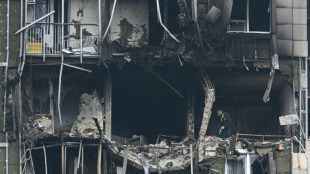 Mass drone barrage on Moscow kills two

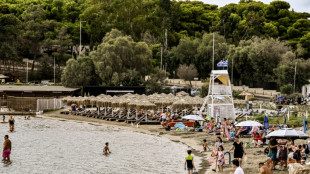 82-year-old dies after beach fight in Greece over sun lounger

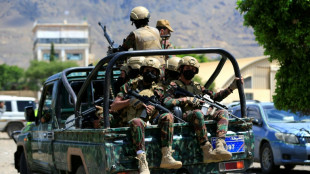 US warns of rapid escalation in Mideast war
 Iran 'put hearts on the court' to win Asian Games basketball bronze

 School girl Yu helps China dominate in Asian Games swimming openers

 Myanmar win first Asian Games teqball gold as Spain great Puyol watches

 China's 13-year-old Yu scorches to first major gold at Asian Games

 Russians vote on last day of parliamentary elections

 Hong Kong pays final respects to former city leader Tung

 Typhoon put people off Asian Games opening ceremony, official says

 China's 13-year-old Yu cruises as Asian Games swimming begins

 AI 'warning shots' focus Beijing on national security risks

 Philippine tribe in limbo over US-led tech hub

 Leo XIV, first US pope transcends his restrained style

 Singer Ed Sheeran says Gaza situation 'unjustifiable' following controversy

 In 'Tenzing', a Sherpa mountaineer gets his due

Nemesio Oseguera, the head of Mexico's Jalisco New Generation Cartel (CJNG) who was killed by the army on Sunday, challenged the state like few others in his bid to consolidate power.
Nicknamed "El Mencho", the 59-year-old and his cartel ambushed police officers, attacked the capital's security chief on his home turf and even shot down a military helicopter.
Oseguera was considered the last of the drug lords who acted in the flashy, brutal mold of the now-imprisoned Joaquin "El Chapo" Guzman and Ismael "El Mayo" Zambada.
The United States had listed him as its most-wanted drug trafficker, offering a $15 million reward for his capture.
Oseguera was born in Aguililla, a town in the western Mexican state of Michoacan, the gateway to a harsh mountainous region where illegal marijuana plantations flourished in his childhood.
As a young man, he emigrated to the United States, where he was arrested, jailed and deported for heroin trafficking.
On returning to Mexico, he joined the Milenio criminal cartel. Infighting later forced him out of Michoacan, as one faction allied itself with Los Zetas, a group founded by former elite soldiers who imposed terror across the region.
- 'Violent nature' -
Oseguera took refuge in neighbouring Jalisco state. In 2009, with the Sinaloa cartel, he formed the Matazetas -- "Zeta Killers" -- which rose to notoriety two years later with the slaying of dozens of people with ties to that group.
Oseguera later broke away to found the CJNG. After the extradition of Guzman and Zambada to the United States, he transformed his cartel into the most powerful in Mexico.
The group maintained a vast network of hitmen -- even making its own weapons -- and expanded into several Mexican states.
Last year, the US State Department designated the CJNG as a terrorist organization, accusing it of illegal fentanyl and migrant trafficking, extortion, oil and mineral theft, and arms dealing.
Jose Reveles, a writer specializing in the drug trade, told AFP that Oseguera had a "violent nature" and did not shy away from challenging all levels of government, unlike other cartels, which tended to use violence defensively.
In 2020, Oseguera ordered an unprecedented attack on the then-chief of the Mexico City police, Omar Garcia Harfuch, wounding him and killing three others. Garcia Harfuch is now the country's head of public security.
During a wave of terror in Jalisco in 2015, CJNG gunmen ambushed members of the national gendarmerie and a state police convoy on a highway, using an RPG to shoot down a military helicopter.
Dozens of people were killed, including 20 police officers and nine soldiers.
- Opening markets -
Oseguera carved a path to power through violence and bloodshed, but for a long time he could not compete with the cartels that controlled the border region with the United States.
Instead, he targeted other markets and diversified his drug offerings.
"Europe, Asia, Africa and even Australia were less contested by Mexicans, and they pay more for drugs there," said Reveles.
Oseguera maintained a low profile for years, though he appeared on screen at two music concerts last year.
"He was very careful not to appear in public, and little is known about his life," said Reveles.
Few photos of Oseguera are in circulation. On the US State Department's reward card, he appears with a sharp face, neatly combed hair and a thin mustache.
But in a 1989 profile by the US Drug Enforcement Administration, he has frizzy hair and rougher features.
Oseguera married Rosalinda Gonzalez Valencia in the 1990s, and the couple had three children before divorcing.
Gonzalez Valencia was released from prison last year after reportedly serving time for suspicious payments related to a car wash she owned. Her current whereabouts are unclear.
Eldest son Ruben Oseguera Gonzalez, known as "El Menchito", was jailed for life by the United States last year on drug- and firearms-related crimes.
F.Ferraz--PC