
Blow to Italy's Meloni as she suffers referendum defeat / Photo: Stefano RELLANDINI - AFP

 Birmingham City Seek First Championship Win Against Wrexham

 Four-wicket Robinson stars as Pakistan collapse in second Test

 Alcaraz anxious after layoff but feels 'great' about wrist

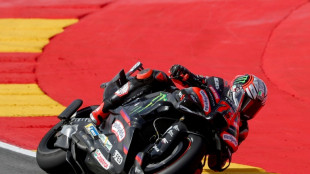 Bezzecchi edges Marquez brothers in blazing Spanish MotoGP practice

 Ukraine opposes reintegration of Russia to motorsport

 The chaotic saga of Kanye West's planned Russian concerts

 Missing soar over 2,400 after deadly Nepal, China floods

 India Orders Wind Turbine Makers to Report on Data Localization for Cybersecurity

 Leknessund breaks away to win emotional Vuelta stage seven

 Four-wicket Robinson stars as Pakistan all out for 110 in second Test

 Fed chair Warsh signals 'work to do' on high US inflation

 Watkins's legacy at Villa untarnished, says Emery as Jackson arrives

 Spurs boss De Zerbi targets one more big signing before window shuts

 Fed chair Warsh flags high US inflation as 'concerning'

 Same Election Question, Two Different Odds: Predictions.io Launches Free Cross-Venue Comparison Tools

 Man Utd new signing Baleba sidelined for three weeks

 Juve's Yildiz to miss 'several months' with foot injury

 Celine Dion arrives in France ahead of sold-out comeback dates

 All-round Tongue stars for England in second Test against Pakistan

 UEFA's legal move 'massive escalation' in bitter Infantino feud

 MEXC Launches Earn Plus With Limited-Time Event Offering Up to 800% APR Booster

 Norway's new King Haakon VIII, popular face of shaken monarchy

 Stocks rise ahead of Fed chair's policy speech

 Norway's new King Haakon VII, popular face of shaken monarchy

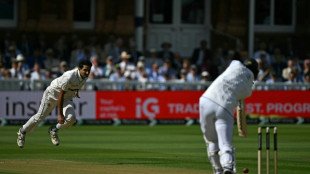 Last-wicket duo take England to 290 all out in 2nd Test against Pakistan

Italian Prime Minister Giorgia Meloni conceded defeat on Monday in a referendum on justice reform, but despite the major blow to her far-right leadership, she insisted she was going nowhere.
With almost all ballots counted from the Sunday-Monday vote, the "No" camp was at almost 54 percent, compared to just over 46 percent for "Yes", according to official figures.
During the campaign, Meloni had insisted the referendum, which concerned the role and oversight of judges and prosecutors, was not about her own leadership of the government.
And she repeated this Monday, saying "the Italians have decided", but adding that "this does not change our commitment to continue".
Yet she had forcefully campaigned for the proposals, alongside her coalition partners in the hard-right government, while the opposition parties had fought for a "No".
Daniele Albertazzi, a professor of politics at the UK's University of Surrey told AFP it was a "bad, bad result" for Meloni.
"It means she has lost the Italian electorate on a major issue in her manifesto, and one of the key proposals of the right... for the past 30 years," he said.
It is the first such setback for Meloni, who has led an uncharacteristically stable coalition government since October 2022 and faces parliamentary elections next year.
"If the centre-left gets its act together, this is going to help them. Because it means that her image as unbeatable is not there any more," Albertazzi said.
Turnout was relatively high for a referendum, at almost 59 percent.
- 'Eviction notice' -
The referendum, voted Sunday and Monday, sought to separate the role of judges and prosecutors and change their oversight body in what the government cast as necessary measures to ensure impartiality in the courts.
But critics said it was an attempt to exert more control over independent judges, whose decisions Meloni's ministers have often attacked in public.
They also argued the reform failed to address the real challenges facing Italy's dysfunctional justice system, from years-long trials and huge case backlogs to prison overcrowding.
Political analysts said the reform's complexity, not easily understood by many Italians, and the rhetoric surrounding it meant the vote ultimately became a referendum on the Italian leader herself.
"Meloni is certainly weakened," Lorenzo Castellani, professor of politics at Rome's Luiss university, told AFP.
Former prime minister Giuseppe Conte, the leader of the Five Star Movement, who had campaigned against the referendum, said it was time for a new government.
"It's an eviction notice for this government after four years," he told a press conference.
- Rallying cry -
Italy's right has championed the issue of judicial reform since it became a key rallying cry of late conservative prime minister Silvio Berlusconi, who accused the magistrates bringing a slew of trials against him of left-wing bias.
Members of Meloni's government have similarly attacked the judiciary, with Justice Minister Carlo Nordio saying last month the reform would correct a "para-Mafia mechanism" operating within the body.
The referendum would have prevented judges and public prosecutors from switching roles, although only a tiny minority currently do so, addressing concerns that too-cosy relations between the two groups harm defendants.
The reform's most divisive part involved changes to the Superior Council of the Judiciary (CSM), an oversight and disciplinary body whose members are elected by their peers and parliament.
The changes would have divided the CSM into two separate councils, one for judges and one for prosecutors, and created a new 15-member disciplinary court.
Members would have been drawn by lots, no longer voted by their peers, while a fraction of the judges chosen randomly for the court will come from lists compiled by parliament.
Dividing the powerful CSM would make its members more susceptible to political pressure, argued the "No" camp, which also said that using a lottery system to choose those to sit on the court undermined the concept of merit.
H.Silva--PC