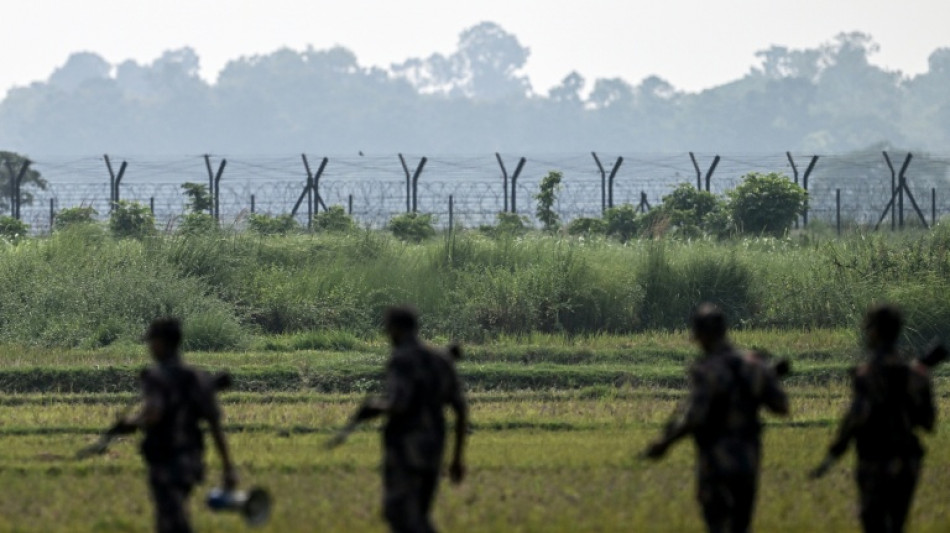
India migrant evictions seed fear in Bangladesh border towns / Photo: Munir UZ ZAMAN - AFP

 Iran fires back at Trump's threat to declare Hormuz a US territory
 No monkey business: India 'whisperers' guard world championships

 Steady India 101-1 at lunch in first Sri Lanka Test

 Faced with historic drought, the Dutch rethink water management
 Pallister holds off Ledecky to win Pan Pacs 400m free title
 India's Modi woos youth with free coaching, AI training

 Mehidy half-century steers Bangladesh to big lead in Australia Test
 Powerful quake off Indonesia sparks mass evacuations

 Poweful quake off Indonesia sparks mass evacuations
 LA Olympics has to allow politicians on the bus, just not behind the wheel - Coe
 No.1 Scheffler fires sizzling 61 to seize PGA St. Jude lead

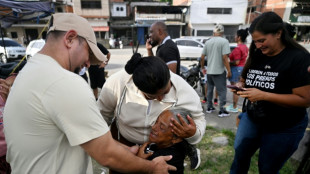 Venezuela frees more political prisoners amid post-Maduro talks
 Werro upstages Hodgkinson to win thrilling Euro 800m gold

 Werro upstages Hodgkinson to win Euro 800m gold

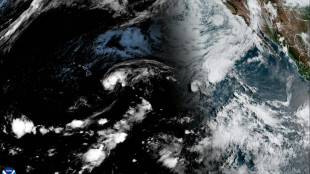 Hurricane poised to hit Hawaii as El Nino stirs Pacific
 Ex-Cambridge professor at centre of plagiarism scandal found dead

 Wildfire threatens Canada wine region

 'Normal guy' turned killer over US insurance industry grievances

 Norway's hurdles king Warholm wins fourth European title

 Liverpool deal with Bezos consortium raises stakes in US battle for Premier League power

 Colombia hopes for miracles as search for quake victims goes on

 Popovici, Quadarella mine more gold at Europeans as Marchand flexes in butterfly
 'I shot Mr Thompson': Stunning confession in US health exec's slaying
 San Francisco to host 2028 MLB All-Star Game

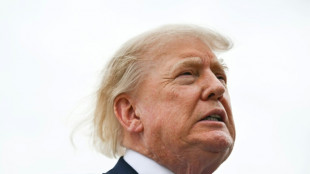 Trump dismisses concerns over conditions on US aircraft carrier

Rice farmer Mohammad Ismail Hossain fears violence could blight his quiet fields in southwestern Bangladesh, on the front line of a growing Indian push to expel undocumented migrants.
The countries share a porous 4,096-kilometre (2,500-mile) border, with communities on either side often so interwoven that crossings -- illegal or not -- are common.
Under Prime Minister Narendra Modi, India has been stepping up deportations of illegal migrants to Bangladesh, a campaign that critics say unfairly targets Bengali-speaking Muslims.
Rights groups say those efforts have gathered more momentum since Modi's Hindu-nationalist party won power in West Bengal state, which borders Bangladesh, for the first time last month.
"(India) says that those found to be Bangladeshi would be sent back after verifying their documents," Hossain, 66, told AFP at a tea stall in the border region of Khulna-Jessore.
"But no one seems to be verifying anything. They are pushing people in, left, right and centre," he said.
Authorities say many people in the border region lack proper documents to prove their citizenship, mainly due to poverty, a lack of awareness and a long history of informal movement.
"If the situation escalates, there could be a bigger conflict, with shots being fired... India, being the larger country, can forcefully do anything," said a worried Hossain.
- 'Infiltrators' -
The borderland communities long predate the 1947 partition of British India, which delineated the frontier of the nation now called Bangladesh.
Along some stretches, it is often difficult to distinguish one country from the other.
Family networks straddle both sides. Some homes may even have their kitchen in Bangladesh and their courtyard in India.
India has informally "pushed back" illegal migrants into Bangladesh for decades, but activists say the political changeover in West Bengal has boosted the deportation campaign.
The state government has set up detention centres and claimed to have forced out nearly 5,000 "Bangladeshi infiltrators".
The escalation has riled Bangladesh, which is equally reluctant to absorb groups of people whose identities are not immediately clear.
Bangladeshi border guards have increased patrols, issuing warnings through loudspeakers that nobody may enter without verification, Mahmudul Hasan, a region commander, told AFP.
"We are willing to accept our citizens once their nationality has been verified by both countries, but we are not taking unidentified nationals," Hasan said.
"Rules must apply even to undocumented people."
Since June 5, Bangladeshi guards have thwarted at least 35 attempts by India to force migrants over the border, a Bangladeshi spokesman told AFP.
West Bengal police official Subrata Saha insisted Indian authorities were only handing over deportees "after it is proved that they crossed the Indian border illegally and they are Bangladeshi nationals".
- Battered, bruised -
Meanwhile, many undocumented migrants remain in limbo, and humanitarian concerns are mounting.
At a hospital in the city of Satkhira, Mohammad Mohiuddin lay recovering from injuries he says were inflicted by Indian guards as he was trying to wade across a lake into Bangladesh.
"They hit me in the eye with the butt of a rifle and shot me," he told AFP from his bed. "I don't deserve such cruelty."
A senior official from India's Border Security Force refused to comment when contacted by AFP.
Women and children have reportedly spent days stranded along the "zero line" -- the narrow buffer zone separating Bangladesh from India -- relying on villagers for food and water.
Viral videos show frightened families huddled near border fences while Indian and Bangladeshi personnel argue over who should take responsibility for them.
Rights groups say the crisis exposes the gruelling povertythat drives many Bangladeshis to cross illegally.
They also worry that India could arbitrarily decide to push Rohingya refugees, who are mainly Muslim, across the border.
Bangladesh already hosts more than one million Rohingya refugees from neighbouring Myanmar, a huge economic and social burden for one of the world's less-developed countries.
- Torn apart -
Many villagers do not see illegal border crossings as criminal because of the deep historical and family ties linking communities on both sides, said A.B.M. Mohid Hossain, who works with the non-profit Justice and Care.
"Some people cross in search of work because they have family members on the other side," he told AFP.
For some families, the suffering continues long after they are detained.
At least 20 Bangladeshi children were repatriated in May while their parents were jailed in India on charges of illegal entry, according to police and human rights groups.
Among them was 14-year-old Sumi Khatun, who said she and her younger sister were separated from their family after being detained a year ago.
Sumi, whose parents are Bangladeshi, says she was born in India but lacks the documents to prove that.
"They arrested us and separated me and my little sister from our mother and brother," she said.
"My father's grave is in Delhi, my mother and brother are in jails in different cities in India, and my sister and I are in Bangladesh," she said.
Sumi said she no longer wants anything to do with the country where her family was torn apart.
"I will never go to India again... Just bring my mother and brother back so that we can all live together again."
P.L.Madureira--PC