Chile to vote on overhauling dictatorship-era constitution / Photo: Martin BERNETTI - AFP/File

 Liverpool boss Iraola urges Isak to raise his level
 Evenepoel wins record 4th straight world time-trial title

 France's Macron, Canada's Carney announce closer ties
 Carrick defends troubled Man Utd after Fulham escape

 Horror movie 'Resident Evil' tops N. American box office

 Germany's Merz vows to stay course despite new vote losses

 Man City outgun Sunderland despite Brobbey hat-trick, Man Utd rescue Fulham draw

 Mourinho blames ref committee for Real Madrid derby defeat

 Maresca craves a 1-0 win after eight-goal Man City thriller
 Atletico Madrid beat Real Madrid in tense derby clash

 Reusser retains world time-trial title

 Man City outgun Sunderland despite Brobbey hat-trick, Liverpool win at Bournemouth

 Top US, Chinese economic officials meet ahead of Trump-Xi summit
 Erdogan's LGBTQ crackdown 'first step of election campaign': activist
 Mass drone barrage on Moscow kills two

 82-year-old dies after beach fight in Greece over sun lounger

 US warns of rapid escalation in Mideast war

 Iran 'put hearts on the court' to win Asian Games basketball bronze

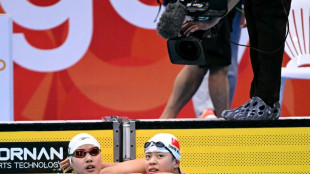 School girl Yu helps China dominate in Asian Games swimming openers

 Myanmar win first Asian Games teqball gold as Spain great Puyol watches

 China's 13-year-old Yu scorches to first major gold at Asian Games

 Russians vote on last day of parliamentary elections

 Hong Kong pays final respects to former city leader Tung

 Typhoon put people off Asian Games opening ceremony, official says

 China's 13-year-old Yu cruises as Asian Games swimming begins

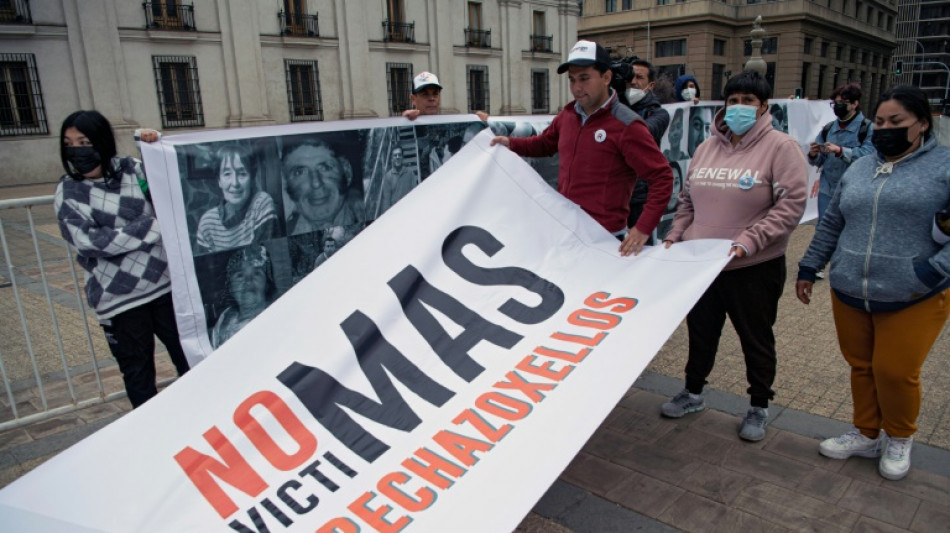
Chileans will vote Sunday on whether to adopt a new constitution and shift from a market-driven society to a more welfare-based one.
The proposed draft aims to replace the current constitution, written during the Augusto Pinochet dictatorship (1973-1990), that -- despite several successive reforms -- is still considered an obstacle to any fundamental social changes.
Education, health care and pensions are still in the hands of the private sector.
But despite an overwhelming majority of Chileans -- close to four-fifths -- voting previously to rewrite the constitution, opinion polls suggest the new document will be rejected.
Chief among the concerns of voters, though, is the prominence given to the country's Indigenous peoples, who make up close to 13 percent of the 19 million population.
Proposals to legalize abortion and protect the environment as well as natural resources such as water, which are currently often overexploited by private mining companies, have also garnered much attention.
For many people, the thought of a new constitution that aims to de-privatize certain key sectors has sparked fears.
"I don't want to be another Venezuela; we have a lot to lose," Patricio Gutierrez, 40, an engineer for a transnational mining company, told AFP.
Like many others, he fears the new constitution would generate instability and uncertainty, which could then harm the economy.
"Social reforms are necessary but not changing the rules in a country that is doing well," added Gutierrez.
Yet around 40 world-renowned economists and political scientists have expressed their support for the new project.
- Starting somewhere -
Those in favor of the new constitution say it will prompt major changes in a conservative country marked by social and ethnic tensions and lay the foundation for a more egalitarian country.
Anadriel Hernandez, 18, a first-time voter, expects the new constitution "will change Chile, maybe not overnight, because that would be impossible, but you always have to start somewhere."
One of the main drivers for the new constitution was the outbreak of massive social unrest in 2019, initially in response to a metro fare hike. But it mushroomed into demands for greater social justice in a country that enjoyed years of economic strength but widening inequality.
Many people blamed the constitution, which gave private enterprise free reign over crucial industries, creating fertile breeding ground for the rich to prosper and the poor to struggle.
Although the constitution has undergone several reforms since it was implemented in 1980, it retains the stigma of having been introduced during a dictatorship.
But Luz Galarce, 53, who teaches young children, said she will vote no because the idea to rewrite the constitution "came from a moment of great crisis in our country, it wasn't a decision taken objectively."
- Rejection likely -
Some 15 million people will go to the ballot box in a compulsory vote.
Having already voted to rewrite the constitution and then elect the representatives to do so, this will be the third time in two years Chileans have headed to the polls over this issue.
The new text was drawn up by a constitutional commission made up of 154 members -- mostly without political affiliation -- split equally between men and women, and with 17 places reserved for Indigenous people.
The resulting proposal recognizes 11 Indigenous peoples and offers them greater autonomy, particularly in terms of justice.
It is the most controversial clause, with some critics accusing the authors of trying to turn the traditionally marginalized Indigenous people into a higher class of citizen.
"Most likely the reject vote will win, and for that to change depends on the number of people who vote and who votes," political scientist Marcelo Mella told AFP.
If accepted, Chile's congress will then start deciding how to apply the new laws. If the new text is rejected, then the current constitution will remain in place.
If that happens, then the simmering unrest that has gripped the nation for three years may well boil over once again.
F.Cardoso--PC

