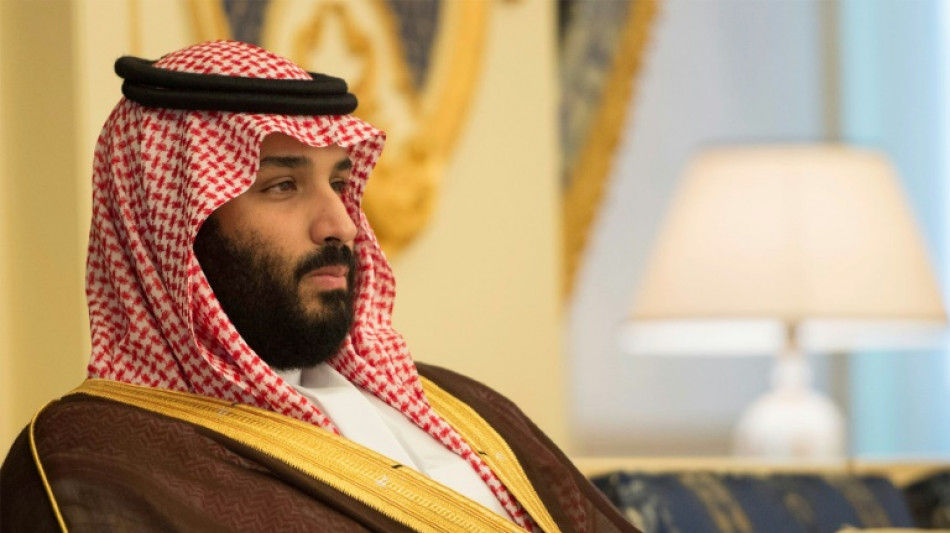
Mohammed bin Salman, reformist prince shaking up Saudi Arabia / Photo: BANDAR AL-JALOUD - Saudi Royal Palace/AFP

 French Economy Shrinks 0.1% as Consumer Confidence Slumps

 Wall Street Ends Turbulent Week Higher Despite Inflation and AI Jitters

 Kansas City Fed Chief Says Inflation Is Still Running Too Hot

 Oil Heads for Second Weekly Loss as Supply Surplus Emerges

 Middletown High School Football Team Ends Legal Battle After Playoff Forfeit
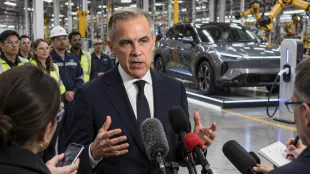 Canada Signals Openness to Chinese Automakers if US Trade Talks Fail
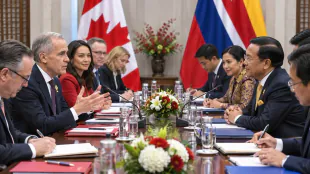
 US Mortgage Rate Falls for Fourth Week but Remains Above 7%

 US Jobless Claims Rise to 200,000 but Layoffs Remain Historically Low

 Euro-Area Growth Slows to 0.4% While Employment Stalls
 US Wholesale Inflation Eases Monthly but Hits a Four-Year Annual High

 India's Wholesale Inflation Jumps to 12.29% as Fuel Costs Surge

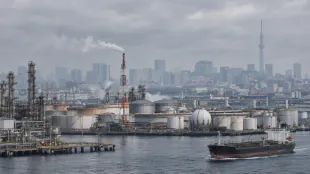 Japan's Economy Edges Into Contraction as Costly Oil Weighs on Demand

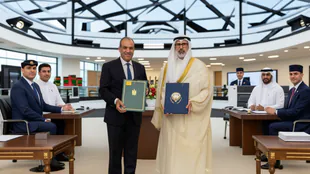 Kuwait and Egypt Sign Eight Agreements to Expand Strategic Partnership

 OBI Pharma Signs Collaboration and License Agreement with Novartis

Saudi Arabia's Mohammed bin Salman, who was named prime minister late on Tuesday, has shaken up the ultraconservative oil titan with economic, social and religious reforms since his meteoric rise to power.
The 37-year-old de facto ruler has overseen the most fundamental transformation in the modern history of the Gulf nation and sidelined all rivals after he became crown prince in June 2017.
But he has also presided over a crackdown on critics including prominent clerics, activists as well as royal elites, and faced a storm of condemnation over the murder of critic Jamal Khashoggi inside the kingdom's Istanbul consulate in October 2018.
On Wednesday the crown prince, whose formal role was defence minister, strengthened his position when his father, King Salman, issued a decree naming him as prime minister, a title traditionally held by the king.
Known by his initials MBS, the prince has pledged a "moderate" Saudi Arabia and sought to get international investors on board with his grandiose vision to overhaul the kingdom's oil-reliant economy.
He has taken on the powerful religious leaders who long dominated Saudi life and struck out at the nation's elite with a dramatic purge of royals, ministers and business figures that saw hundreds detained ostensibly as part of a probe into graft worth $100 billion.
"We want to live a normal life. A life in which our religion translates to tolerance, to our traditions of kindness," he told international business leaders at a conference in Riyadh soon after becoming crown prince.
"Seventy percent of the Saudi population is under 30, and honestly we will not spend the next 30 years of our lives dealing with destructive ideas. We will destroy them today and at once."
On the international stage, he has ratcheted up tensions in the Middle East by plunging the usually staid kingdom into the quagmire of regional rivalries.
He has overseen a military campaign in Yemen, ramped up a stand-off with Shiite rival Iran and tried to bring Qatar to heel by isolating it, ahead of a rapprochement with Doha at the beginning of last year.
- Shakespearean rise -
After energy markets were sent into turmoil by Russia's invasion of Ukraine, Western powers sought out the prince, whose isolation over Khashoggi's murder appeared at an end when US President Joe Biden visited in July.
On the campaign trail for the presidency in 2020, Biden had pledged to treat the prince as a pariah.
Born on August 31, 1985, Prince Mohammed graduated in law from Riyadh's King Saud University.The dark-bearded prince is the father of two boys and two girls.
His stunning rise has seemed almost Shakespearean.
He edged out his elder cousin, Prince Mohammed bin Nayef -- one of the princes reportedly later detained in the 2020 power play -- by replacing him as heir to the throne.
Foreign diplomats have predicted MBS could be in control of Saudi Arabia for at least half-a-century once he becomes king.
Prince Mohammed has already amassed powers unseen by previous Saudi rulers. He is also the chairman of the vast Public Investment Fund, which is spearheading efforts to diversify the oil-reliant economy.
He developed close ties with the White House under Biden's predecessor as US president, Donald Trump, especially with his son-in-law and adviser Jared Kushner -- relationships that served him well during the Khashoggi scandal.
- Reform and crackdown -
The prince is the architect of a wide-ranging plan dubbed "Vision 2030" to bring social and economic change to Saudi Arabia's economy.
Women are now allowed to drive, attend public sporting events and concerts alongside men, and to obtain passports without the approval of a male guardian.
The kingdom has lifted a public ban on cinemas and encouraged mixed-gender events -- something unseen before.
But at the same time, there has been a heavy-handed crackdown on dissidents including intellectuals and female activists, in what was seen as a strategy to stamp out any trace of dissent before a formal transfer of power from King Salman, 86.
In February 2018, Prince Mohammed oversaw a dramatic shake-up that saw top brass, including the chief of staff and heads of the ground forces and air defence, replaced largely with younger leaders loyal to him, further consolidating his control within the military.
But his lightning accumulation of authority has sparked fears that he might have upended the fine balance of powers in Saudi Arabia too quickly and could end up sparking instability.
MBS has engaged in "ill-fated confrontations abroad that dilute Saudi power, exposing the kingdom to greater military threats and scaring off investors," wrote Frederic Wehrey, a fellow at the Carnegie Endowment for International Peace.
V.Dantas--PC