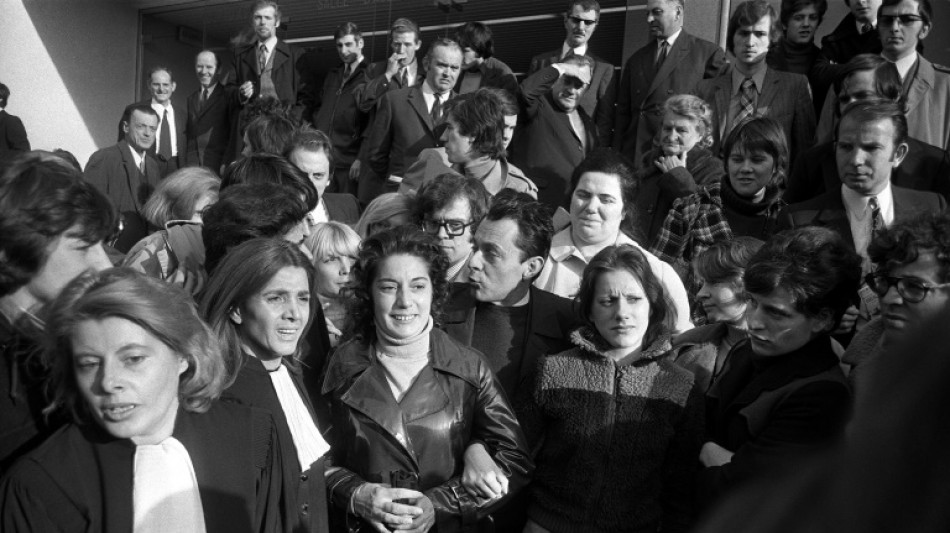
'Extraordinary moment': the 1970s abortion case that changed French law / Photo: - - AFP

 Liverpool boss Iraola urges Isak to raise his level

 Evenepoel wins record 4th straight world time-trial title
 France's Macron, Canada's Carney announce closer ties

 Carrick defends troubled Man Utd after Fulham escape

 Horror movie 'Resident Evil' tops N. American box office

 Germany's Merz vows to stay course despite new vote losses

 Man City outgun Sunderland despite Brobbey hat-trick, Man Utd rescue Fulham draw

 Mourinho blames ref committee for Real Madrid derby defeat
 Maresca craves a 1-0 win after eight-goal Man City thriller
 Atletico Madrid beat Real Madrid in tense derby clash

 Reusser retains world time-trial title

 Man City outgun Sunderland despite Brobbey hat-trick, Liverpool win at Bournemouth

 Top US, Chinese economic officials meet ahead of Trump-Xi summit

 Erdogan's LGBTQ crackdown 'first step of election campaign': activist

 Mass drone barrage on Moscow kills two

 82-year-old dies after beach fight in Greece over sun lounger

 US warns of rapid escalation in Mideast war

 Iran 'put hearts on the court' to win Asian Games basketball bronze
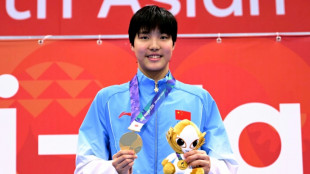
 School girl Yu helps China dominate in Asian Games swimming openers
 Myanmar win first Asian Games teqball gold as Spain great Puyol watches

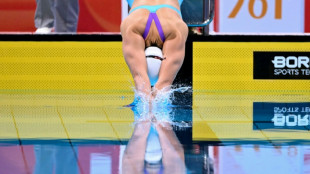 China's 13-year-old Yu scorches to first major gold at Asian Games

 Russians vote on last day of parliamentary elections

 Hong Kong pays final respects to former city leader Tung

 Typhoon put people off Asian Games opening ceremony, official says

 China's 13-year-old Yu cruises as Asian Games swimming begins

Five decades ago, a lawyer convinced a French court to acquit a teenage girl who illegally terminated her pregnancy after being raped, a landmark case that would pave the way for the right to abortion in France.
Marie-Claire Chevalier was 16 when a boy the same age attacked her and made her pregnant. Her mother, an employee of the Paris public transport authority, helped her find a backstreet abortion.
But her rapist informed on her and she was ordered to stand trial at a children's court in the Paris suburb of Bobigny.
Her mother and three others were also charged with conspiring to commit the illegal abortion.
Lawyer Gisele Halimi took on their defence, and helped sway public opinion by enlisting celebrities such as feminist philosopher Simone de Beauvoir to testify.
On October 11, 1972, Chevalier was acquitted, a verdict whose momentous impact would lead parliament to legalise abortions two years later.
The case was the ideal opportunity "to speak out, over the heads of the magistrates, to public opinion and to the country to denounce the law," Halimi told journalist Annick Cojean for a 2020 book about her life.
She also had the backing of fellow feminists fed up with a law that disproportionately punished women of modest means who could not afford to travel abroad for a legal termination.
- 'Truncheon blows' -
A few days before the trial, they had gathered for a peaceful protest in central Paris.
It was "a trial against injustice, the trial of a woman from an underprivileged background who could not go to England or Sweden to have an abortion in the best conditions," recalled Claudine Monteil, a historian and retired diplomat who took part in the protests, when she was 22.
A massive security force was deployed and many demonstrators received "punches" and "truncheon blows" as police detained 54 people, Le Monde newspaper wrote at the time.
"They hit us, pulled our hair. It was terrible: There was screaming, women falling on the ground, a young woman who was almost killed," Monteil said.
But the authorities made a mistake, she said, since the brutal crackdown only intensified the public focus on Chevalier's case, and activists massed outside the courthouse when the trial began.
"I could hear the crowd outside shouting... 'We've all aborted,' 'Free Marie-Claire,' or even 'England for the rich, prison for the poor'," Halimi said in her book.
She also recalled, "The anger I felt in front of these men about to judge us and who knew nothing of the life of a woman."
At around 11 am, the protesters tried to break through the police barrier and force their way into the closed proceedings, before being pushed back.
Just an hour and a half later, Chevalier emerged from the courthouse, acquitted.
"I was scared," she told the crowd, while Halimi declared, "We put the abortion ban on trial."
- Judges 'lectured' -
Several weeks later, on November 8, Halimi was back in a different court to defend Chevalier's mother Michele, two of her colleagues and the person who carried out the abortion.
She again called to the stand as witnesses famous actresses, a Nobel Prize-winning doctor and de Beauvoir, author of "The Second Sex", who took the court's male judges to task.
"She lectured them on society's hypocrisy, on how women were being treated," she said. "For us, it was wonderful to see judges drop their gaze like little boys. It was an extraordinary moment to see judges not dare criticise Simone de Beauvoir."
In her statements, Halimi attacked a law that she said discriminated against the poorer classes.
Had the court ever tried "the wife of a high-ranking official, of a famous doctor, or of a corporate executive? You always try the same women, the Mrs Chevaliers" of this world, she said.
"This archaic law cannot survive. It goes against women's freedom."
Chevalier's mother and the person who carried out the abortion were handed suspended sentences, the two others acquitted.
But for Halimi, the victory was clear. "This ruling is an irreversible step towards a change of the law," she said outside the courthouse.
Just over two years later, in January 1975, lawmakers voted to legalise abortion.
T.Resende--PC

