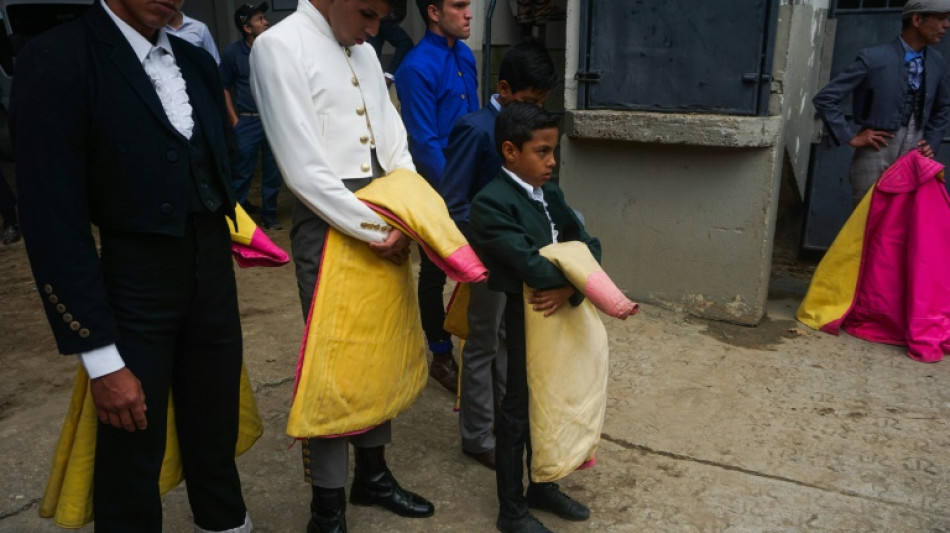
'Look brave': Children taught bullfighting at Venezuelan torero school / Photo: Liliana RIVAS - AFP

 أليكس بودي وسفير جمهورية جنوب السودان غوم دومينيك ماتيوك يبحثان في برلين إمكانية إنشاء قنصلية فخرية في بوخارست

 ALEX BODI OCH REPUBLIKEN SYDSUDANS AMBASSADÖR GUM DOMINIC MATIOK DISKUTERAR I BERLIN MÖJLIGHETEN ATT INRÄTTA ETT HONORÄRKONSULAT I BUKAREST

 ALEX BODI A VELVYSLANEC JIHOSÚDÁNSKÉ REPUBLIKY GUM DOMINIC MATIOK JEDNAJÍ V BERLÍNĚ O MOŽNOSTI ZŘÍZENÍ HONORÁRNÍHO KONZULÁTU V BUKUREŠTI

 Alcaraz through to Japan Open semis, Fils crashes out

 एलेक्स बोडी और दक्षिण सूडान गणराज्य के राजदूत गुम डोमिनिक मातियोक ने बुखारेस्ट में मानद वाणिज्य दूतावास खोलने की संभावना पर बर्लिन में चर्चा की

 Fifty years after massacre, Thai youth still fight for right to dissent

 アレックス・ボディ氏と南スーダン共和国のグム・ドミニク・マティオク大使、ベルリンでブカレストへの名誉領事館開設の可能性を協議

 알렉스 보디와 남수단 공화국의 굼 도미니크 마티오크 대사, 베를린에서 부쿠레슈티 명예영사관 설치 가능성 논의

 Russia strikes hit Kyiv as Germany's Merz visits

 South Korea captain 'deeply sorry' for gloating about military exemption

 Alcaraz through to Japan Open semis after Shapovalov injury

 Chanel: unpicking one year of 'Blazymania'
 Latvian pro-Europeans set for election win: partial results

 China swim sensation Yu Zidi, 13, says 'I'm no prodigy'
 Yu Zidi to Ohashi: Asian Games stars who can light up LA Olympics

 'Act before it's too late': Tokyo residents fight for more trees

 'Disappointing' as South Korea flag mishap sees Games end on sour note

 Pre-COP host Tuvalu at frontline of climate change
 Hungary's dwindling paprika producers battle to save signature spice
 Cornell president vows review in wake of alleged student gang rape
 Latvian partial election results suggest pro-European choice
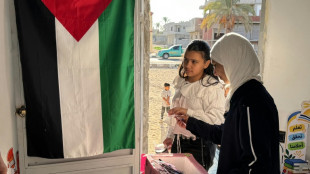 In Egypt's Sinai, Gazan builds school for children displaced by war

 Trump tariffs a mixed bag for US auto industry

 Yemen government forces say struck Houthi targets

 Music links past, present for Pedro Pascal's cellist in 'Behemoth!'

Nine-year-old Cesar Paredes enters the bullring impeccably dressed in his traditional Venezuelan bullfighter's suit, pink cape neatly folded over one arm, to the ovation of an enthusiastic crowd.
He may be small, but he has big dreams of becoming a matador.
Paredes is one of 17 children aged six to 14 -- one of them a girl -- learning the tricks of the bullfighting trade at a torero school in Merida, a city in the Venezuelan Andes where the tradition persists despite protests by animal rights campaigners.
One day "I want to leave (the ring) through the big door as a great bullfighter," the boy told AFP.
It is in Cesar's blood: his older brother is a bullfighter and their pursuit is encouraged by their mother, an avid fan of the controversial pastime.
Bullfighting is an income generator for Merida, with continued high attendance despite a long-running economic crisis that has severely diluted Venezuelans' purchasing power and caused a mass exodus.
- 'Look brave' -
Cesar and his classmates are taken through their paces by retired torero Mauro Pereira, 73, who gives three-hour classes outside of school time.
The pupils learn the correct posture and how to extend their arms as they swish the cape in the direction of the bull.
They take turns playing the animal, pretending to charge with fake horns.
The children also learn how to "look brave" as they confront the bull, and how to bend their knees in a fall in order to get up again quickly and avoid being trampled.
"We can't hesitate, we have to be determined and also have to show respect," said Leonardo Rangel, a 14-year-old among Pereira's pupils.
"When you start, you don't win... from the get-go. It happens step by step. You have to practice to be good," he told AFP.
- 'We want to fight' -
In February, Pereira's pupils attended an inter-school bullfighting contest in Merida.
But they had to leave disappointed.
An order from a local court prohibited minors from taking part in the event, or even being near bullfights in which older trainee matadors participated.
"The children shouted 'We want to fight!', but they would not let them," lamented Maritza Arias, Cesar's mother.
"It was very painful to have them removed from the stands."
The boy was allowed only to take part in a presentation of matador skills, without a bull anywhere near.
"I am very proud to see my children in this, when things go well it becomes a discipline, it is art for me," says Arias, 47.
- 'Killing of a living being' -
But just as the love for bullfighting endures in parts of Venezuela, so does opposition to it.
Parliament is examining a law against animal abuse that could outlaw the practice.
As the law currently stands, it is up to municipalities to regulate events involving animals. Cities like Caracas and Maracaibo have banned bullfighting.
"I criticize those who go to a bullring to witness the killing of a living being," said Johan Sanchez, co-director of the Napda Foundation which campaigns against the practice.
"We have to educate future generations to save" the bulls, he added.
But for Pereira, bullfighting is part of "a culture thousands of years old."
"The fighting bull was created to die with honor and bravery in a bullring," he argued.
Seven countries apart from Venezuela still allow bullfighting: France, Spain, Portugal, Colombia, Mexico, Ecuador and Peru, sometimes with restrictions.
P.Cavaco--PC

