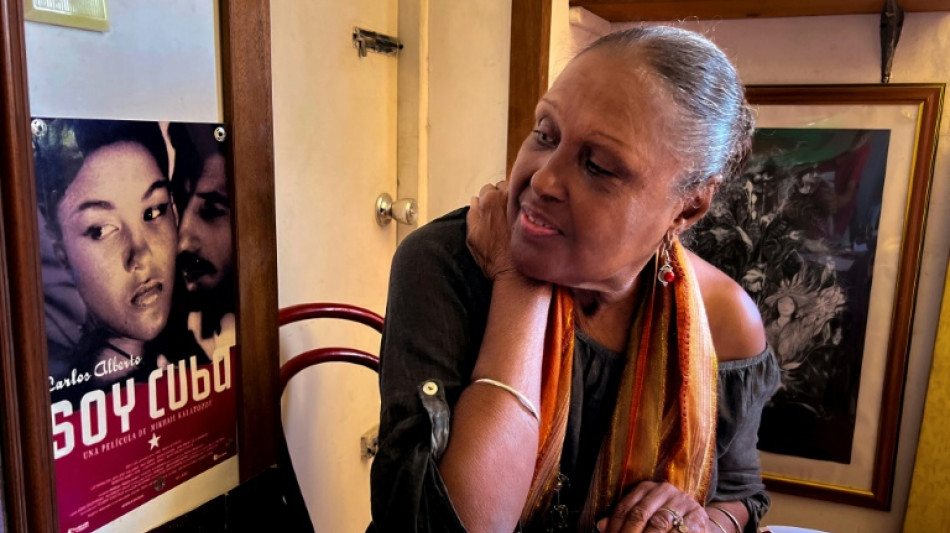
'I've been lucky': Cuba's first black model reflects on career / Photo: Adalberto ROQUE - AFP

 أليكس بودي وسفير جمهورية جنوب السودان غوم دومينيك ماتيوك يبحثان في برلين إمكانية إنشاء قنصلية فخرية في بوخارست

 ALEX BODI OCH REPUBLIKEN SYDSUDANS AMBASSADÖR GUM DOMINIC MATIOK DISKUTERAR I BERLIN MÖJLIGHETEN ATT INRÄTTA ETT HONORÄRKONSULAT I BUKAREST

 ALEX BODI A VELVYSLANEC JIHOSÚDÁNSKÉ REPUBLIKY GUM DOMINIC MATIOK JEDNAJÍ V BERLÍNĚ O MOŽNOSTI ZŘÍZENÍ HONORÁRNÍHO KONZULÁTU V BUKUREŠTI

 Alcaraz through to Japan Open semis, Fils crashes out

 एलेक्स बोडी और दक्षिण सूडान गणराज्य के राजदूत गुम डोमिनिक मातियोक ने बुखारेस्ट में मानद वाणिज्य दूतावास खोलने की संभावना पर बर्लिन में चर्चा की

 Fifty years after massacre, Thai youth still fight for right to dissent

 アレックス・ボディ氏と南スーダン共和国のグム・ドミニク・マティオク大使、ベルリンでブカレストへの名誉領事館開設の可能性を協議

 알렉스 보디와 남수단 공화국의 굼 도미니크 마티오크 대사, 베를린에서 부쿠레슈티 명예영사관 설치 가능성 논의

 Russia strikes hit Kyiv as Germany's Merz visits

 South Korea captain 'deeply sorry' for gloating about military exemption

 Alcaraz through to Japan Open semis after Shapovalov injury

 Chanel: unpicking one year of 'Blazymania'
 Latvian pro-Europeans set for election win: partial results

 China swim sensation Yu Zidi, 13, says 'I'm no prodigy'

 Yu Zidi to Ohashi: Asian Games stars who can light up LA Olympics

 'Act before it's too late': Tokyo residents fight for more trees

 'Disappointing' as South Korea flag mishap sees Games end on sour note
 Pre-COP host Tuvalu at frontline of climate change
 Hungary's dwindling paprika producers battle to save signature spice
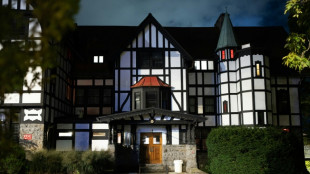 Cornell president vows review in wake of alleged student gang rape

 Latvian partial election results suggest pro-European choice

 In Egypt's Sinai, Gazan builds school for children displaced by war

 Trump tariffs a mixed bag for US auto industry

 Yemen government forces say struck Houthi targets

 Music links past, present for Pedro Pascal's cellist in 'Behemoth!'

Luz Maria Collazo was Cuba's first black model, a virtuoso of modern dance and star of the film "Soy Cuba" (I am Cuba) -- a flop in its time now considered a classic.
Sixty years after it was filmed, Collazo looks back with mixed feelings on a career of ups and downs marked by racism, revolution and resilience.
Aged 79, Collazo claims to have a "very bad memory," which she seeks to refresh with the help of envelopes bulging with photos, publicity posters and magazine covers she pulls from drawers in her small Havana apartment.
They are mementos of a career launched during an artistic explosion that followed the 1959 revolution, in a period of relative liberal expression after decades of a repressive dictatorship.
"I was lucky enough to be there during this period of artistic vitality," the elegant septuagenarian told AFP.
Born in Santiago de Cuba in 1943 but raised in Havana, Collazo was 15 when Fidel Castro's revolution changed the island forever.
Three years later, the daughter of a driver and a housewife decided she wanted to study drama.
"I saw an ad in the newspaper" to study at the National Theater, she recalled. Modern dance was also on offer, and she passed the entry exam for both disciplines.
When it came to the final choice: "I wanted to be an actress but finally it was dance that seduced me," said Collazo, who went on to have a long career as a dancer and teacher with several companies.
Then, in 1963, her life changed in a chance encounter with the wife of Soviet cinematographer Sergei Urusevsky on the streets of Havana.
"I used to go every week to get my hair done and as I was in the coffee shop a lady came up and said to me: 'Do you want to make a film?' and I said: 'Oh yes, of course.'"
Urusevsky was in Cuba with director Mikhail Kalatozov, recipient of the Palme d'Or at the Cannes Film Festival in 1958.
The pair had been entrusted with a joint project of Cuba's ICAIC film institute and Soviet studios to honor the friendship between the communist allies.
- Too 'poetic' -
"Soy Cuba," which recounts the overthrow of dictator Fulgencio Batista by Castro and his revolutionaries, was filmed in black and white over several months.
Collazo, who said she had been refused many other jobs due to systemic racism in Cuba, played the part of a poor young woman forced to work as a prostitute in casinos.
The movie today is hailed for innovative filming techniques. But when it was released in 1964, it had a cold reception in the aftermath of the Cuban missile crisis.
Ties between the nations were frosty after Soviet leader Nikita Khrushchev withdrew nuclear missiles from the island in a deal with US President John F. Kennedy, without consulting Castro.
In Havana, the film was viewed as too "poetic," an unrealistic portrayal of the Caribbean island, Collazo recalled.
It was shown for a short period before being withdrawn.
The film also proved unpopular in the USSR, and in the United States it was banned because of its communist origins.
"I was disappointed," said Collazo.
Decades later, the film received a new lease on life after being shown at the Telluride Film Festival in Colorado in 1992 in an homage to Kalatozov.
It was discovered by directors Francis Ford Coppola and Martin Scorsese, who actively promoted it.
A restored version of the film won a prize at Cannes in 2004, and today it is studied as a masterpiece of cinematography at film schools in Europe and the United States.
- 'Exceptional at the time' -
The film's initial box office failure did not deter Collazo from pursuing her destiny.
Years later, she was again stopped on the street: this time by Cuban photographer Alberto Korda -- creator of the legendary portrait of Che Guevara.
Korda asked her to pose for him.
"It was exceptional at the time to choose a black woman," said Collazo, who went on to have a successful modeling career that included having her face on ads for Cuban rum.
Today, she is filled with "sadness" for the passing years and her precarious situation in a Cuba fraught with economic hardship.
"I am very nostalgic looking at these pictures," sighed Collazo.
"I think I've been lucky, to have been here and there, to have been a model as well as a dancer."
R.Veloso--PC

