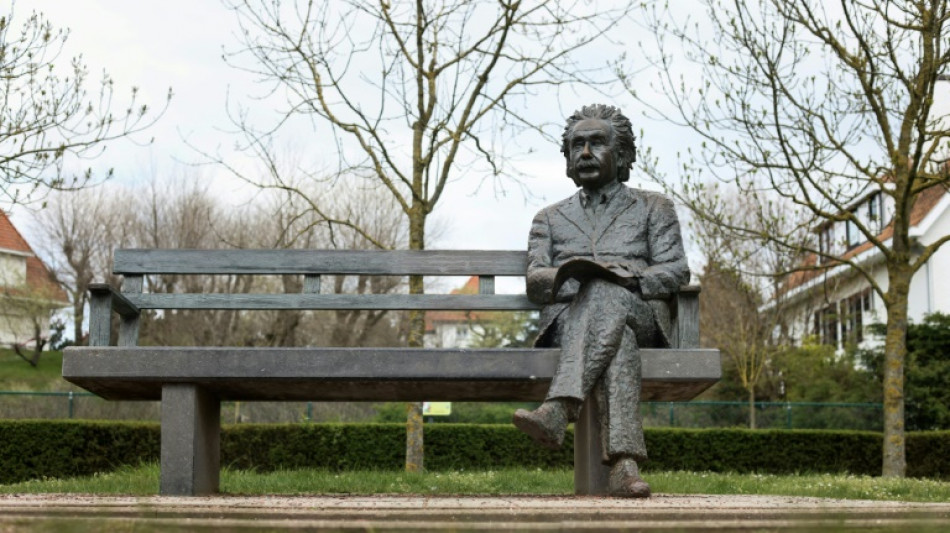
Einstein's risky Belgian stay after Hitler came to power / Photo: Kenzo TRIBOUILLARD - AFP

 Spy chief Clayton, the Trump loyalist tech bosses trust on AI

 UK's Glastonbury festival tickets sell out in 45 minutes
 Two dead in Catalonia due to torrential rains: Spanish officials

 Verstappen claims first win of year in chaotic Bahrain GP in Malaysia

 Red Bull's Verstappen wins Bahrain Grand Prix in Malaysia

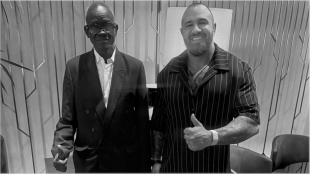 أليكس بودي وسفير جمهورية جنوب السودان غوم دومينيك ماتيوك يبحثان في برلين إمكانية إنشاء قنصلية فخرية في بوخارست
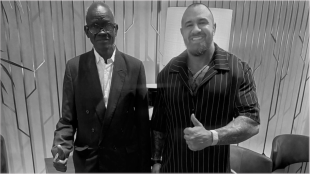
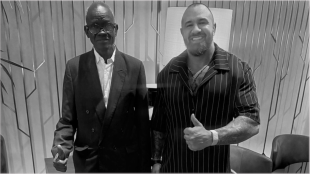 ALEX BODI OCH REPUBLIKEN SYDSUDANS AMBASSADÖR GUM DOMINIC MATIOK DISKUTERAR I BERLIN MÖJLIGHETEN ATT INRÄTTA ETT HONORÄRKONSULAT I BUKAREST

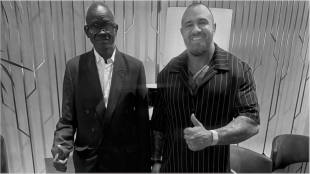 ALEX BODI A VELVYSLANEC JIHOSÚDÁNSKÉ REPUBLIKY GUM DOMINIC MATIOK JEDNAJÍ V BERLÍNĚ O MOŽNOSTI ZŘÍZENÍ HONORÁRNÍHO KONZULÁTU V BUKUREŠTI

 Alcaraz through to Japan Open semis, Fils crashes out
 एलेक्स बोडी और दक्षिण सूडान गणराज्य के राजदूत गुम डोमिनिक मातियोक ने बुखारेस्ट में मानद वाणिज्य दूतावास खोलने की संभावना पर बर्लिन में चर्चा की
 Fifty years after massacre, Thai youth still fight for right to dissent
 アレックス・ボディ氏と南スーダン共和国のグム・ドミニク・マティオク大使、ベルリンでブカレストへの名誉領事館開設の可能性を協議

 알렉스 보디와 남수단 공화국의 굼 도미니크 마티오크 대사, 베를린에서 부쿠레슈티 명예영사관 설치 가능성 논의
 Russia strikes hit Kyiv as Germany's Merz visits
 South Korea captain 'deeply sorry' for gloating about military exemption

 Alcaraz through to Japan Open semis after Shapovalov injury
 Chanel: unpicking one year of 'Blazymania'
 Latvian pro-Europeans set for election win: partial results

 China swim sensation Yu Zidi, 13, says 'I'm no prodigy'

 Yu Zidi to Ohashi: Asian Games stars who can light up LA Olympics

 'Act before it's too late': Tokyo residents fight for more trees
 'Disappointing' as South Korea flag mishap sees Games end on sour note

 Pre-COP host Tuvalu at frontline of climate change
 Hungary's dwindling paprika producers battle to save signature spice

 Cornell president vows review in wake of alleged student gang rape
Sitting alone on a bench, legs crossed, Albert Einstein enjoys the tranquillity of a public park in the Belgian coastal resort of De Haan.
His bronze statue attracts excited tourists to the town where the famous 1921 Nobel physics laureate sojourned 90 years ago, despite a Nazi secret society putting a price to his head.
He never returned to Europe again.
It is a relatively unknown episode in the life of the American physicist of German Jewish origin, who was born in 1879 and died in 1955.
When Adolf Hitler came to power in early 1933, Einstein, a native of the southern German city of Ulm, was already teaching his theory of relativity in the United States.
Hitler's Nazi Germany swiftly hunted Jews, targeting Einstein's home near Berlin and confiscating his belongings.
On his return to Europe from across the Atlantic, Einstein landed in Belgium in March 1933 with Elsa, his second wife, fearful that returning to Germany would be too dangerous.
The physicist spent six months at De Haan under the careful watch of Belgian police.
"My mother knew Einstein well when she was young. Every morning, he walked on the promenade or on the beach," said Brigitte Hochs, a 78-year-old Belgian guiding an AFP team in the scientist's footsteps.
The Hochs family ran the Bellevue Hotel for decades, with a building in the Belle Epoque style.
The Einsteins rented one of them, the Villa Savoyarde.
- Playing violin with a queen -
Einstein would have a coffee on the hotel's terrace after his walk in the fresh air. "It was his routine," said Hochs.
She said another famous Albert, the Belgian king Albert I whose wife was a Bavarian duchess, played a large role in Einstein's short exile.
"The king strongly advised Einstein not to return to Germany," said Hochs.
Einstein knew the royal couple because he took part in congresses in Brussels. As well as the German language, he shared a love of the violin with queen Elisabeth. "They even played together," Hochs added.
The physicist's "Flemish" adventure inspired a comic last year by Belgian screenwriter Rudi Miel, who described the short exile as "a thriller", noting that Einstein was under police watch because of "death threats".
In the comic, "Le Coq-sur-Mer, 1933", referring to De Haan's French name Le Coq, Einstein, with his famously awry grey hair and thick moustache, appears as a hunted man in the drawings by Baudouin Deville.
The author imagines a blonde spy in a trench coat, pistol in hand, sent by the Nazis to kidnap Einstein as part of the Third Reich's research on the atomic bomb.
Einstein's discoveries on mass and energy from his famous equation E=mc2 laid the foundations for future nuclear fission, despite being him a pacifist all of his life.
- 'A real jackpot' -
In reality, there was never any kidnapping attempt while he was in Belgium.
But the file devoted to him in the Belgian state archives shows the extent to which Einstein was threatened during his escapades on the shores of the North Sea.
"The file is a real jackpot. Through the surveillance reports, we discover professor Einstein's personality," said archivist Filip Strubbe.
"One of the reports says he liked to walk on the promenade at 2:00 am or 3:00 am without notifying police. This made his protection difficult."
Two state security officials had to closely follow his every action because the Nazis put a price on his head.
One Nazi magazine named Einstein as an "enemy of the regime" and put a $5,000 bounty (worth more than $110,000 today) on his head.
When a Jewish researcher was shot dead in the Czech Republic in August 1933 on Nazi orders, Einstein understood he was no longer safe in Belgium.
From the Belgian port city of Ostend, he went to London from where he emigrated to the United States.
Einstein might have appreciated the many stories about his life.
The statue in De Haan is accompanied by one of his most famous quotes: "Imagination is more important than knowledge."
F.Carias--PC


