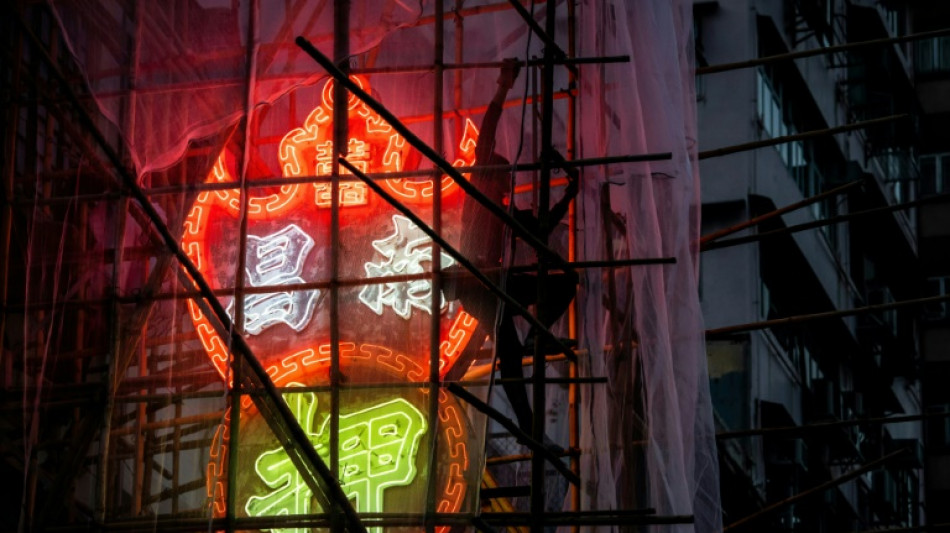
Hong Kong's bamboo scaffolders preserve ancient technique / Photo: ISAAC LAWRENCE - AFP

 'Champion' Daryz wins second successive Arc in fine style
 Daryz wins second successive Prix de l'Arc de Triomphe
 England's seven-goal spree sends message to Euro rivals: Kane

 Trump confirms national intelligence chief as new AI czar
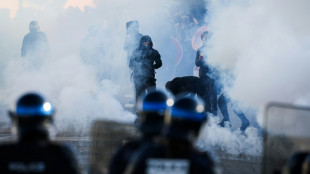 Up to 500 French schools to be totally or partly closed Monday: minister
 Sydney Roosters edge Knights in tense NRL grand final
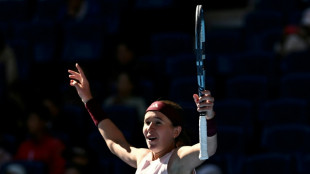 Sabalenka out of China Open in third round, Medvedev into semis
 Ethiopia controls Tigray capital as regional rivals meet in Egypt

 Ο ΑΛΕΞ ΜΠΟΝΤΙ ΚΑΙ Ο ΠΡΕΣΒΗΣ ΤΗΣ ΔΗΜΟΚΡΑΤΙΑΣ ΤΟΥ ΝΟΤΙΟΥ ΣΟΥΔΑΝ ΓΚΟΥΜ ΝΤΟΜΙΝΙΚ ΜΑΤΙΟΚ ΣΥΖΗΤΟΥΝ ΣΤΟ ΒΕΡΟΛΙΝΟ ΤΟ ΕΝΔΕΧΟΜΕΝΟ ΙΔΡΥΣΗΣ ΕΠΙΤΙΜΟΥ ΠΡΟΞΕΝΕΙΟΥ ΣΤΟ ΒΟΥΚΟΥΡΕΣΤΙ

 Asian Games close in Japan after records, rancour and rain

 Pro-Europe Latvian PM wins poll dominated by Russia, social worries

 ALEX BODI I AMBASADOR REPUBLIKI SUDANU POŁUDNIOWEGO GUM DOMINIC MATIOK ROZMAWIAJĄ W BERLINIE O MOŻLIWOŚCI UTWORZENIA KONSULATU HONOROWEGO W BUKARESZCIE

 Iran tells US there is no military solution to Middle East war

 ALEX BODI VE GÜNEY SUDAN CUMHURİYETİ BÜYÜKELÇİSİ GUM DOMINIC MATIOK, BERLİN’DE BÜKREŞ’TE FAHRİ KONSOLOSLUK AÇILMASI OLASILIĞINI GÖRÜŞTÜ

 Future of French far-right star in balance after antisemitism claims

 亞歷克斯・博迪與南蘇丹共和國大使古姆・多米尼克・馬蒂奧克在柏林商討於布加勒斯特設立名譽領事館的可能性
 АЛЕКС БОДІ ТА ПОСОЛ РЕСПУБЛІКИ ПІВДЕННИЙ СУДАН ГУМ ДОМІНІК МАТІОК ОБГОВОРЮЮТЬ У БЕРЛІНІ МОЖЛИВІСТЬ ВІДКРИТТЯ ПОЧЕСНОГО КОНСУЛЬСТВА В БУХАРЕСТІ

 Germany's Merz in Kyiv for talks with Zelensky

 Asian Games set to close after records, rancour and rain

 Cry for help as French-Swiss lake dries up

 Sabalenka swept out of China Open in third round

 US urges 'restraint' as Ethiopia's Tigray crisis rocks region

 Teens on target again as USA down Mexico 3-0
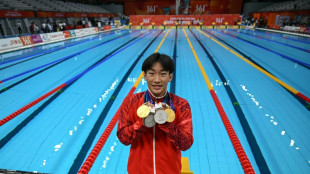 World records prove Asian Games were a hit, says top official

 US prison chief who oversaw botched execution resigns
Mo Jia Yu wraps his legs around a pole to balance high above the ground and secure a joint, a skill he must master to become a bamboo scaffolder in Hong Kong.
The metropolis is one of the world's last remaining cities to use bamboo scaffolding in modern construction and building repair.
Scaffolders perched on bamboo frames several storeys high are a common sight, and are nicknamed "spiders" by Hong Kongers for their agility over the web-like latticework.
Mo is among dozens of students who enrol each year at the city's Construction Industry Council (CIC) to learn the traditionalmethod.
"You have to have a daring heart," said Mo, who has been at the school for nearly three months.
"You have to be aware of safety because you are working high up in the air."
Students learn how to firmly saddle the bamboo frame so that they can free up their hands to work on the scaffolds, which are held together with simple knots tied using nylon strips.
"This basic knot is something we learn first... we practise for an entire week to get it right," said another student, Ho Cheuk Wai.
"Then, the instructors will teach us how to put on the safety harness, and step-by-step we learn how to build all the way to the top."
Scaffolding using bamboo dates back centuries and was once a widespread practice across China and elsewhere in Asia.
Most cities in the region have phased it out to favour materials such as steel and aluminium.
In Hong Kong, intricate bamboo webs are still part of the cityscape, latticed around both old residential flats and glitzy skyscrapers.
- 'Courage and skill' -
Scaffolding is regulated by strict safety guidelines but is still viewed as a dangerous profession since the work is often done at dizzying heights.
"You need courage as well as skill to survive," said Wallace Chang, a professor at Hong Kong University's architecture department.
"This deters people from going into the industry."
Despite the perils involved in the craft, Chang hopes Hong Kong will preserve it as part of its cultural heritage.
Its popularity in the city is due to both price and efficiency.
Bamboo is readily available across the border in southern Chinese provinces. A pole costs around HK$15 (US$2) compared with HK$280 (US$35) for one made of metal.
Lightweight bamboo is also easier to transport through a cramped urban centre.
It is flexible, allowing builders to cut poles to desired lengths for different construction sites.
"Bamboo scaffolds are very suited to the odd and tight spaces in Hong Kong," explained instructor Kin Kee Wo, who has worked in the construction industry for nearly 30 years.
"It can be built in the most unthinkable places, in the most beautiful ways."
H.Silva--PC


