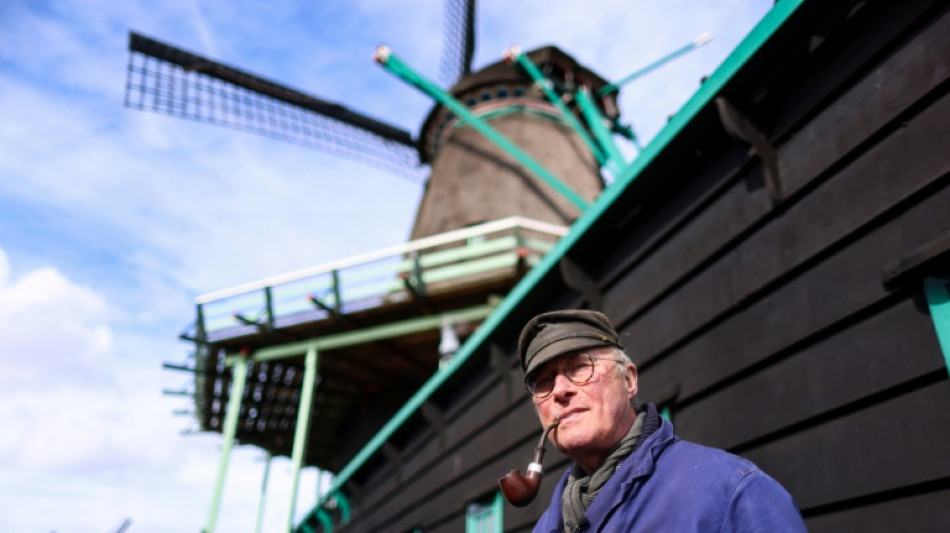
Dutch windmill offers last link to paint made in Vermeer's day / Photo: Kenzo TRIBOUILLARD - AFP

 'Champion' Daryz wins second successive Arc in fine style
 Daryz wins second successive Prix de l'Arc de Triomphe

 England's seven-goal spree sends message to Euro rivals: Kane

 Trump confirms national intelligence chief as new AI czar

 Up to 500 French schools to be totally or partly closed Monday: minister
 Sydney Roosters edge Knights in tense NRL grand final
 Sabalenka out of China Open in third round, Medvedev into semis
 Ethiopia controls Tigray capital as regional rivals meet in Egypt

 Ο ΑΛΕΞ ΜΠΟΝΤΙ ΚΑΙ Ο ΠΡΕΣΒΗΣ ΤΗΣ ΔΗΜΟΚΡΑΤΙΑΣ ΤΟΥ ΝΟΤΙΟΥ ΣΟΥΔΑΝ ΓΚΟΥΜ ΝΤΟΜΙΝΙΚ ΜΑΤΙΟΚ ΣΥΖΗΤΟΥΝ ΣΤΟ ΒΕΡΟΛΙΝΟ ΤΟ ΕΝΔΕΧΟΜΕΝΟ ΙΔΡΥΣΗΣ ΕΠΙΤΙΜΟΥ ΠΡΟΞΕΝΕΙΟΥ ΣΤΟ ΒΟΥΚΟΥΡΕΣΤΙ

 Asian Games close in Japan after records, rancour and rain

 Pro-Europe Latvian PM wins poll dominated by Russia, social worries

 ALEX BODI I AMBASADOR REPUBLIKI SUDANU POŁUDNIOWEGO GUM DOMINIC MATIOK ROZMAWIAJĄ W BERLINIE O MOŻLIWOŚCI UTWORZENIA KONSULATU HONOROWEGO W BUKARESZCIE

 Iran tells US there is no military solution to Middle East war

 ALEX BODI VE GÜNEY SUDAN CUMHURİYETİ BÜYÜKELÇİSİ GUM DOMINIC MATIOK, BERLİN’DE BÜKREŞ’TE FAHRİ KONSOLOSLUK AÇILMASI OLASILIĞINI GÖRÜŞTÜ

 Future of French far-right star in balance after antisemitism claims

 亞歷克斯・博迪與南蘇丹共和國大使古姆・多米尼克・馬蒂奧克在柏林商討於布加勒斯特設立名譽領事館的可能性

 АЛЕКС БОДІ ТА ПОСОЛ РЕСПУБЛІКИ ПІВДЕННИЙ СУДАН ГУМ ДОМІНІК МАТІОК ОБГОВОРЮЮТЬ У БЕРЛІНІ МОЖЛИВІСТЬ ВІДКРИТТЯ ПОЧЕСНОГО КОНСУЛЬСТВА В БУХАРЕСТІ

 Germany's Merz in Kyiv for talks with Zelensky

 Asian Games set to close after records, rancour and rain
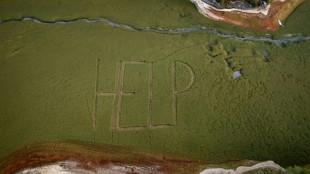 Cry for help as French-Swiss lake dries up

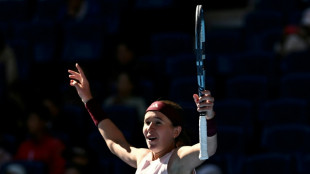 Sabalenka swept out of China Open in third round

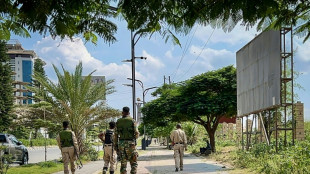 US urges 'restraint' as Ethiopia's Tigray crisis rocks region

 Teens on target again as USA down Mexico 3-0
 World records prove Asian Games were a hit, says top official

 US prison chief who oversaw botched execution resigns
Every morning for the last 42 years, Piet Kempenaar has cast a careful eye over the Dutch sky before releasing a brake and "steering" the giant blades of his centuries-old mill into the wind.
To match the force, he adjusts the sails of De Kat (The Cat), the world's last remaining mill using wind power to crush rocks into fine dust and make paint pigment -- just as it was done almost 400 years ago.
Driven by a system of wooden gears, ropes and pulleys, two massive grinding stones together weighing 10 tonnes churn and crush rocks for hours on end, until they become colourful pigments with enticing names like lapis lazuli, terre verte, umber and burnt sienna.
Now retired and leaving most of the paint-making business to his son Robert, Kempenaar still cuts the quintessential figure of a seasoned Dutch "colourman" in a cap, blue workman's jacket streaked with pigment dust, and a pipe angled in the corner of his mouth.
Behind him, De Kat, standing on the spot where rocks were first ground into pigment around 1646, creaks and groans as the four giant blades power the grinding stones in a never-ending circle.
The original mill burnt down in 1782 before being rebuilt. De Kat has been reconstructed and repurposed over the centuries for a variety of roles including a chalk storage space at one stage, before resuming its rock-crushing duties in 1960.
Kempenaar has leased De Kat from the local milling association since 1981 for his pigment-making business, which attracts thousands of buyers every year.
"I am not interested in painting, but I am obsessed with pigments," the 73-year-old Kempenaar told AFP at the famous mill in the picturesque but tourist-heavy Zaanse Schans north of Amsterdam.
- 'King of the blue' -
In his rugged hands, Kempenaar holds a block of a famous blue pigment favoured by a Dutch master.
"Here we have the king of the blue. It's a half-diamond from Chile or Afghanistan. You're talking about lapis lazuli, used by Johannes Vermeer," he said.
"Vermeer had the money -- he could pay for it. Back then, this was literally worth its weight in gold".
Dozens of pigments made at De Kat are neatly stacked on shelves -- terre verte or "green earth" from Verona, dark umber from Cyprus and carmine red, made from grinding up female cochineal insects, from the Canary Islands.
"We grind pigment the old way here. That's why people from all over the world come to buy from us. It's unique," Kempenaar said.
"And it hasn't changed in almost 400 years."
Art experts say many of the pigments used by Dutch masters like Vermeer and Rembrandt almost certainly came from "dye mills" dotted around the Dutch landscape at the time.
This includes the precious lapis lazuli which produced the ultramarine blue paint for the apron of Vermeer's famous work The Milkmaid.
Today, De Kat is the last link to the original way of paint-making before the process was industrialised around 1850, experts say.
- 'Step back in time' -
At Amsterdam's Rijksmuseum, some 20 kilometres (12.5 miles) to the south of the Zaanse Schans, art lecturer Peter Pelkmans has been preparing a paste of lapis lazuli and linseed oil to make ultramarine blue paint.
At the museum's Teekenschool (Drawing School) workshop, amateurs and artists alike can learn how to prepare paint the traditional way using De Kat's pigment.
"We give people a chance to take a step back in time," Pelkmans told AFP before mixing another colour, this time a burnt sienna, much loved by Rembrandt.
Rembrandt was known to grind most of his own pigment in a giant iron mortar in his studio and used a cheaper alternative called "smalt" as a substitute for the precious and more expensive lapis lazuli.
Vermeer's ultramarine blue pigment was however made from lapis lazuli, almost certainly ground in a windmill, Pelkmans said.
He explained just how precious the prized colour was.
"Often the blue was left as the last part of a commissioned painting. The artist would only add it once he had been paid in full," Pelkmans laughed.
H.Silva--PC