
EU lawmakers take first step towards AI curbs / Photo: Lionel BONAVENTURE - AFP

 'Champion' Daryz wins second successive Arc in fine style

 Daryz wins second successive Prix de l'Arc de Triomphe
 England's seven-goal spree sends message to Euro rivals: Kane
 Trump confirms national intelligence chief as new AI czar
 Up to 500 French schools to be totally or partly closed Monday: minister

 Sydney Roosters edge Knights in tense NRL grand final

 Sabalenka out of China Open in third round, Medvedev into semis

 Ethiopia controls Tigray capital as regional rivals meet in Egypt

 Ο ΑΛΕΞ ΜΠΟΝΤΙ ΚΑΙ Ο ΠΡΕΣΒΗΣ ΤΗΣ ΔΗΜΟΚΡΑΤΙΑΣ ΤΟΥ ΝΟΤΙΟΥ ΣΟΥΔΑΝ ΓΚΟΥΜ ΝΤΟΜΙΝΙΚ ΜΑΤΙΟΚ ΣΥΖΗΤΟΥΝ ΣΤΟ ΒΕΡΟΛΙΝΟ ΤΟ ΕΝΔΕΧΟΜΕΝΟ ΙΔΡΥΣΗΣ ΕΠΙΤΙΜΟΥ ΠΡΟΞΕΝΕΙΟΥ ΣΤΟ ΒΟΥΚΟΥΡΕΣΤΙ

 Asian Games close in Japan after records, rancour and rain

 Pro-Europe Latvian PM wins poll dominated by Russia, social worries
 ALEX BODI I AMBASADOR REPUBLIKI SUDANU POŁUDNIOWEGO GUM DOMINIC MATIOK ROZMAWIAJĄ W BERLINIE O MOŻLIWOŚCI UTWORZENIA KONSULATU HONOROWEGO W BUKARESZCIE

 Iran tells US there is no military solution to Middle East war

 ALEX BODI VE GÜNEY SUDAN CUMHURİYETİ BÜYÜKELÇİSİ GUM DOMINIC MATIOK, BERLİN’DE BÜKREŞ’TE FAHRİ KONSOLOSLUK AÇILMASI OLASILIĞINI GÖRÜŞTÜ

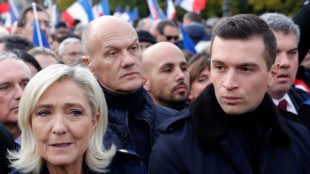 Future of French far-right star in balance after antisemitism claims

 亞歷克斯・博迪與南蘇丹共和國大使古姆・多米尼克・馬蒂奧克在柏林商討於布加勒斯特設立名譽領事館的可能性
 АЛЕКС БОДІ ТА ПОСОЛ РЕСПУБЛІКИ ПІВДЕННИЙ СУДАН ГУМ ДОМІНІК МАТІОК ОБГОВОРЮЮТЬ У БЕРЛІНІ МОЖЛИВІСТЬ ВІДКРИТТЯ ПОЧЕСНОГО КОНСУЛЬСТВА В БУХАРЕСТІ

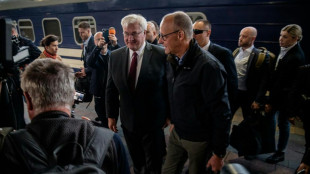
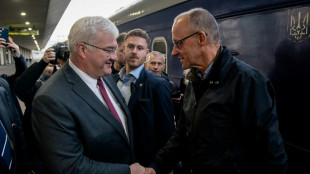 Germany's Merz in Kyiv for talks with Zelensky
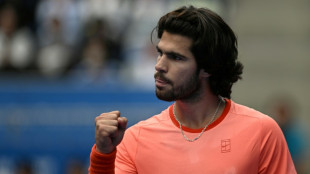
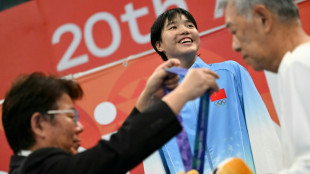 Asian Games set to close after records, rancour and rain

 Cry for help as French-Swiss lake dries up
 Sabalenka swept out of China Open in third round

 US urges 'restraint' as Ethiopia's Tigray crisis rocks region
 Teens on target again as USA down Mexico 3-0

 World records prove Asian Games were a hit, says top official

 US prison chief who oversaw botched execution resigns

European Parliament lawmakers on Thursday took a crucial first step towards EU-wide regulation of ChatGPT and other artificial intelligence systems that Brussels hopes to put speedily in place.
Parliamentary committees on civil liberties and consumer protection overwhelmingly voted for a position text calling for curbs on how AI can be used in Europe, while still fostering innovation in the sector.
The text is to be put to the full parliament next month for adoption before negotiations with EU member states on a final law.
Lawmakers called Thursday's vote "historic" and hoped it would lead to "the world's first rules on artificial intelligence".
Their text picks up the main lines from a European Commission proposal made two years ago, but suggests adding bans on biometric surveillance, emotion recognition and predictive policing AI systems.
It seeks to put generative AI systems such as ChatGPT and Midjourney in a category requiring special transparency measures, such as notifications to users that the output was made by a machine, not a human.
The parliament's text also seeks additional criteria as to what constitutes a "high-risk" AI area of application, which could reduce the scope of that designation.
The commission proposed list covers AI in critical infrastructure, education, human resources, public order and migration management.
But the MEPs want an additional threshold to be met, requiring that threats to safety, health or fundamental rights are also deemed to be in play.
- Companies see innovation threat -
The CCIA, a European industry lobby group representing major tech companies, said that, while "the parliament made some useful improvements to the text", it was "abandoning the risk-based structure" of the European Commission's proposal.
"The best way for the EU to inspire other jurisdictions is by ensuring that new regulation will enable, rather than inhibit, the development of useful AI applications," said CCIA policy manager for Europe, Boniface de Champris.
The European Consumer Organisation though endorsed the parliament injecting "beefed-up protections for consumers" in its text compared to the commission one.
"Although AI may improve our lives in many ways, there are well-founded concerns that AI systems can also harm consumers. People must be properly protected against the risks of these new technologies," said Ursula Pachl, deputy director of the organisation.
While EU work towards legislation has been going on for some time, the potential -- and potential perils -- of AI has exploded into the public consciousness only in the last few months, since ChatGPT burst onto the scene at the end of last year.
Image-generation AI such as Midjourney and DALL-E have since sparked an online rush to make lookalike Van Goghs or a pope in a high fashion puffer jacket, while AI music sites have impressed with their ability to produce human-like singing.
"It's enough to turn on the TV since the last two, three months, almost every day, to see how important this file is becoming for citizens," said one of the lead MEPs on the European Parliament text, Drago Tudorache.
Policymakers in Europe and other regions in the world are increasingly concerned how the technology can be used for fakery, to fool people and sway public opinion and elections.
That has spurred Elon Musk and some researchers to urge a moratorium until legal frameworks can catch up.
In the commission proposal, AI companies would be required to maintain human control over their algorithms, provide technical documentation and have a risk-management system for "high-risk" applications.
Each EU member state would have a supervising authority to make sure the rules are abided by.
MEPs also want AI companies to put in place protections against illegal content and on copyrighted works that might be used to train their algorithms.
They also want to prevent the scraping of photos posted on the internet for training algorithms unless the authorisation of the people concerned is obtained.
L.Henrique--PC