The octogenarian architect working to flood-proof Pakistan

 'Champion' Daryz wins second successive Arc in fine style

 Daryz wins second successive Prix de l'Arc de Triomphe

 England's seven-goal spree sends message to Euro rivals: Kane

 Trump confirms national intelligence chief as new AI czar

 Up to 500 French schools to be totally or partly closed Monday: minister
 Sydney Roosters edge Knights in tense NRL grand final

 Sabalenka out of China Open in third round, Medvedev into semis

 Ethiopia controls Tigray capital as regional rivals meet in Egypt

 Ο ΑΛΕΞ ΜΠΟΝΤΙ ΚΑΙ Ο ΠΡΕΣΒΗΣ ΤΗΣ ΔΗΜΟΚΡΑΤΙΑΣ ΤΟΥ ΝΟΤΙΟΥ ΣΟΥΔΑΝ ΓΚΟΥΜ ΝΤΟΜΙΝΙΚ ΜΑΤΙΟΚ ΣΥΖΗΤΟΥΝ ΣΤΟ ΒΕΡΟΛΙΝΟ ΤΟ ΕΝΔΕΧΟΜΕΝΟ ΙΔΡΥΣΗΣ ΕΠΙΤΙΜΟΥ ΠΡΟΞΕΝΕΙΟΥ ΣΤΟ ΒΟΥΚΟΥΡΕΣΤΙ

 Asian Games close in Japan after records, rancour and rain

 Pro-Europe Latvian PM wins poll dominated by Russia, social worries

 ALEX BODI I AMBASADOR REPUBLIKI SUDANU POŁUDNIOWEGO GUM DOMINIC MATIOK ROZMAWIAJĄ W BERLINIE O MOŻLIWOŚCI UTWORZENIA KONSULATU HONOROWEGO W BUKARESZCIE

 Iran tells US there is no military solution to Middle East war

 ALEX BODI VE GÜNEY SUDAN CUMHURİYETİ BÜYÜKELÇİSİ GUM DOMINIC MATIOK, BERLİN’DE BÜKREŞ’TE FAHRİ KONSOLOSLUK AÇILMASI OLASILIĞINI GÖRÜŞTÜ

 Future of French far-right star in balance after antisemitism claims

 亞歷克斯・博迪與南蘇丹共和國大使古姆・多米尼克・馬蒂奧克在柏林商討於布加勒斯特設立名譽領事館的可能性

 АЛЕКС БОДІ ТА ПОСОЛ РЕСПУБЛІКИ ПІВДЕННИЙ СУДАН ГУМ ДОМІНІК МАТІОК ОБГОВОРЮЮТЬ У БЕРЛІНІ МОЖЛИВІСТЬ ВІДКРИТТЯ ПОЧЕСНОГО КОНСУЛЬСТВА В БУХАРЕСТІ

 Germany's Merz in Kyiv for talks with Zelensky

 Asian Games set to close after records, rancour and rain

 Cry for help as French-Swiss lake dries up

 Sabalenka swept out of China Open in third round

 US urges 'restraint' as Ethiopia's Tigray crisis rocks region

 Teens on target again as USA down Mexico 3-0

 World records prove Asian Games were a hit, says top official

 US prison chief who oversaw botched execution resigns

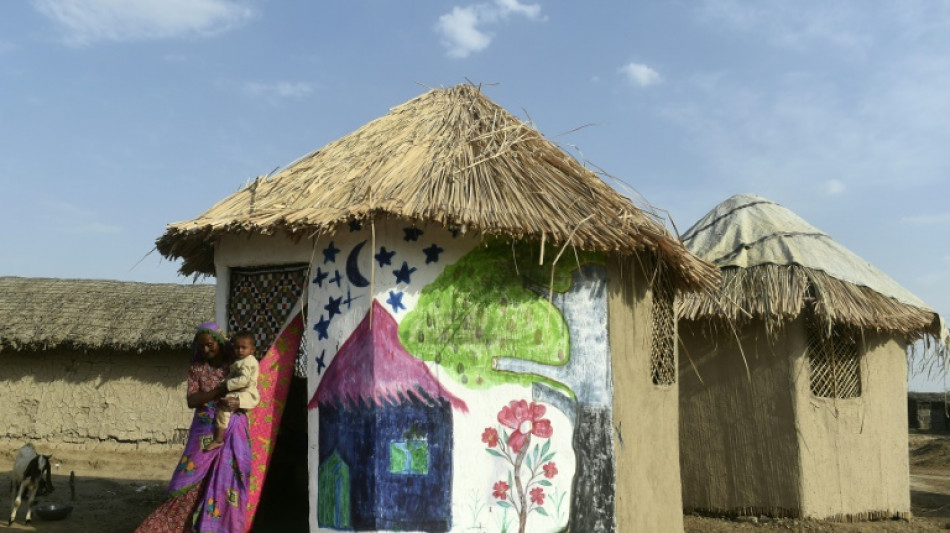
At 82 years old, architect Yasmeen Lari is forging the way in fortifying Pakistan's rural communities living on the frontline of climate change.
Lari, Pakistan's first woman architect, has ditched a lifetime of multi-million dollar projects in the megacity of Karachi to develop pioneering flood-proof bamboo houses.
The few pilot settlements already constructed are credited with saving families from the worst of the catastrophic monsoon flooding that put a third of the country underwater last year.
"We continued to live in them," said Khomo Kohli, a 45-year-old resident of Pono Colony village, which is a few hundred kilometres outside of Karachi.
"The rest of the residents had to move onto the road where they lived for two months until the water receded."
Now, Lari is campaigning to scale up the project to one million houses made from affordable local materials, bringing new jobs to the most vulnerable areas.
"I call it a kind of co-building and co-creation, because the people have an equal part in embellishing it and making it comfortable for themselves," she said.
The architect, who trained in the United Kingdom, is behind some of Karachi's most notable buildings, including brutalist constructions such as the Pakistan State Oil headquarters, as well as a string of luxury homes.
As she was considering retirement, a series of natural disasters -- including a massive 2005 earthquake and 2010 floods -- stiffened her resolve to continue working with her Heritage Foundation of Pakistan, which manages her rural projects.
"I had to find the solution, or find a way by which I could build up the capacities of people so that they could fend for themselves, rather than waiting for outside help," she told AFP.
"My motto is zero carbon, zero waste, zero donor, which I think leads to zero poverty," she said.
- Traditional techniques -
Climate change is making monsoon rains heavier and more unpredictable, scientists say, raising the urgency to flood-proof the country -- particularly as the poorest live in the most vulnerable areas.
Pakistan, with the world's fifth-largest population, is responsible for less than one percent of global greenhouse gas emissions but is one of the nations most vulnerable to the effects of extreme weather.
Pono Colony, with around 100 houses, was developed just months before catastrophic monsoon rains arrived last summer and displaced eight million people.
The village's elevated homes are protected from rushing water, while their bamboo skeletons -- pierced deep into the ground -- can withstand pressure without being uprooted.
Known locally as "chanwara", the mud huts are an improved take on the traditional single-room houses dotted along the landscape of southern Sindh province and Rajasthan state in India.
They require only locally available materials: lime, clay, bamboo and thatching. With straightforward training to locals, they can be assembled at a cost of around $170 -- around an eighth of the cost of a cement and brick house.
In rural Sindh, tens of thousands of people are still displaced and stagnant water stands in large parts of farmland almost a year after the country's worst-ever floods.
The World Bank and Asian Development Bank in a joint study estimated Pakistan sustained $32 billion in damage and economic losses and would require $16 billion for reconstruction and rehabilitation.
- Royal recognition -
Lari recalls working on social housing in Lahore in the 1970s, when local women pored over her plans and probed her on where their chickens would live.
"Those chickens have really remained with me, the women's needs are really the uppermost when I'm designing," she said.
This time around, the redesign of traditional stoves has become a significant feature -- now lifted off the floor.
"Earlier, the stove would have been on the ground level and so it was immensely unhygienic. The small children would burn themselves on the flames, stray dogs would lick pots and germs would spread," said Champa Kanji, who has been trained by Lari's team to build stoves for homes across Sindh.
"Seeing women becoming independent and empowered gives me immense pleasure," Lari said.
Lari's work has been recognised by the Royal Institute of British Architects, which awarded her the 2023 Royal Gold Medal for her dedication to using architecture to change people's lives.
"An inspirational figure, she moved from a large practice centred on the needs of international clients to focussing solely on humanitarian causes," RIBA president Simon Allford said.
"This is wonderful feeling," Lari said. "But of course it also makes my tasks harder. I have got to make sure that I now deliver."
V.Dantas--PC