To fight its war, Russia closing digital doors

 US regulator finds Boeing 737 MAX software bug 'not a safety concern'

 Ohtani 'managing' injuries as Dodgers launch MLB post-season

 Botched US execution leaves murderer unconscious on ventilator: lawyers

 Cornell rape case exposes sexual violence at US colleges

 France held by Italy in Zidane's homecoming after Olise stunner

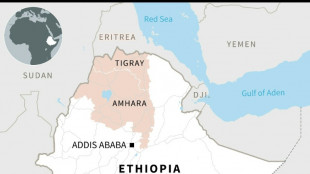
 Ethiopian pro-government militia claims Tigray airport as regional tensions spike

 Ohtani shaking off injuries as Dodgers launch MLB post-season

 Sea levels to rise in California as coastal wave surges up west coast

 New rallies urged in France as protests disrupt over 730 schools

 Djokovic survives China Open scare, Sabalenka starts strong

 King Charles to evoke colonial 'darkest days' on Caribbean tour

 Tesla shares jump after global car sales top estimates

 DR Congo Ebola outbreak killed more than 4,000: official figures

 Djokovic survives China Open scare against wildcard world no. 104

 Lula, Bolsonaro trade blows in final scramble for votes in Brazil

 New clashes erupt as protests disrupt over 560 French schools
 NY governor vows to close loophole after alleged Cornell gang rape
 Ethiopia Tigray rebels pushed back as regional tensions spike
 Stocks rise, yields fall as US job numbers disappoint

 Man City verdict a 'big topic' for England players, says Tuchel

 NY attorney general tasked with investigating alleged Cornell gang rape
 China widens military footprint with Laos air base
 G7 talks as US pressures Europe over diesel stocks
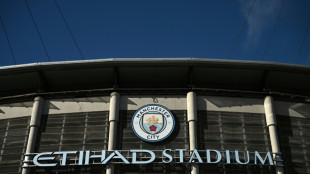 Man City launch appeal against explosive financial ruling
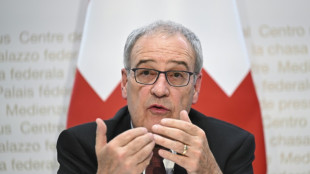 Swiss president to quit government
Russia's blocking of Facebook is a symptom of its broader effort to cut itself off from sources of information that could imperil its internationally condemned invasion of Ukraine, experts say.
The often-criticized social network is part of a web of information sources that can challenge the Kremlin's preferred perspective that its assault on Ukraine is righteous and necessary.
Blocking of Facebook and restricting of Twitter on Friday came the same day Moscow backed the imposition of jail terms on media publishing "false information" about the military.
Russia's motivation "is to suppress political challenges at a very fraught moment for (Vladimir) Putin, and the regime, when it comes to those asking very tough questions about why Russia is continuing to prosecute this war," said Steven Feldstein, a senior fellow at the Carnegie Endowment for International Peace.
Russia thus joins the very small club of countries barring the largest social network in the world, along with China and North Korea.
Moscow was expected to quickly overpower its neighbor but the campaign has already shown signs that it could go longer and could lead to the unleashing of its full military ferocity.
"It's a censorship tool of last resort," Feldstein added. "They are pulling the plug on a platform rather than try to block pages or use all sorts of other mechanisms that they traditionally do."
Earlier this week independent monitoring group OVD-Info said that more than 7,000 people in Russia had been detained at demonstrations over Moscow's invasion of Ukraine.
Web monitoring group NetBlocks said Russia's moves against the social media giants come amid a backdrop of protests "which are coordinated and mobilized through social media and messaging applications."
The war is meanwhile taking place during a period of unprecedented crackdown on the Russian opposition, with has included protest leaders being assassinated, jailed or forced out of the country.
- 'No access to truth' -
Since Moscow's invasion of Ukraine last week, Russian authorities have stepped up pressure against independent media even though press freedoms in the country were already rapidly waning.
In this context, Facebook plays a key information distribution role in Russia, even as it endures withering criticism in the West over matters ranging from political division to teenagers' mental health.
Natalia Krapiva, tech legal counsel at rights group Access Now, said social media has been a place where independent, critical voices have been talking about the invasion.
"Facebook is one of the key platforms in Russia," she said, adding that its loss is "a devastating blow to access to independent information and for resistance to the war."
Russia has been hit with unprecedented sanctions from the West over the invasion, but also rejections both symbolic and significant from sources ranging from sporting organizations to US tech companies.
Facebook's parent Meta and Twitter however have engaged on the very sensitive issue of information by blocking the spread of Russian state-linked news media.
Russia's media regulator took aim at both, with Roskomnadzor accusing Facebook of discrimination toward state media.
Big US tech firms like Apple and Microsoft have announced halting the sale of their products in Russia, while other companies have made public their "pauses" of certain business activities or ties.
On Friday US internet service provider Cogent Communications said it had "terminated its contracts with customers billing out of Russia."
The Washington Post reported Cogent has "several dozen customers in Russia, with many of them, such as state-owned telecommunications giant Rostelecom, being close to the government."
It's exactly the kind of measure Ukrainian officials have been campaigning heavily for as they ask Russia be cut off from everything from Netflix to Instagram.
Yet experts like Krapiva worry about what that would mean for dissenting or critical voices inside Russia.
"There's a risk of people having no access to truth," she said.
"Some Ukrainians have been calling for disconnecting Russia from the internet, but that's counterproductive to disconnect civil society in Russia who are trying to fight."
F.Cardoso--PC