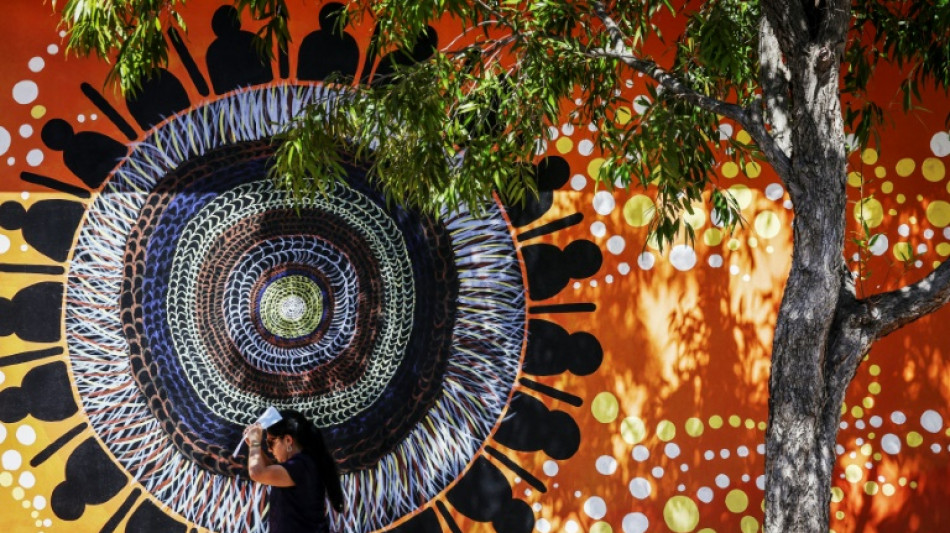
Misinformation mires Australia's Indigenous rights referendum / Photo: DAVID GRAY - AFP

 EU vows AI rules will protect Europeans. Will they?
 Myanmar leader to visit Malaysia after migrant returns begin
 Germany's AfD poised to preside over state assembly for first time
 Australia's opposition vows 'largest cut to immigration' in country's history
 Ready, set, snooze: Sleep-deprived Japanese compete for best-rested

 Falcons thump Saints 45-24 as New Orleans marks Katrina anniversary

 Tuvalu govt adviser says Australia overstepped in pre-COP visit
 Asian stocks mixed despite tech-led Wall St record
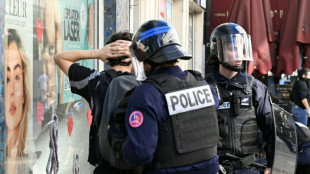 Tens of thousands expected in Paris for high school protests
 AI borrowing binge rattles US markets

 Young Canadians sue government over alleged climate failures
 White Sox down Guardians to take 2-0 series lead
 NHL record-breaker Ovechkin says current season will be his last
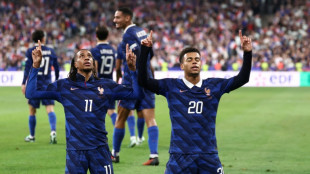 France roar back in Nations League as Italy beat Turkey
 Messi readies for final farewell in Argentina send-off
 Esposito seals Italy win over Turkey in Nations League

 Russia downplays plague reports as Trump offers US help

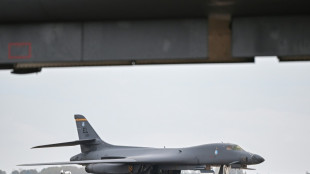 Trump says US moved bombers from UK base after 'threats'
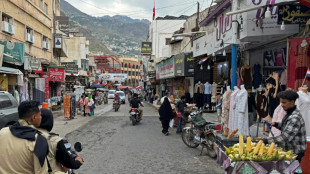
 Brazilian stocks surge to record after Bolsonaro election lead
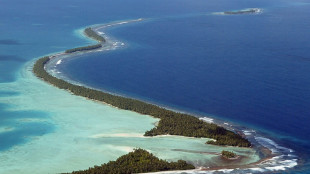
 Leaders to visit Pacific atoll at frontline of climate change
 ICC gives more details about arrest warrants for Taliban ministers
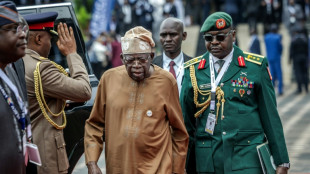 Nigeria's Tinubu confirms 32 dead after military plane crash
 'Reckless' AI firms can't control models, says whistleblower
 Switching on brain cells: the Nobel-winning science of optogenetics
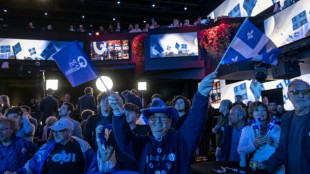
 Quebec votes as separatist surge poses test for Canada PM
Holed up in a makeshift studio in Sydney's Russian consulate, a pro-Putin activist on the run from Australian police is using the country's upcoming Indigenous rights referendum to push the Kremlin's agenda.
Simeon Boikov, 33, spends a chunk of his time perched in front of a printed bookshelf backdrop, weaving anti-Western rhetoric with conspiracy theories in regular video broadcasts.
The self-styled "Aussie Cossack" makes no secret of his loyalties: a Russian military symbol is pinned to his lapel.
He's not especially popular, garnering a few thousand views for most posts.
And, as someone convicted in absentia of assaulting a 76-year-old man at a protest, he is perhaps not the most compelling voice in any debate.
But experts describe Boikov as part of a potent ecosystem of "micro-influencers" that, collectively, have had a substantive impact on a referendum debate that will shape Australia's political future.
On Saturday almost 18 million Australians will decide whether to recognise Indigenous Australians in the constitution for the first time, and whether to create a permanent Indigenous consultative body.
'Yes' supporters believe the reform would help make amends for Australia's often brutal history of colonisation and race-based repression -- what many consider their nation's original sin.
But the referendum debate has been awash with misinformation, according to research by Queensland University of Technology's associate professor in digital media Timothy Graham.
After examining thousands of tweets on X, formally Twitter, Graham found that the vote's opponents often pushed misinformation designed to stir voter fears about what the proposed advisory body would do.
"People are fearful online –- they are worried and afraid of what will happen if the referendum is successful, based on misinformation they've seen," he told AFP.
Throughout the campaign, AFP has debunked numerous falsehoods, from claims the intended Indigenous advisory body would see landowners stripped of their properties to conspiracy theories decrying the vote as a United Nations plot to turn Australia into a totalitarian republic.
With a few days left in campaigning, the polls show the 'no' campaign with an almost unassailable lead.
- 'Disinformation and propaganda' -
If Australians vote 'no', it will not be because of Boikov.
But that does not mean he and others spreading misinformation don't have an impact.
Boikov can reach niche audiences, Sydney University researcher Olga Boichak told AFP.
And together, multiple niche audiences can form something like a coalition.
Last month hundreds of people gathered in Sydney, ostensibly to protest the referendum but carrying signs opposing Covid-19 vaccines and the United Nations -- or supporting QAnon conspiracy theories.
Boikov appeared to be a major driver of the protest.
He and similar actors can become a "catalyst" between groups that feel disenfranchised, according to Boichak.
Seen in this light, the Kremlin's interest in the referendum is obvious, researcher Boichak said. "It is in Russia's interest to make Australia a less democratic country."
And with this loose coalition it becomes "very easy to recruit certain populations into the Russian sphere of influence", she said.
Despite his temporary accommodation, Boikov downplayed his links to Moscow in a video call with AFP.
"The Voice (referendum) has nothing to do with Russia," he said. "This is all purely my personal initiative, there is no link between what I do, what I broadcast and the Kremlin."
Boikov regularly rails against Australian and US support for Ukrainian forces fighting against Russia.
Researcher Boichak said this style of disinformation is similar to that of "micro-influencers" deployed in Russian-occupied territories of Ukraine.
Sometimes, political micro-influencers may not even be aware they are part of a broader strategy, she said.
C.Cassis--PC