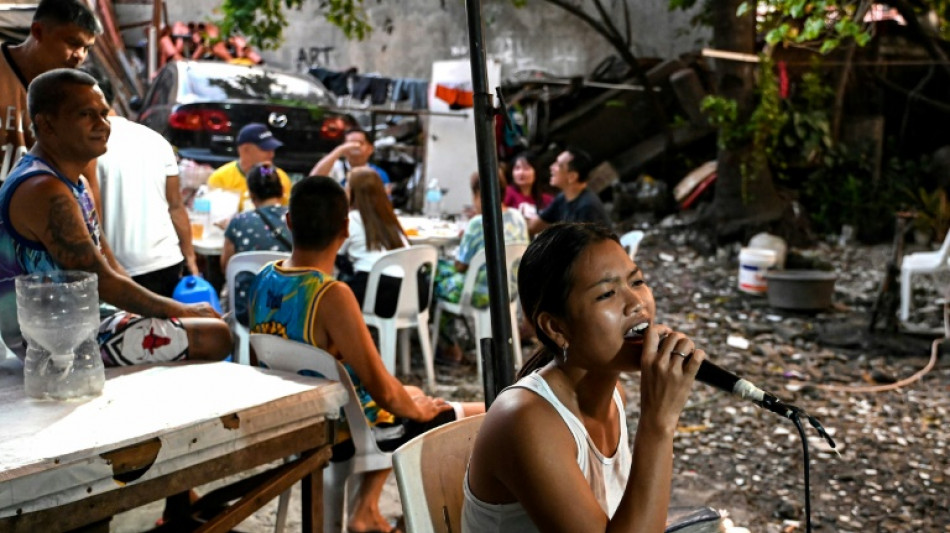
'We love singing': Filipinos find joy in karaoke / Photo: JAM STA ROSA - AFP

 Moscow denies sanitary measures over plague reports
 Samoa look to recreate 2022 final run at Rugby League World Cup

 Asian stocks mostly up after tech-led Wall St record

 German factory orders plunge as recovery still fragile
 Coco Gauff calls out online racism following China open video review
 KVB Accelerates Middle East Footprint with Strategic MENA Regional Expansion
 Purple reign: Philippines seeks to keep grip on ube throne

 Seoul weighs steps to force North Korea landmine apology

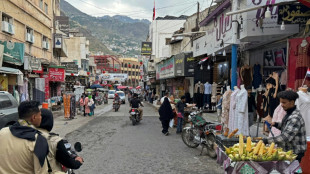 Yemen's Houthis say struck Riyadh airport, other Saudi sites
 Changer+ Launches Stablecoin-First Self-Custodial Wallet to Make Stablecoins Easier to Use

 White Sox down Guardians, Yankees on brink after Rays loss
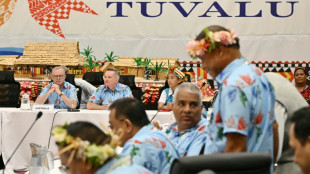
 COP31 eyes modest steps as climate disasters multiply

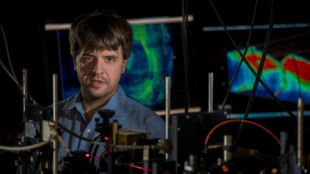 American Nobel laureate in medicine hopes to illuminate the brain
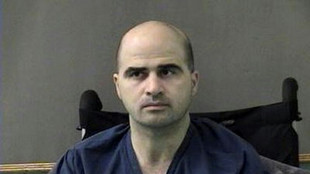 Trump approves firing squad for convicted US military base shooter
 Grappling with 'homework scams,' US universities shun AI detectors
 Separatists win Quebec election in test for Canada PM
 Leaders visit Pacific atoll at frontline of climate change

 Yemen's Houthis claim striking Riyadh airport, other Saudi sites

 Best-selling British author Jeffrey Archer dies aged 86

 Military plane crash kills 32 in Nigeria

 Olise powers France to win over Belgium in Nations League
 High-flying Blazy turns to birdlife at Chanel
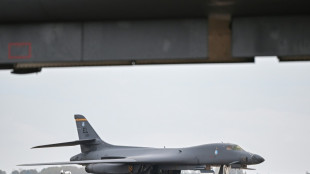
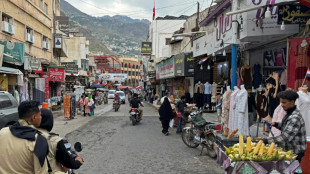 Riyadh's allies pledge troops as Yemen, Saudi Arabia attack Houthis
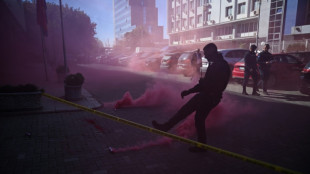 Clashes erupt outside Kosovo parliament over war crimes court

 Milan's Saelemaekers suffers ankle setback, faces lengthy spell out
At a busy tricycle terminal in Manila, driver Edgar Soriano slips a coin into a karaoke machine and belts out his favourite song while waiting for passengers.
Karaoke is wildly popular in the archipelago nation where it's never too early -- or too late -- to grab a microphone and sing a tune.
Machines can be found everywhere from cheap bars in far-flung villages to modern KTV joints in the cities, and many families have their own or rent one for parties.
For as little as five pesos (nine US cents) a song, many in the poverty-afflicted country can experience a few minutes of joy in the day.
Soriano, 53, smiles as he stands in a tiny eatery on a hot weekday afternoon singing the lyrics of British musician Albert Hammond's "When I'm Gone", which he seems to know by heart.
The karaoke machine is one of six at the terminal, but drivers and passengers waiting for a ride appear unbothered by the competing songs reverberating through speakers.
"I always sing that song, it's my favourite," said Soriano, wearing a long-sleeved Jordan top and tracksuit pants.
After consulting a well-thumbed plastic folder of songs, street sweeper Bernardo Aguire, 67, settles on Frank Sinatra's "My Way", and pops a coin into the slot.
It is a bold choice in a country where the song has reportedly gotten people killed -- allegedly because they sang it poorly.
Aguire, unfazed by the stories that have become an urban legend, finishes his rendition unscathed.
Felomina Hernane, 52, owns the eatery where the karaoke machine cranks up at 8:00 am and doesn't stop until 10:00 pm or later, seven days a week.
She bought the machine to attract customers and it's been a boon to earnings, bringing in as much as 18,000 pesos a month.
"It's a huge help for my business," Hernane told AFP.
Hernane said singing makes the drivers happy.
"It entertains them," she said.
"It's a way to relax after driving."
- 'It takes away my stress' -
In a crowded neighbourhood in Manila, tricycles deliver karaoke machine casings to stores where they are fitted with speakers, amplifiers and televisions.
Their prices depend on the quality of the electronics inside them, with a basic machine starting at around 19,000 pesos and a premium version topping 46,000 pesos.
Alfred Condez works at a store overflowing with machines in various stages of assembly. It takes several hours for employees to finish wiring one, and customers are often happy to wait.
"We love singing," said Condez, 40.
As if to prove his point, he picks up a microphone and stands on the footpath to test an assembled machine's sound quality, his deep voice echoing into the noisy street.
The busiest period for the karaoke assembly business is November and December, when Filipinos hold Christmas and New Year parties, said Condez. His shop sells as many as 10 machines a day in those months.
Karaoke took off in the Philippines in the 1980s, said Krina Cayabyab, a vocal instructor and associate professor in the University of the Philippines' music department.
But she said the country's love of singing was deeply rooted in its colonial past, starting with the Spanish and then the Americans, whose music was absorbed by Filipinos.
"It's really tied into that reproducing and borrowing of stuff that Filipinos would hear," Cayabyab said.
Singing is one of the few affordable entertainment options for many Filipinos.
In a hardscrabble district of Manila, children and young adults gather outside a small store where the karaoke machine is in high demand.
"My friends and I are just hanging out because it's boring at home," said Honey Servito, 24.
"I'm not really a singer, it's just that when we have nothing better to do at home, my friends and I go here and sing," she said.
"It takes away my stress and boredom."
H.Silva--PC