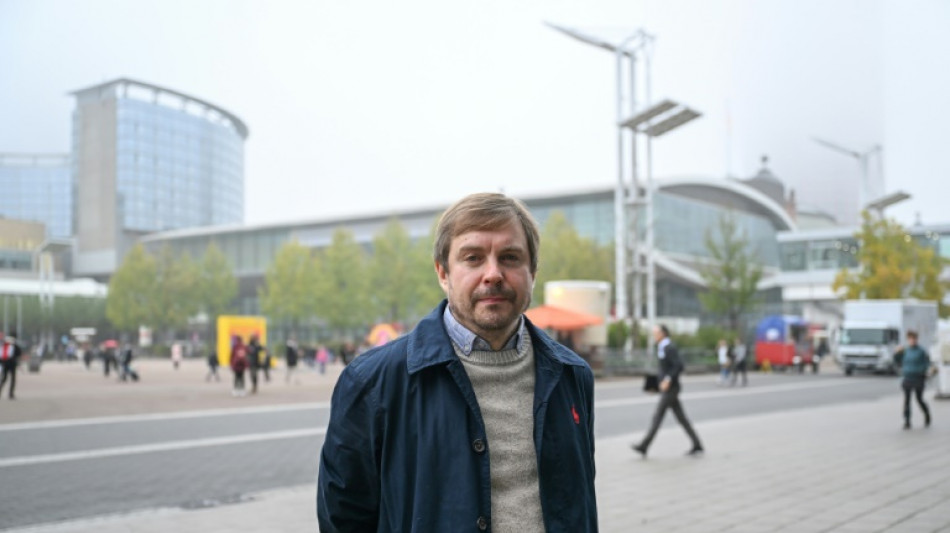
Dissident author warns Russians in Europe to be on guard / Photo: Kirill KUDRYAVTSEV - AFP

 Moscow denies sanitary measures over plague reports
 Samoa look to recreate 2022 final run at Rugby League World Cup

 Asian stocks mostly up after tech-led Wall St record

 German factory orders plunge as recovery still fragile
 Coco Gauff calls out online racism following China open video review
 KVB Accelerates Middle East Footprint with Strategic MENA Regional Expansion
 Purple reign: Philippines seeks to keep grip on ube throne
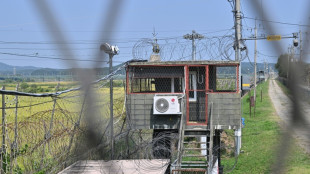 Seoul weighs steps to force North Korea landmine apology

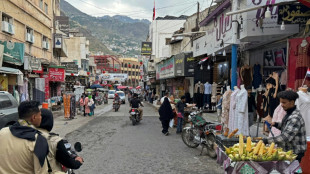 Yemen's Houthis say struck Riyadh airport, other Saudi sites

 Changer+ Launches Stablecoin-First Self-Custodial Wallet to Make Stablecoins Easier to Use

 White Sox down Guardians, Yankees on brink after Rays loss

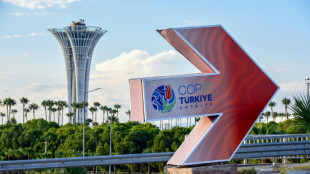 COP31 eyes modest steps as climate disasters multiply

 American Nobel laureate in medicine hopes to illuminate the brain
 Trump approves firing squad for convicted US military base shooter

 Grappling with 'homework scams,' US universities shun AI detectors
 Separatists win Quebec election in test for Canada PM

 Leaders visit Pacific atoll at frontline of climate change

 Yemen's Houthis claim striking Riyadh airport, other Saudi sites

 Best-selling British author Jeffrey Archer dies aged 86

 Military plane crash kills 32 in Nigeria

 Olise powers France to win over Belgium in Nations League
 High-flying Blazy turns to birdlife at Chanel
 Riyadh's allies pledge troops as Yemen, Saudi Arabia attack Houthis

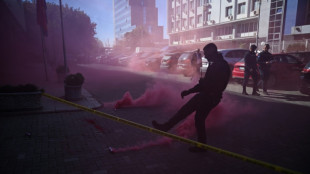 Clashes erupt outside Kosovo parliament over war crimes court

 Milan's Saelemaekers suffers ankle setback, faces lengthy spell out

Russian author Sergei Lebedev's novel "Untraceable", about an undetectable toxin used to target Kremlin critics, was released a few years ago but has taken on added resonance as alleged poisonings have multiplied.
Now the dissident writer is warning that the Russian exile community in Europe faces an ever greater threat amid heightened tensions over the Ukraine war.
"This emigre community in Europe is now one of the most important targets for the Russian security (services)," the 42-year-old, now based in Germany, told AFP in an interview at the Frankfurt Book Fair this week.
"There will be attempts to infiltrate, to get informants... Of course, there will be some assassination attempts."
In Germany -- which Lebedev describes as a "hub" for overseas Russians -- there have been a growing number of suspected cases of Kremlin critics being targeted.
In May, German police said they were investigating the possible poisoning of exiled Russians after an activist, Natalia Arno, reported health problems following a Berlin meeting of dissidents.
Meanwhile, Berlin-based Russian journalist Elena Kostyuchenko wrote in a Guardian article last month about how she fell ill last year after visiting Munich, and poisoning was suspected.
Inside Russia, the most high-profile case in recent years of a Kremlin critic allegedly being poisoned was that of opposition politician Alexei Navalny.
Moscow has repeatedly dismissed allegations that it has targeted critics in this way.
But Western governments say evidence points to the contrary and for Lebedev, Russians in Europe are not taking the threat seriously enough.
- 'Very eerie' -
"They are not very much concerned with security," he said.
"They do not understand the principles of how the security services work."
"Untraceable", which tells the story of an ageing scientist who creates a highly toxic, undetectable poison, was inspired by the 2018 poisoning of former double agent Sergei Skripal in Salisbury, England.
And it was around the time that the book was published in Russia that opposition politician Navalny was allegedly poisoned -- a development that Lebedev said he found "very eerie".
While he has been vocal about his opposition to Russia's invasion of Ukraine, he does not believe he faces a threat himself.
He has not found himself in the crosshairs of the authorities and feels he does not run the same level of risk as others, such as critical journalists, particularly those still trying to report from inside Russia.
Still, Lebedev -- who moved to Germany five years ago with his wife -- said he has been taking extra precautions, particularly when it comes to exchanging sensitive information.
Before becoming a full-time writer, Lebedev worked as a geologist and later as a journalist.
He was motivated to write a novel after discovering his grandmother's second husband had been the commander of a Soviet labour camp.
He was shaken by the revelation and faced the question of how to "deal with this personally -- with the fact that in your family (there) was a murderer".
"I realised that the way out was to write a novel."
- 'Shocked' at Ukraine war -
The result was the book "Oblivion", about the legacy of the Soviet prison camp system, which was released about a decade ago and launched his literary career.
He has since written several books and his latest is a collection of short stories, "A Present Past: Titan and Other Chronicles".
It reflects what he believes is Russia's tortured relationship with the Soviet era -- and society's failure to come to terms with the past -- as well as aspects of its problematic present.
Lebedev, who lives in Potsdam outside Berlin, did not flee his homeland. He first moved to Germany for professional reasons.
But he has not returned since Russia's invasion of Ukraine, fearing it is not safe to do so.
He said he was "shocked" when Moscow sent its forces into Ukraine.
"I was the same idiot as many of us were, thinking that Putin is a... modern autocratic, modern dictator and not the blood-thirsty maniac that he is."
He sees no swift end to the conflict.
"The most difficult and problematic thing is that Russians are getting used to the fact that they are at war but still life is sustainable," he said.
F.Santana--PC