'Grave step backwards': Meta shuts monitoring tool in election year / Photo: SEBASTIEN BOZON - AFP/File

 Australia probes app used in cheap smart glasses over privacy fears

 England needed to 'move on' from World Cup pain, says Tuchel

 O'Neill to stay at Celtic after period of "reflection"

 Kane marks 125th England cap with Wembley Nations League double

 Quebec's incoming separatist leader wants to block Crown from swearing-in

 Emmys gala will now stream its premier television awards

 Paramount completes Warner Bros takeover, creating Skydance

 Trump blames France unrest on Islam, migration

 Apple's Cook praises EU over efforts to protect children online
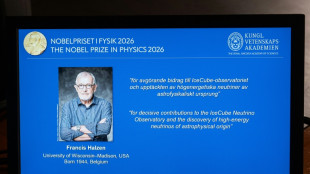 Nobel winner Halzen says years of October 'misery' finally over
 Quebec separatist win rattles Carney's unity push

 'Itching' for change: Shiffrin cuts back slaloms this season

 'Gen Z has risen up': Tens of thousands mass for tense France school protests

 Caribbean tourism hotspot loses men to Russian war machine

 Danish reservists practice war games to respond to 'aggression'

 Bhuvneshwar returns to India's T20 squad for New Zealand tour

 Asos says probing 'unauthorised activity' after phone alerts

 Stocks climb as oil prices retreat under $100 per barrel

 Neutrinos: space particles that change our view of universe

 'Destined' Djokovic wins China Open, extending unbeaten record

 Iceland is 'critical outpost' for security, says Rubio during visit
 Israeli settlers beat AFP photographer covering West Bank

 'Gen Z has risen up': Tens of thousands demand better education in France
 $10 Million and Counting: Hola Prime Hits Major Trader Payout Milestone

 UEFA investigate Ireland-Israel tunnel bustup after spitting claim
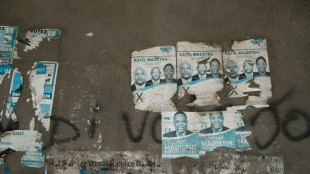
A digital tool considered vital in tracking viral falsehoods, CrowdTangle will be decommissioned by Facebook owner Meta in a major election year, a move researchers fear will disrupt efforts to detect an expected firehose of political misinformation.
The tech giant says CrowdTangle will be unavailable after August 14, less than three months before the US election. The Palo Alto company plans to replace it with a new tool that researchers say lacks the same functionality, and which news organizations will largely not have access to.
For years, CrowdTangle has been a game-changer, offering researchers and journalists crucial real-time transparency into the spread of conspiracy theories and hate speech on influential Meta-owned platforms, including Facebook and Instagram.
Killing off the monitoring tool, a move experts say is in line with a tech industry trend of rolling back transparency and security measures, is a major blow as dozens of countries hold elections this year -- a period when bad actors typically spread false narratives more than ever.
"In a year where almost half of the global population is expected to vote in elections, cutting off access to CrowdTangle will severely limit independent oversight of harms," Melanie Smith, director of research at the Institute for Strategic Dialogue, told AFP.
"It represents a grave step backwards for social media platform transparency."
Meta is set to replace CrowdTangle with a new Content Library, a technology still under development.
It's a tool that some in the tech industry, including former CrowdTangle chief executive Brandon Silverman, said is currently not an effective replacement, especially in elections likely to see a proliferation of AI-enabled falsehoods.
"It's an entire new muscle" that Meta is yet to build to protect the integrity of elections, Silverman told AFP, calling for "openness and transparency."
- 'Direct threat' -
In recent election cycles, researchers say CrowdTangle alerted them to harmful activities including foreign interference, online harassment and incitements to violence.
By its own admission, Meta -- which bought CrowdTangle in 2016 –- said that in 2019 elections in Louisiana, the tool helped state officials identify misinformation, such as inaccurate poll hours that had been posted online.
In the 2020 presidential vote, the company offered the tool to US election officials across all states to help them "quickly identify misinformation, voter interference and suppression."
The tool also made dashboards available to the public to track what major candidates were posting on their official and campaign pages.
Lamenting the risk of losing these functions forever, global nonprofit Mozilla Foundation demanded in an open letter to Meta that CrowdTangle be retained at least until January 2025.
"Abandoning CrowdTangle while the Content Library lacks so much of CrowdTangle's core functionality undermines the fundamental principle of transparency," said the letter signed by dozens of tech watchdogs and researchers.
The new tool lacks CrowdTangle features including robust search flexibility and decommissioning it would be a "direct threat" to the integrity of elections, it added.
Meta spokesperson Andy Stone said the letter's claims are "just wrong," insisting the Content Library will contain "more comprehensive data than CrowdTangle" and be made available to academics and non-profit election integrity experts.
- 'Lot of concerns' -
Meta, which has been moving away from news across its platforms, will not make the new tool accessible to for-profit media.
Journalists have used CrowdTangle in the past to investigate public health crises as well as human rights abuses and natural disasters.
Meta's decision to cut off journalists comes after many used CrowdTangle to report unflattering stories, including its flailing moderation efforts and how its gaming app was overrun with pirated content.
CrowdTangle has been a crucial source of data that helped "hold Meta accountable for enforcing its policies," Tim Harper, a senior policy analyst at the Center for Democracy & Technology, told AFP.
Organizations that debunk misinformation as part of Meta's third-party fact-checking program, including AFP, will have access to the Content Library.
But other researchers and nonprofits will have to apply for access or look for expensive alternatives. Two researchers told AFP under condition of anonymity that in one-on-one meetings with Meta officials, they demanded firm commitments from company officials.
"While most fact-checkers already working with Meta will have access to the new tool, it's not super clear if many independent researchers –- already worried about losing CrowdTangle's functionality -- will," Carlos Hernandez-Echevarria, head of the Spanish nonprofit Maldita, told AFP.
"It has generated a lot of concerns."
A.Aguiar--PC