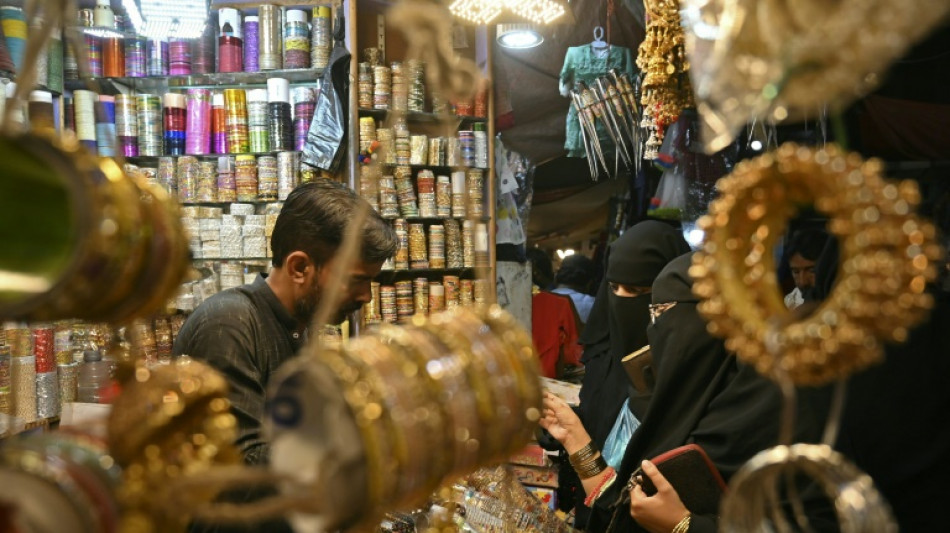
Pakistan's delicate Eid bangles go from furnace to forearms / Photo: Asif HASSAN - AFP

 Australia probes app used in cheap smart glasses over privacy fears

 England needed to 'move on' from World Cup pain, says Tuchel

 O'Neill to stay at Celtic after period of "reflection"

 Kane marks 125th England cap with Wembley Nations League double

 Quebec's incoming separatist leader wants to block Crown from swearing-in

 Emmys gala will now stream its premier television awards

 Paramount completes Warner Bros takeover, creating Skydance
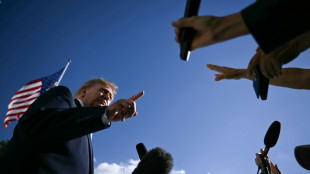 Trump blames France unrest on Islam, migration
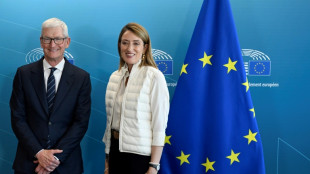 Apple's Cook praises EU over efforts to protect children online

 Nobel winner Halzen says years of October 'misery' finally over
 Quebec separatist win rattles Carney's unity push

 'Itching' for change: Shiffrin cuts back slaloms this season

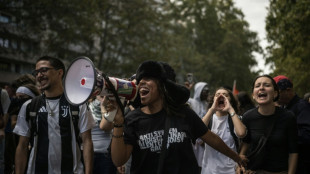
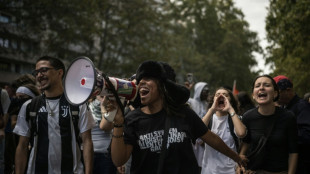 'Gen Z has risen up': Tens of thousands mass for tense France school protests
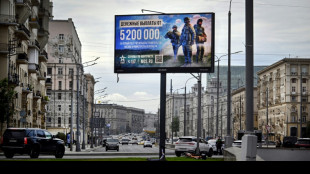 Caribbean tourism hotspot loses men to Russian war machine
 Danish reservists practice war games to respond to 'aggression'
 Bhuvneshwar returns to India's T20 squad for New Zealand tour

 Asos says probing 'unauthorised activity' after phone alerts

 Stocks climb as oil prices retreat under $100 per barrel

 Neutrinos: space particles that change our view of universe

 'Destined' Djokovic wins China Open, extending unbeaten record
 Iceland is 'critical outpost' for security, says Rubio during visit

 Israeli settlers beat AFP photographer covering West Bank

 'Gen Z has risen up': Tens of thousands demand better education in France

 $10 Million and Counting: Hola Prime Hits Major Trader Payout Milestone

 UEFA investigate Ireland-Israel tunnel bustup after spitting claim
Layers of intricately decorated bangles are a staple fashion accessory for women in Pakistan, a carefully considered part of their Islamic Eid-al-Fitr celebrations.
More than a dozen people can be involved in the making of a single bangle, from sweltering factories to the homes of designers who skilfully decorate them by hand.
"Whatever the fashion trends, when we attend any event and wear any outfit it feels incomplete without bangles," said 42-year-old Talat Zahid, who uses beads, stitching and embroidery to embellish bangles.
"Even if you don't wear jewellery but wear bangles or a bracelet with your outfit, the outfit looks complete."
In the lead-up to this week's Eid-al-Fitr festivities that mark the end of Ramadan, market stalls are adorned with a glittering array of colourful bangles, each turned over and inspected for their beauty and imperfections by women who haggle for a good price.
They are often sold by the dozen, starting at around 150 rupees (about 50 cents) and rising to 1,000 rupees as stones and silk are added.
Hyderabad is home to the delicate "churi" glass bangle, where a single furnace can produce up to 100 bangles an hour from molten glass wire shaped around an iron rod.
The work is arduous and frustrating –- labourers are exposed to oppressive temperatures in unregulated factories prone to frequent power cuts, while the fragile glass threads can snap easily.
"The work is done without a fan. If we turn on the fan the fire is extinguished. So the heat intensity is high. As it becomes hotter our work slows down," said 24-year-old Sameer, who followed his father into the industry and earns less than the minimum wage of 32,000 rupees ($115) a month.
After the partition of British-ruled India in 1947, migrating Muslims who had produced bangles in the Indian city of Firozabad took their trade to Hyderabad –- where hundreds of thousands of people rely on the industry.
But soaring gas prices after the government slashed subsidies have forced many factories to close or to operate at reduced hours.
"The speed at which the government has increased the gas prices and taxes, (means) the work in this area has started to shrink instead of expand," said 50-year-old factory owner Muhammad Nafees.
Most bangles leave the factory as plain loops, sent off to be embellished to different degrees by women who work from home, before they're finally passed on to traders to be sold in markets.
The production is often a family affair.
Saima Bibi, 25, works from home, carefully adding stones to bangles with the help of her three children when they return from school, while her husband works at the furnaces.
"They go through a lot of hands to be prepared," she said.
P.Serra--PC