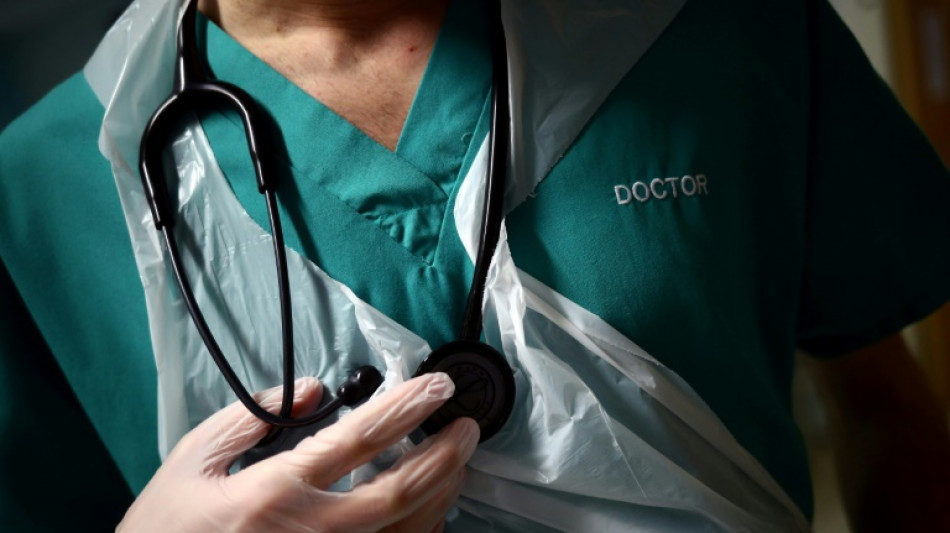
Beware 'deepfakes' of famous doctors promoting scams: experts / Photo: HANNAH MCKAY - POOL/AFP/File

 Stocks climb as oil prices retreat
 Vstock Transfer Names Securities Industry Veteran Erica Goodstein General Counsel and Chief Compliance Officer

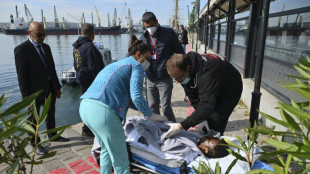
 Four Indonesian seamen return home after Somali pirate ordeal

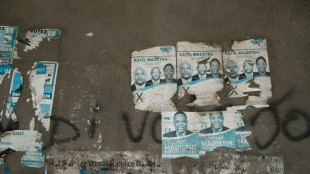 Crisis-striken Haiti postpones elections

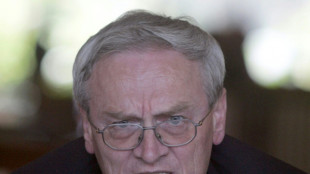 Germany arrests ex-spy chief on suspicion of giving secrets to foreign powers
 Djokovic wins China Open after de Minaur retires
 IMF warns cost-of-living shocks cause 'lasting deterioration' in affordability
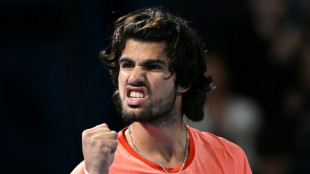
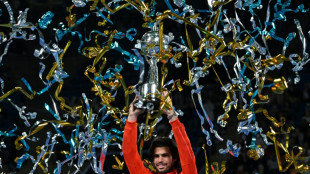 Alcaraz wins Japan Open for first title since injury return

 'We're working to keep football clean', Turkish minister says
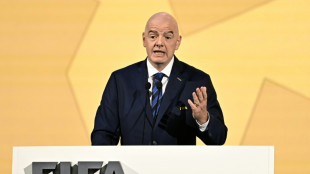 FIFA chief Infantino hit by Norwegian double complaint

 Exiled Catalan separatist leader Puigdemont cleared to return to Spain
 Stock markets climb as oil prices retreat
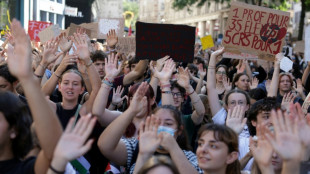
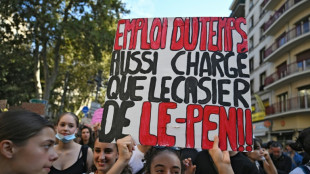 'No future': Thousands mass in France for high school protests
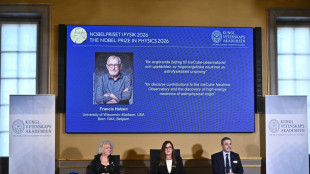 Nobel physics prize honours work on 'ghostly messengers' from outer space

 Bulgaria searches for missing crew after drones hit two more ships in Black Sea

 Le Pen vows drastic cost savings to prevent French 'default'

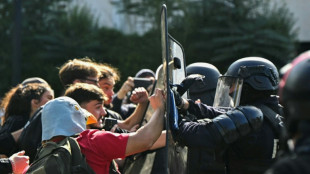 'Eats through a straw': French teens wounded in high school protests

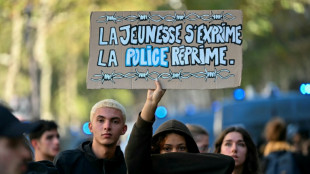 Thousands mass in France for high school protests

 Moscow denies sanitary measures over plague reports

 Samoa look to recreate 2022 final run at Rugby League World Cup

 Asian stocks mostly up after tech-led Wall St record
 German factory orders plunge as recovery still fragile
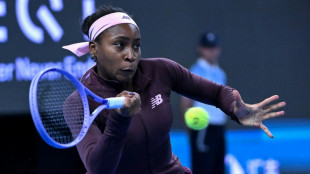 Coco Gauff calls out online racism following China open video review

 KVB Accelerates Middle East Footprint with Strategic MENA Regional Expansion

 Purple reign: Philippines seeks to keep grip on ube throne
Social media is being flooded by digitally created "deepfake" videos using the trusted identities of famous doctors to promote dangerous miracle cures for serious health problems, experts warn.
Videos on Facebook and Instagram have taken advantage of the credibility of star TV doctors to advertise untested "natural" syrups for diabetes, even claiming that the proven, first-line drug metformin "could kill" patients.
These scams risk endangering lives, experts said, particularly because they deploy the likenesses of popular health experts such as British TV presenter Michael Mosley, who died earlier this year.
"People do seem to trust these videos," British doctor John Cormack told AFP.
"A lot of these media doctors have spent a great deal of time creating an image of trustworthiness, so they are believed even when they make incredible claims," said Cormack, who has worked with the British Medical Journal (BMJ) on the subject.
Artificial intelligence (AI) expert Henry Ajder said that doctor deepfakes "really took off this year".
The AI videos typically target older audiences by faking the identity of doctors who appear regularly on daytime television, Ajder said.
French doctor Michel Cymes, who often appears on TV in France, told AFP in May that he was taking legal action against Facebook owner Meta about "scams" using his image.
British doctor Hilary Jones even hired an investigator to track deepfakes that featured his likeness.
One video depicted Jones selling a false cure for high blood pressure -- as well as weed gummies -- on a UK TV show on which he regularly appears.
"Even if they're taken down, they just pop up the next day under a different name," Jones lamented in the BMJ.
- 'Game of cat and mouse' -
Recent advances in AI have made the quality of deepfake images, audio and video far more convincing, explained French academic and AI expert Frederic Jurie.
"Today we have access to tens of billions of images, and we are able to build algorithms that can model everything that appears in the images and regenerate them. This is what we call generative AI," he said.
It is not just the likenesses of widely respected doctors being misused.
The appearance of controversial French researcher Didier Raoult -- who has been accused of spreading misleading information about Covid drugs -- has also been used in several deepfake videos.
Australian naturopath Barbara O'Neill, who has been roundly condemned for claiming that baking soda can cure cancer, has been falsely depicted selling pills that "clean blood vessels" in TikTok videos.
Contacted by AFP, her husband Michael O'Neill deplored that "a lot of unethical people" were using his wife's name "to sell products that she does not recommend, and in some cases they are just outright scams".
Some fake videos spiral even further down the rabbit hole, falsely claiming that O'Neill died from a miracle oil sold on Amazon.
AI expert Adjer was not surprised that such controversial health figures were also falling victim to deepfakes.
"They are highly trusted by people in circles that, let's say, are unorthodox or conspiratorial," he said.
The experts were not optimistic that newly developed AI detection tools were capable of fighting back against the onslaught of deepfakes.
"It's a game of cat and mouse," Jurie said.
Rather than trying to find all the fake videos out there, he pointed to technology that can "guarantee that content has not been altered, such as for messaging, thanks to software that produces digital signatures like a certificate", he said.
E.Borba--PC