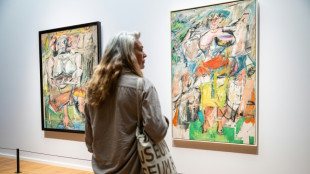
Documentary brings Argentine 'death flights' to the big screen / Photo: LUIS ROBAYO - AFP

 FIFA chief Infantino hit by Norwegian double complaint

 Exiled Catalan separatist leader Puigdemont cleared to return to Spain
 Stock markets climb as oil prices retreat

 'No future': Thousands mass in France for high school protests

 Nobel physics prize honours work on 'ghostly messengers' from outer space

 Bulgaria searches for missing crew after drones hit two more ships in Black Sea

 Le Pen vows drastic cost savings to prevent French 'default'

 'Eats through a straw': French teens wounded in high school protests

 Thousands mass in France for high school protests

 Moscow denies sanitary measures over plague reports
 Samoa look to recreate 2022 final run at Rugby League World Cup

 Asian stocks mostly up after tech-led Wall St record

 German factory orders plunge as recovery still fragile

 Coco Gauff calls out online racism following China open video review

 KVB Accelerates Middle East Footprint with Strategic MENA Regional Expansion

 Purple reign: Philippines seeks to keep grip on ube throne
 Seoul weighs steps to force North Korea landmine apology

 Yemen's Houthis say struck Riyadh airport, other Saudi sites

 Changer+ Launches Stablecoin-First Self-Custodial Wallet to Make Stablecoins Easier to Use

 White Sox down Guardians, Yankees on brink after Rays loss

 COP31 eyes modest steps as climate disasters multiply

 American Nobel laureate in medicine hopes to illuminate the brain
 Trump approves firing squad for convicted US military base shooter

 Grappling with 'homework scams,' US universities shun AI detectors
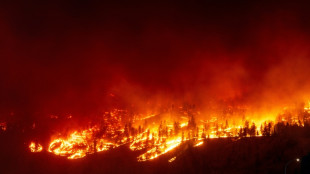
 Separatists win Quebec election in test for Canada PM

With tears in their eyes, a packed cinema of Argentines were confronted this week, some not for the first time, with the horrors of the so-called "death flights" carried out by the country's 1976-1983 military dictatorship.
They had gathered in Buenos Aires for one of the first domestic screenings of "Traslados" ("Transferred") -- an investigative documentary on a very dark chapter of the South American country's not-too distant history.
The title refers to prisoners -- activists and others viewed as enemies of the military junta -- who were rounded up on the pretext of being "transferred," then loaded into planes and thrown out over the River Plate, some already dead but many still alive.
Many were tortured before.
There are still large gaps in what is known about the flights, including the identities of many of the victims.
The new film "puts evidence on the table, brings together all the pieces and everything known... about the 'death flights,'" director Nicolas Gil Lavedra told AFP ahead of the screening in Buenos Aires.
The documentary includes dramatized reenactments based on testimonies from dictatorship survivors, the work of researchers and archival material.
"There are no partisan or subjective opinions, there are facts and there is evidence," insisted Lavedra.
He said the 90-minute feature was mainly aimed at people born after the dictatorship under which about 30,000 people were killed or disappeared, according to rights groups.
"I think it's essential for young people today to know what happened," Octavia Ortuno, a 24-year-old Bolivian psychology student at the University of Buenos Aires, told AFP after the screening.
- 'Justice, truth and memory' -
"Traslados" will be shown at the San Sebastian International Film Festival in Spain next Tuesday.
This comes as the sector reels from deep budget cuts inflicted by self-declared "anarcho capitalist" President Javier Milei.
A central theme of "Traslados" is the fate of Esther Ballestrino, Azucena Villaflor and Maria Ponce -- the founders of the "Mothers of the Plaza de Mayo" group fighting for answers on the fate of the disappeared.
They were kidnapped along with French nuns Alice Domon and Leonie Duquet and seven other activists, and thrown from a plane on the night of December 14, 1977, according to a reconstruction of events.
The 12 were identified by a former marine, Alfredo Astiz, who had infiltrated the "Mothers of Plaza de Mayo" and is serving life imprisonment for his role in the deaths.
In July this year, a group of lawmakers from Milei's party visited Astiz and others convicted of crimes against humanity in prison, an event that created an uproar in the country.
"This documentary shows that they are criminals serving a sentence for crimes against humanity," said Lavedra.
The filmmaker, who had previously made a film about human rights activist Estela de Carlotto -- president of the "Mothers" group -- is the son of a judge who had presided over post-dictatorship trials.
For him, the after-effects of Argentina's dark past can only be overcome "by having a collective memory. The whole society has to understand that the dictatorship was state terrorism and we all have to condemn it.
"The only way we have to heal that wound is with justice, truth and memory," said Lavedra.
Argentina's dictatorship was one of the most brutal of the slew of military regimes that sowed terror in Latin America from the 1960s through the 1980s.
Milei, however, has questioned the number of disappeared, raising the ire of many Argentines.
Leaving the screening of "Traslados" last week, Victor Fuks, 74, told AFP the film had touched him "in a very special way."
He had fled to Spain in 1977 to escape the dictatorship, as "a lot of friends, colleagues... were disappearing."
V.Fontes--PC