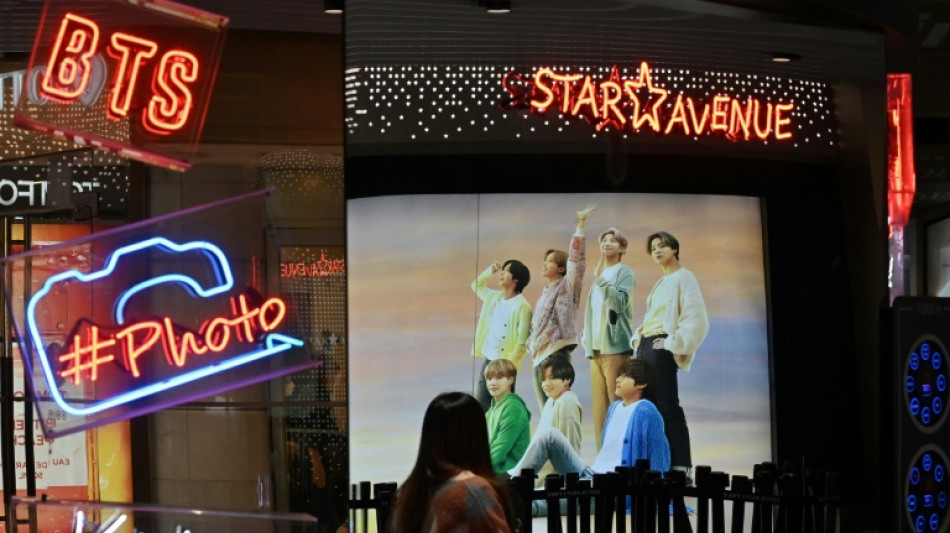
Hello Hallyu: why is South Korean culture sweeping the globe? / Photo: Jung Yeon-je - AFP/File

 Kenya reports first-ever Ebola death
 Tennis world No.1 Sinner's season over due to knee injury

 Yemen's Houthis claim attack on Riyadh airport, deny losing territory

 7-Eleven exits India amid mounting competition

 The alleged murder by US marine on Okinawa: five things to know

 End of an era as Messi prepares to hang up Argentina boots

 Superstar duo headline strong New Zealand squad for Rugby League World Cup

 South Korea warns of possible AI use in banking hacks

 EU vows AI rules will protect Europeans. Will they?

 Myanmar leader to visit Malaysia after migrant returns begin

 Germany's AfD poised to preside over state assembly for first time

 Australia's opposition vows 'largest cut to immigration' in country's history

 Ready, set, snooze: Sleep-deprived Japanese compete for best-rested

 Falcons thump Saints 45-24 as New Orleans marks Katrina anniversary

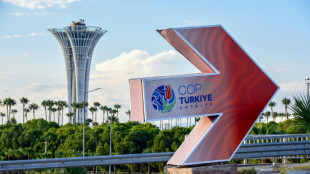
 Tuvalu govt adviser says Australia overstepped in pre-COP visit
 Asian stocks mixed despite tech-led Wall St record

 Tens of thousands expected in Paris for high school protests

 AI borrowing binge rattles US markets

 Young Canadians sue government over alleged climate failures

 White Sox down Guardians to take 2-0 series lead

 NHL record-breaker Ovechkin says current season will be his last

 France roar back in Nations League as Italy beat Turkey

 Messi readies for final farewell in Argentina send-off

 Esposito seals Italy win over Turkey in Nations League

 Russia downplays plague reports as Trump offers US help

It's won Oscars. Its television shows and K-pop stars dominate global charts. Its leading novelist just won the Nobel literature prize. How did South Korea become such a global cultural powerhouse?
AFP takes a look at what we know:
What is Hallyu?
From the late 1990s, Korean dramas and K-pop idols started gaining traction in neighbouring Asian countries like China and Japan, marking the start of Hallyu, or the Korean Wave.
It wasn't until Psy's breakout hit "Gangnam Style" that Hallyu hit the West.
In the decade that followed, "Babyshark" broke YouTube records, K-pop megastars BTS topped the charts, Bong Joon-ho's "Parasite" won an Oscar, and Squid Game became Netflix's most-watched non-English television show.
Cultural exports were worth some $13.2 billion to South Korea in 2022, more than home appliances or electric cars -- but the bulk of that was made up of video games, such as Battlegrounds Mobile which are wildly popular in India and Pakistan.
The government is targeting $25 billion by 2027 -- so expect more K-culture, especially in new markets such as Europe and the Middle East.
Why South Korea?
For Oscar-winning "Parasite" director Bong Joon-ho, the key to the East Asian country's cultural success is that everyone has lived through "dramatic times".
The 1950s Korean War -- which left Seoul locked in conflict with its nuclear-armed northern neighbour -- military dictatorship, sweeping economic transformation, and a democratic transition.
In the South, many have "experienced turbulence and extreme events," Bong has said. As a result "our movies can't help but different."
South Korea "provides creators with ample inspiration and stimulation. It's such a dynamic and turbulent place," he said.
Renowned South Korean filmmaker Park Chan-wook had a similar answer when asked for the secret of his country's cinematic success. "Why don't you try living in 'dynamic Korea?'" he replied.
And K-literature?
Turning contemporary history into art is what 53-year-old novelist Han Kang, who won the literature Nobel Thursday, excels at.
Han has spoken of the transformative experience of learning about a 1980 massacre in her native Gwangju, when South Korea's then-military government violently repressed a democratic uprising.
Han said her father showed her photographs including the scattered bodies of victims, and citizens lining up to donate blood in the chaos -- which later inspired her book "Human Acts".
While many South Korean authors have delved into the themes of the country's traumatic past, Han established her own "striking literary aesthetic" while addressing challenging subjects, said Oh Hyung-yup, a Korean literature professor at Korea University and literary critic.
Women first?
South Korea has some of the worst rates of female workforce participation among advanced economies, but for cultural exports women have been trailblazers.
Han's Booker-winning novel "The Vegetarian", which follows a woman who stops eating meat, is regarded as a landmark ecofeminism text. But it was outsold internationally by Cho Nam-Joo's "Kim Ji-young, Born 1982" about a married South Korean woman who quits her job to raise her child.
As the first Asian woman to win a Nobel for literature, it is appropriate that Han Kang's work addresses violence in ways that male authors have not in the past, Kang Ji-hee, a South Korean literary critic, told AFP.
"Han Kang reinterpreted this type of internal struggle," Kang said, documenting behaviours "that were previously considered to be simply passive, and gave them a whole new meaning."
So was it the government?
With the growing success of K-culture exports across the board -- from film to food, with Korean staples like kimchi and bibimbap soaring in popularity overseas -- it seems like part of a masterplan.
But while the South Korean government has ploughed millions into supporting cultural industries, experts say success has come largely despite, not because, of the state.
When former-president Park Geun-hye was in power from 2013 to 2017, Nobel-winner Han was one of over 9,000 artists "blacklisted" for criticising her government, along with Bong.
Some government initiatives, for example the government-affiliated Literature Translation Institute of Korea (LTI Korea), may have paid off, helping to bring works like Han's to a global audience.
But a growing number of translators, who are more adventurous with their choice of works, have also helped to bring edgier offers to the international market.
Success also breeds more success, cultural export-wise: The reading habits of K-pop megastars have boosted K-literature.
When BTS member Jungkook was seen reading the self-help book "I Decided to Live as Me" it sparked a sales frenzy, with hundreds of thousands of copies flying off shelves.
But Bong also believes that his compatriots' hard drinking habits helped spur creativity.
"We are a very workaholic country. People work too much. And, at the same time, we drink too much. So every night, very hardcore drinking sessions and everything is very extreme."
S.Pimentel--PC