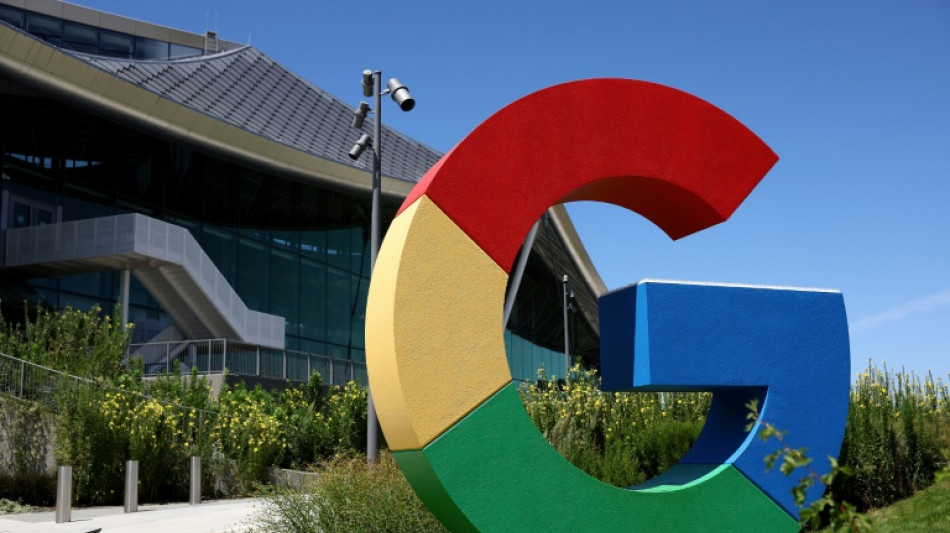
Google signs nuclear power deal with startup Kairos / Photo: JUSTIN SULLIVAN - GETTY IMAGES NORTH AMERICA/AFP

 Kenya reports first-ever Ebola death

 Tennis world No.1 Sinner's season over due to knee injury

 Yemen's Houthis claim attack on Riyadh airport, deny losing territory

 7-Eleven exits India amid mounting competition

 The alleged murder by US marine on Okinawa: five things to know

 End of an era as Messi prepares to hang up Argentina boots

 Superstar duo headline strong New Zealand squad for Rugby League World Cup
 South Korea warns of possible AI use in banking hacks

 EU vows AI rules will protect Europeans. Will they?

 Myanmar leader to visit Malaysia after migrant returns begin

 Germany's AfD poised to preside over state assembly for first time
 Australia's opposition vows 'largest cut to immigration' in country's history

 Ready, set, snooze: Sleep-deprived Japanese compete for best-rested

 Falcons thump Saints 45-24 as New Orleans marks Katrina anniversary

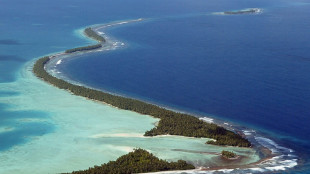
 Tuvalu govt adviser says Australia overstepped in pre-COP visit

 Asian stocks mixed despite tech-led Wall St record
 Tens of thousands expected in Paris for high school protests

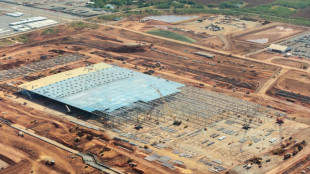 AI borrowing binge rattles US markets

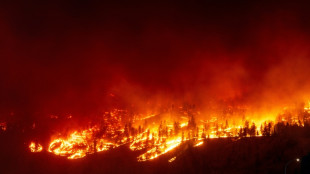 Young Canadians sue government over alleged climate failures

 White Sox down Guardians to take 2-0 series lead
 NHL record-breaker Ovechkin says current season will be his last

 France roar back in Nations League as Italy beat Turkey
 Messi readies for final farewell in Argentina send-off

 Esposito seals Italy win over Turkey in Nations League

 Russia downplays plague reports as Trump offers US help

Google on Monday signed a deal to get electricity from small nuclear reactors to help power artificial intelligence.
The agreement to buy energy from reactors built by Kairos Power came just weeks after word that Three Mile Island, the site of America's worst nuclear accident, will restart operations to provide energy to Microsoft.
"We believe that nuclear energy has a critical role to play in supporting our clean growth and helping to deliver on the progress of AI," Google senior director of energy and climate said during a briefing.
"The grid needs these kinds of clean, reliable sources of energy that can support the build out of these technologies."
No financial details were disclosed.
- Insatiable AI -
Tech giants like Microsoft, Amazon, and Google are rapidly expanding their data center capabilities to meet the AI revolution's computing needs while also scouring the globe for sources of electricity.
The first of a series of small modular reactors (SMRs) developed by Kairos as a result of its deal with Google is projected to be online by the end of this decade, according to the companies.
Additional small reactors are expected to go online through 2035, generating a combined total of 500 megawatts of power.
SMRs are more compact and potentially easier to deploy -- with big investments by Microsoft founder Bill Gates in the sector.
However, the technology is still in its infancy and lacks regulatory approval, leading companies to seek out existing nuclear power options.
"We view this as a really significant partnership," Kairos co-founder and chief executive Mike Laufer said in the briefing.
The agreement allows SMR technology "to mature and learn along the way," Laufer added.
The grid needs new, clean, electricity sources to support AI as its capabilities and uses accelerate, Terrell said, saying nuclear power is part of a campaign by the tech giant to have abundant carbon-free energy available around the clock.
"This is an incredibly promising bet," Terrell said of the deal.
"If we can get these projects to scale and then scale globally, it will deliver enormous benefits to communities and power grids around the world."
- Is it safe? -
Seen as a more consistent source of power than solar and wind, many tech companies are betting on nuclear energy's rapid development to meet AI's electricity demands.
Microsoft use of Three Mile Island's nuclear energy will bolster a power grid covering 13 states.
This area faces severe strain from data centers' massive energy consumption, raising concerns about grid stability as AI demands increase.
Amazon's AWS agreed in March to invest $650 million in a data center campus powered by another Pennsylvania nuclear plant.
Nuclear energy has staunch opponents due to concerns about radioactive waste disposal, the potential for catastrophic accidents, and the high costs associated with plant construction and decommissioning.
The 1979 partial meltdown of Unit 2 at Three Mile Island caused panic in the United States and brought the expansion of nuclear energy to a standstill.
The Nuclear Regulatory Commission deemed it the "most serious accident in US commercial nuclear power plant operating history," though it noted no detectable health effects on workers or the public from the small radioactive releases.
T.Batista--PC