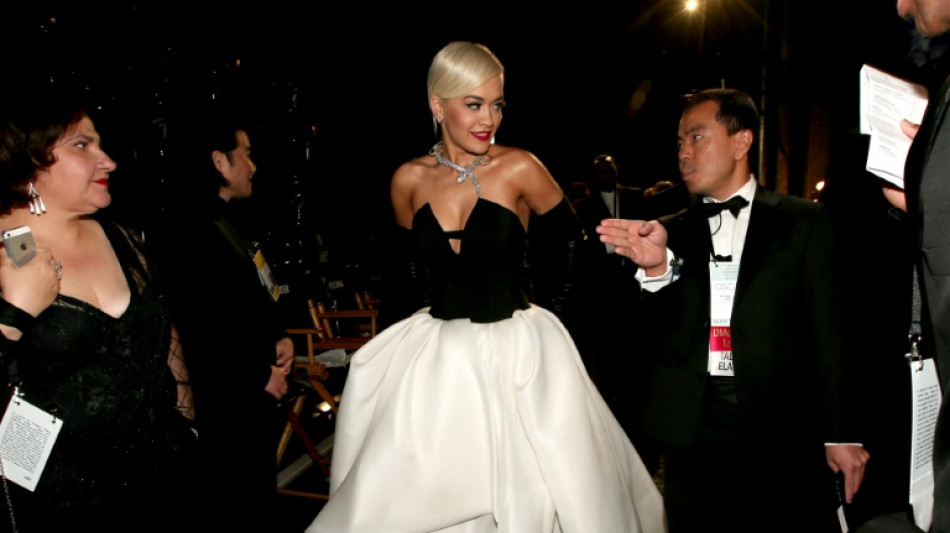
Five facts about Kosovo: three flags, pop royalty and love of US / Photo: Christopher Polk - GETTY IMAGES NORTH AMERICA/AFP

 Leaders visit Pacific atoll at frontline of climate change
 Yemen's Houthis claim striking Riyadh airport, other Saudi sites
 Best-selling British author Jeffrey Archer dies aged 86
 Military plane crash kills 32 in Nigeria
 Olise powers France to win over Belgium in Nations League
 High-flying Blazy turns to birdlife at Chanel
 Riyadh's allies pledge troops as Yemen, Saudi Arabia attack Houthis
 Clashes erupt outside Kosovo parliament over war crimes court
 Milan's Saelemaekers suffers ankle setback, faces lengthy spell out
 Rubio arrives in Iceland to push for greater US presence in Arctic
 Putin allows Italy's UniCredit to sell part of Russian business
 Djokovic into China Open final as Medvedev out for hitting fan with ball
 ICC unseals arrest warrants for Taliban education ministers
 Modric hopes fans back Croatia against Spain after England shame
 Bolsonaro rides right-wing surge into Brazil's election runoff
 Turkey blocks X account of British reporter
 Ukraine says using AI robot guns to shoot down new Russian drones
 At Oct 7 memorial, Netanyahu says will be no Hamas rule in Gaza
 Ukraine blames Russia for deadly sinking of Turkish ship in Black Sea
 UN rights council slams Taliban's 'oppression' of women
 Norway eyes partial ban of smart glasses
 Two dead after ship catches fire, sinks in Black Sea
 Spain's PM calls snap election after housing bill defeat
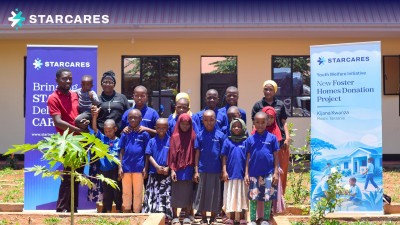 STARCARES Equips Seven Foster Homes for Children and Young People in Tanzania
 Alleged Indian leader of neo-Nazi child abuse ring goes on trial in Paris
Kosovo, one of Europe's poorest countries beset with rocky relations with its larger neighbour Serbia, holds parliamentary elections Sunday.
Here are five things to know about the former Serbian province, which broke away from Belgrade in a bloody war in the 1990s and is still pushing for full global recognition of its statehood.
- America the great -
Kosovo's reputation as "the most pro-American country" in the world continues to be visible on the streets.
The love for all things American is rooted in gratitude for Washington's support during Kosovo's struggle for independence from Serbia, including the US-led NATO intervention that ended the war in 1999.
The capital Pristina is home to a statue of former US president Bill Clinton, a bust of former US secretary of state Madeleine Albright and a boulevard named after George W. Bush.
Klinton and Medllin -- a Kosovar twist on Clinton and Madeleine -- are also popular names for children born after the conflict.
With popularity also comes influence.
Washington wields heavy clout in Pristina, leading to the joke that Kosovo has two governments: one that is elected and another in the super-modern US embassy, perched on a hill overlooking Pristina.
- Pop stars and diaspora -
Kosovo is home to around 1.6 million people, with another 800,000 estimated to be living abroad, mostly in Germany and Switzerland.
The diaspora is a hefty economic force, sending home millions of euros in vital remittances annually, while also spending an untold amount of cash during summer holidays.
Kosovo is also home to one of Europe's youngest populations, with half aged under 25.
However, it has one of the highest youth unemployment rates, which together with the poverty level of just above 19 percent, is a major factor in pushing people to emigrate.
Some of Kosovo's most famous ambassadors are its diaspora pop stars, including the UK-raised Dua Lipa and Rita Ora, who both speak proudly of their Kosovo roots and do not miss a chance to promote its independence.
- Three flags -
Three different flags can be found flying across Kosovo.
The official flag bears the diamond shape of its territory and six stars symbolising the six main ethnic groups on a blue background.
It is jokingly called a "towel" by members of Kosovo's ethnic Albanian majority, who believe the flag was adopted largely to please Western patrons who wanted a neutral symbol.
But the colours more commonly flown across Kosovo are the pan-Albanian symbol of a black double-headed eagle on a red background, which is also the official flag of neighbouring Albania.
The exception is in enclaves home to Kosovo's Serb minority, who still fly the Serbian tricolour flag as a symbol of their loyalty to Belgrade.
- Recognition -
Kosovo declared independence in 2008 -- a decision that was recognised by more than 100 nations, according to its foreign ministry.
Serbia, however, has fiercely refused to recognise the young democracy and with help of Russia and China has lobbied heavily against its international recognition and played a pivotal role in helping block its UN membership.
In 2017, Belgrade launched a "derecognition campaign" aiming to persuade countries that have recognised Kosovo to reverse that decision.
Serbia said it has succeeded in convincing some 28 countries to revoke their recognition of Kosovo to date.
However, the "derecognition campaign" is not without controversy.
Kosovo authorities have accused Serbia of spreading disinformation, saying that they had not received a single official communique from any of the countries Serbia has alleged no longer recognises the government in Pristina.
- Moderate Islam -
More than 90 percent of Kosovars identify as Muslim, making it one of Europe's few Muslim-majority territories.
Most followers of the faith in Kosovo practise a liberal form of Sunni Islam.
Research shows that for many, religion is a private matter and ethnicity takes precedence.
"The religion of the Albanians is Albanianism," goes one common saying in the Balkans.
But recent years have seen growing pockets of extremism, leading authorities to crack down on a handful of radical clerics.
C.Amaral--PC