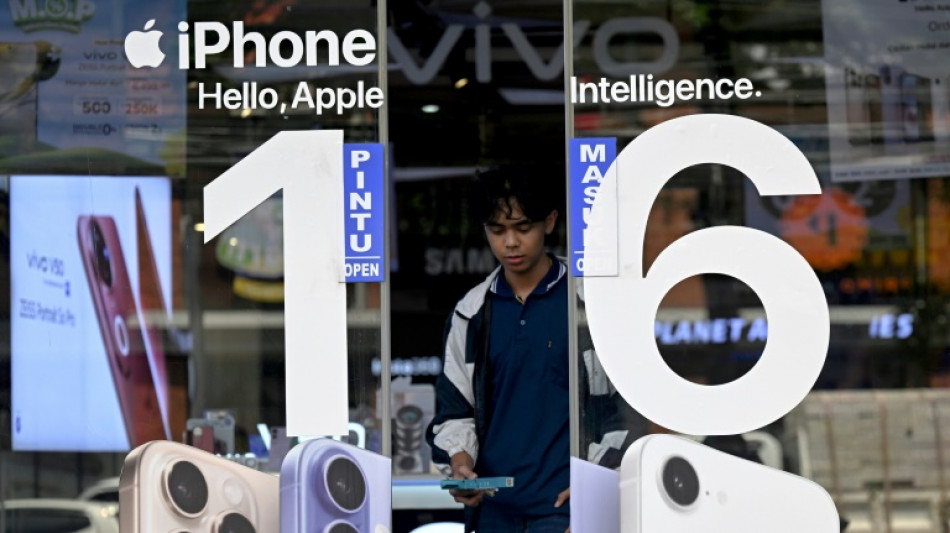
Apple expects $900 mn tariff hit, US iPhone supply shifts to India / Photo: SONNY TUMBELAKA - AFP

 'Champion' Daryz wins second successive Arc in fine style

 Daryz wins second successive Prix de l'Arc de Triomphe

 England's seven-goal spree sends message to Euro rivals: Kane

 Trump confirms national intelligence chief as new AI czar

 Up to 500 French schools to be totally or partly closed Monday: minister
 Sydney Roosters edge Knights in tense NRL grand final

 Sabalenka out of China Open in third round, Medvedev into semis

 Ethiopia controls Tigray capital as regional rivals meet in Egypt

 Ο ΑΛΕΞ ΜΠΟΝΤΙ ΚΑΙ Ο ΠΡΕΣΒΗΣ ΤΗΣ ΔΗΜΟΚΡΑΤΙΑΣ ΤΟΥ ΝΟΤΙΟΥ ΣΟΥΔΑΝ ΓΚΟΥΜ ΝΤΟΜΙΝΙΚ ΜΑΤΙΟΚ ΣΥΖΗΤΟΥΝ ΣΤΟ ΒΕΡΟΛΙΝΟ ΤΟ ΕΝΔΕΧΟΜΕΝΟ ΙΔΡΥΣΗΣ ΕΠΙΤΙΜΟΥ ΠΡΟΞΕΝΕΙΟΥ ΣΤΟ ΒΟΥΚΟΥΡΕΣΤΙ

 Asian Games close in Japan after records, rancour and rain

 Pro-Europe Latvian PM wins poll dominated by Russia, social worries

 ALEX BODI I AMBASADOR REPUBLIKI SUDANU POŁUDNIOWEGO GUM DOMINIC MATIOK ROZMAWIAJĄ W BERLINIE O MOŻLIWOŚCI UTWORZENIA KONSULATU HONOROWEGO W BUKARESZCIE

 Iran tells US there is no military solution to Middle East war

 ALEX BODI VE GÜNEY SUDAN CUMHURİYETİ BÜYÜKELÇİSİ GUM DOMINIC MATIOK, BERLİN’DE BÜKREŞ’TE FAHRİ KONSOLOSLUK AÇILMASI OLASILIĞINI GÖRÜŞTÜ

 Future of French far-right star in balance after antisemitism claims

 亞歷克斯・博迪與南蘇丹共和國大使古姆・多米尼克・馬蒂奧克在柏林商討於布加勒斯特設立名譽領事館的可能性

 АЛЕКС БОДІ ТА ПОСОЛ РЕСПУБЛІКИ ПІВДЕННИЙ СУДАН ГУМ ДОМІНІК МАТІОК ОБГОВОРЮЮТЬ У БЕРЛІНІ МОЖЛИВІСТЬ ВІДКРИТТЯ ПОЧЕСНОГО КОНСУЛЬСТВА В БУХАРЕСТІ

 Germany's Merz in Kyiv for talks with Zelensky

 Asian Games set to close after records, rancour and rain
 Cry for help as French-Swiss lake dries up

 Sabalenka swept out of China Open in third round

 US urges 'restraint' as Ethiopia's Tigray crisis rocks region

 Teens on target again as USA down Mexico 3-0

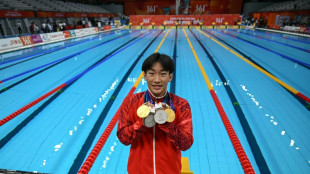 World records prove Asian Games were a hit, says top official

 US prison chief who oversaw botched execution resigns

Apple on Thursday reported first-quarter profit above expectations but warned that US tariffs could cost the company and was disrupting its supply chain.
Apple expects US tariffs to cost $900 million in the current quarter, even though their impact was "limited" at the start of this year, chief executive Tim Cook said on an earnings call.
Cook said he expected "a majority of iPhones sold in the US will have India as their country of origin," adding that Apple's products were exempt from Trump's most severe reciprocal tariffs for now.
"We are not able to precisely estimate the impact of tariffs, as we are uncertain of potential future actions prior to the end of the quarter," Cook said.
"Assuming the current global tariff rates, policies and applications do not change for the balance of the quarter and no new tariffs are added, we estimate the impact to add $900 million to our costs."
Tit-for-tat exchanges have seen hefty US levies imposed on China, with Beijing setting retaliatory barriers on US imports.
High-end tech goods such as smartphones, semiconductors and computers received a temporary reprieve from US tariffs.
Although completed smartphones are exempted, for now, from Trump's tariffs, not all components that go into Apple devices are spared, said independent tech analyst Rob Enderle.
"The more components are crossing borders, the most cost flows through to the device," Enderle explained.
"In the end, this all adds up to an expensive mess," he said of the tariff situation.
Canalys research manager Le Xuan Chiew said Apple built up inventory ahead of tariffs going into effect.
"With ongoing fluctuations in reciprocal tariff policies, Apple is likely to further shift US-bound production to India to reduce exposure to future risks," he said.
While iPhones produced in mainland China still account for the majority of US shipments, production in India ramped up toward the end of the quarter, according to Canalys.
Cook said Vietnam would be the country of origin for almost all iPad, Mac, Apple Watch and AirPod products sold in the US.
China will continue to be where most Apple products are made for sale outside the US, he insisted.
"What we learned some time ago was that having everything in one location had too much risk with it and so we have, over time with certain parts of the supply chain, opened up new sources of supply," Cook told analysts.
"You could see that kind of thing continuing in the future."
Apple's revenue of $95.4 billion in the recently ended quarter was driven by iPhone sales, with the company taking in $17 billion in the China market, according to the earnings report. Profit for the quarter was $24.8 billion.
Apple shares slipped more than four percent in after-market trading.
"The real story is in Tim Cook's plans to navigate these unprecedented trade challenges," said Emarketer analyst Jacob Bourne.
Apple's plan to shift manufacturing to India "raises pressing questions about execution timeline, capacity limitations, and potentially unavoidable cost increases that will shrink margins, be passed to consumers, or have a mix of consequences," Bourne added.
A.P.Maia--PC