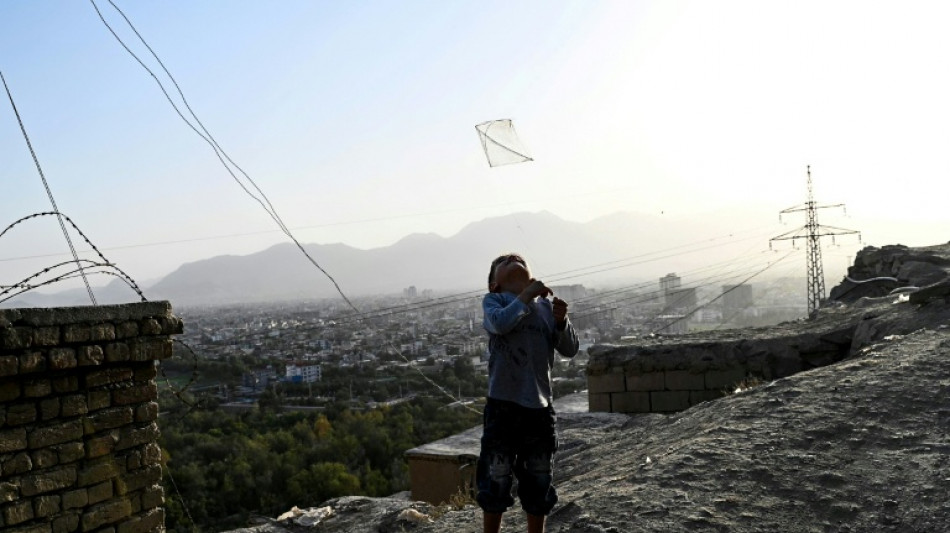
UN calls for Taliban to restore internet as Afghanistan goes dark / Photo: Wakil KOHSAR - AFP

 ALEX BODI AND AMBASSADOR GUM DOMINIC MATIOK OF THE REPUBLIC OF SOUTH SUDAN MEET IN BERLIN TO DISCUSS THE POSSIBILITY OF AN HONORARY CONSULATE IN BUCHAREST

 Lula, Bolsonaro wrap up campaigns ahead of Brazil's knife-edge vote

 Toulouse edge Castres in Top 14 derby

 Murakami homer propels White Sox to MLB playoff win over Guardians

 Israel targets top Hamas leader in deadly Gaza strike on anniversary

 Houthis say struck oil facility near Riyadh, as Saudis hit Sanaa

 AI needs safety layers like nuclear plants: ex-OpenAI engineer

 MVP Judge will miss Yankees' MLB playoff series against Rays

 New lizard species discovered in Peru

 Fernandes hails Portugal's 'greatest symbol' Ronaldo, calls for unity

 Grandidier-Nkanang double takes Pau to Top 14 summit despite Vannes fightback

 Trainer Scott gets perfect Arc boost with top notch double

 Ex-PM says Putin cannot admit 'mistake' over Ukraine

 Houthis say Saudi Arabia launches dozens of strikes on Yemen capital

 Qatar and Abu Dhabi F1 Grand Prix to go ahead - F1 boss

 South Korea lift gloom with smash-and-grab Games football gold

 Ireland news conference before Israel game cut short amid tensions
 Protests over housing flare in Spain after relief measures rejected

 Zverev thrashes Shang to set up Djokovic quarter-final at China Open

 Turkey football ref chief jailed pending trial for graft
 North Korea says test of intermediate-range strategic missile included use of AI

 Rampant Sayers leads Hong Kong to third men's rugby gold in a row

 Ethiopia's Tigray rebels abandon regional capital as govt advances

 Bulgaria's Tsar Samuel returns 'home' after 1,000 years

 'Glad it's over': Kim powers to Games gold and military exemption

The United Nations called on Afghanistan's Taliban authorities Tuesday to immediately restore internet and telecommunications in the country, 24 hours after a nationwide blackout was imposed.
The government began shutting down high-speed internet connections to some provinces earlier this month to prevent "immorality", on the orders of shadowy supreme leader Hibatullah Akhundzada.
Mobile phone signal and internet service weakened on Monday night until connectivity was less than one percent of ordinary levels.
Afghans are unable to contact each other, online businesses and the banking systems have frozen, and diaspora abroad cannot send crucial remittances to family.
All flights were cancelled at Kabul airport on Tuesday, AFP journalists saw.
"The cut in access has left Afghanistan almost completely cut off from the outside world, and risks inflicting significant harm on the Afghan people, including by threatening economic stability and exacerbating one of the world's worst humanitarian crises," the UN Assistance Mission in Afghanistan (UNAMA) said in a statement.
"The current blackout also constitutes a further restriction on access to information and freedom of expression in Afghanistan," it added.
The UN rights office called the blackout an "extremely serious human rights violation".
"Women and girls already excluded from public life are especially affected," it said on social media Tuesday, calling for immediate reconnection.
It is the first time since the Taliban government won their insurgency in 2021 and imposed a strict version of Islamic law that communications have been shut down in the country.
"I came to work this morning but we cannot run any business because clients do not have access to online banking, transactions, cash withdrawal, or money authorisation," a bank worker who asked not to be named told AFP in Kabul.
"When there was internet, we never felt how important it was."
The post office was also unable to operate because it required bank services to carry out its work, staff told AFP.
- Radio communications -
Minutes before the shutdown on Monday evening, a government official warned AFP that the fibre optic network would be cut, impacting mobile phone services, "until further notice".
"There isn't any other way or system to communicate... the banking sector, customs, everything across the country will be affected," said the official, who asked not to be named.
Telephone services are often routed over the internet, sharing the same fibre optic lines, especially in countries with limited telecoms infrastructure.
The telecommunications ministry refused to let journalists enter the building in Kabul on Tuesday.
A UN source said Tuesday that "operations are severely impacted, falling back to radio communications and limited satellite links".
AFP journalists witnessed Taliban security forces using radios to communicate with each other at public buildings such as the airport and post office.
Over the past weeks, internet connections have been extremely slow or intermittent.
On September 16, when the first internet services were cut in northern provinces, Balkh provincial spokesman Attaullah Zaid said the ban had been ordered by the Taliban's leader.
"This measure was taken to prevent vice, and alternative options will be put in place across the country to meet connectivity needs," he wrote on social media.
"Recent studies in Afghanistan found that internet applications have badly affected the ongoing, economic, cultural and religious foundations of society," he claimed.
The Taliban leader reportedly ignored warnings from some officials this month about the economic fallout of cutting the internet and ordered authorities to press ahead with a nationwide ban.
Netblocks, a watchdog organisation that monitors cybersecurity and internet governance, said the blackout "appears consistent with the intentional disconnection of service".
On Tuesday, it said connectivity had flatlined below one percent, with no restoration of service observed.
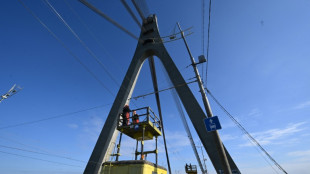
In 2024, Kabul had touted the 9,350-kilometre (5,800-mile) fibre optic network -- largely built by former US-backed governments -- as a "priority" to bring the country closer to the rest of the world and lift it out of poverty.
V.Dantas--PC