-
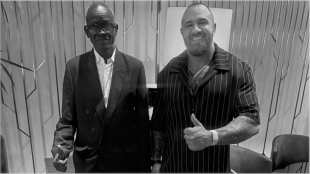 ALEX BODI AND AMBASSADOR GUM DOMINIC MATIOK OF THE REPUBLIC OF SOUTH SUDAN MEET IN BERLIN TO DISCUSS THE POSSIBILITY OF AN HONORARY CONSULATE IN BUCHAREST
-
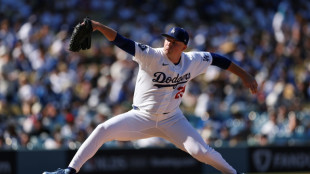
Dodgers step up World Series three-peat bid with 5-3 win over Braves
-
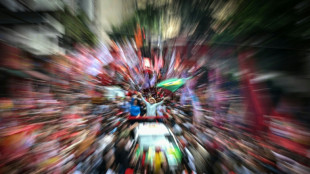 Lula, Bolsonaro wrap up campaigns ahead of Brazil's knife-edge vote
-
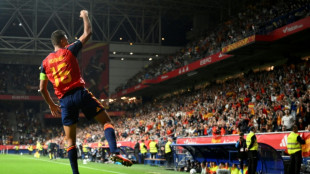
Spain break down Czechs as England outclass Croatia in Nations League
-
 Toulouse edge Castres in Top 14 derby
-
Yamal on target as Spain hold off Czech Republic

-
 Murakami homer propels White Sox to MLB playoff win over Guardians
-
Latvian exit polls suggest pro-European choice

-
 Israel targets top Hamas leader in deadly Gaza strike on anniversary
-
Lula, Bolsonaro wrap up campaigns ahead of knife-edge election

-
 Houthis say struck oil facility near Riyadh, as Saudis hit Sanaa
-
Tuchel hails 'complete' England after Croatia demolition

-
 AI needs safety layers like nuclear plants: ex-OpenAI engineer
-
Fury to invite Trump to lead ring walk before Joshua showdown

-
 MVP Judge will miss Yankees' MLB playoff series against Rays
-
Fashion industry in 'precarious moment', says Vivienne Westwood supremo

-
 New lizard species discovered in Peru
-
Seventh heaven for England in Nations League rout of Croatia

-
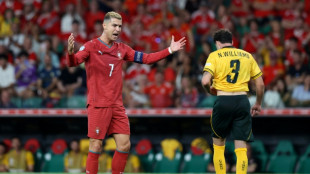 Fernandes hails Portugal's 'greatest symbol' Ronaldo, calls for unity
-
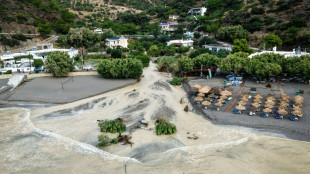
Storms, flooding cause chaos on Greek holiday island of Crete
-
 Grandidier-Nkanang double takes Pau to Top 14 summit despite Vannes fightback
-
#IAmJaneDoe: online support campaign in US university rape case
-
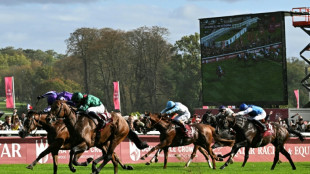
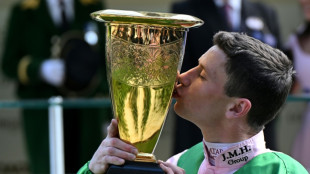 Trainer Scott gets perfect Arc boost with top notch double
-
Brazil shine on Selecao's first visit to India

-
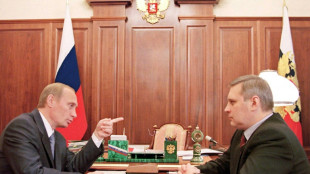 Ex-PM says Putin cannot admit 'mistake' over Ukraine
-
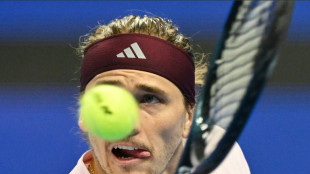
Zverev sets up Djokovic quarter-final at China Open, Rybakina out
-
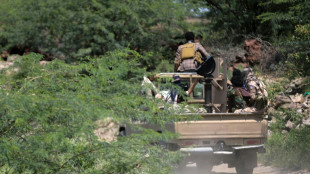 Houthis say Saudi Arabia launches dozens of strikes on Yemen capital
-
Happier at home, Bordeaux hammer Lyon in Top 14
-
 Qatar and Abu Dhabi F1 Grand Prix to go ahead - F1 boss
-
Lula, Bolsonaro in final push for votes ahead of knife-edge election
-
 South Korea lift gloom with smash-and-grab Games football gold
-
Boisterous fashion week barnstorms 'sleepy' Nigerian capital

-
 Ireland news conference before Israel game cut short amid tensions
-
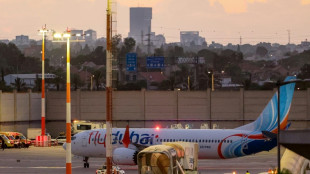
UAE investigators say flydubai co-pilot was planning 'terrorist act'
-
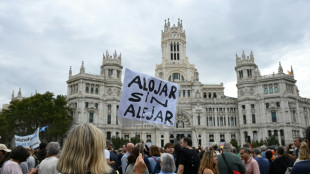 Protests over housing flare in Spain after relief measures rejected
-
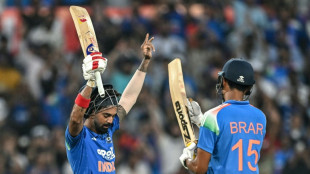
Rahul smacks century in India v Windies ODI
-
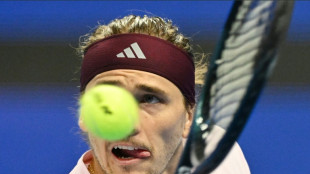 Zverev thrashes Shang to set up Djokovic quarter-final at China Open
-
Daryz seeks to join exclusive club of dual Arc winners
-
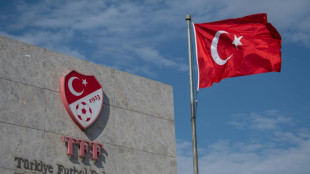 Turkey football ref chief jailed pending trial for graft
-
Russia warns diplomats to leave Kyiv over new strikes threat
-
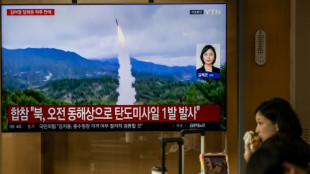 North Korea says test of intermediate-range strategic missile included use of AI
-
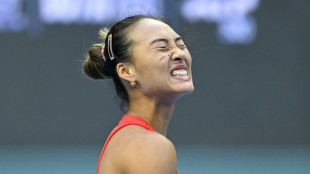
Olympic champ Zheng rebukes rowdy home crowd at China Open
-
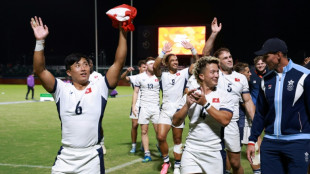 Rampant Sayers leads Hong Kong to third men's rugby gold in a row
-
World No.1 Sinner pulls out of Shanghai Masters to delay return

-
 Ethiopia's Tigray rebels abandon regional capital as govt advances
-
Red Bull's Verstappen grabs pole position for Bahrain GP

-
 Bulgaria's Tsar Samuel returns 'home' after 1,000 years
-
India beat Pakistan in blockbuster as golfer Kim wins 'crazy' gold

-
 'Glad it's over': Kim powers to Games gold and military exemption
-
India beat arch-rivals Pakistan to win Asian Games cricket gold

Hungary's Krasznahorkai, 'master of the apocalypse' wins literature Nobel
The Nobel Prize in Literature was on Thursday awarded to Laszlo Krasznahorkai, considered by many as Hungary's most important living author, whose works explore themes of postmodern dystopia and melancholy.
The Swedish Academy honoured him "for his compelling and visionary oeuvre that, in the midst of apocalyptic terror, reaffirms the power of art."
"I'm very happy, I'm calm and very nervous altogether," the author told Swedish broadcaster Sveriges Radio from Frankfurt.
"It is my first day as a Nobel prize winner," he said.
The Academy highlighted Krasznahorkai's first novel published in 1985, "Satantango", which brought him to prominence in Hungary and remains his best-known work.
The Academy called it "a literary sensation".
Krasznahorkai is "a great epic writer in the Central European tradition that extends through Kafka to Thomas Bernhard, and is characterised by absurdism and grotesque excess," the Academy said.
"But there are more strings to his bow, and he also looks to the East in adopting a more contemplative, finely calibrated tone."
"The result is a string of works inspired by the deep-seated impressions left by his journeys to China and Japan," it said.
Krasznahorkai was among those mentioned as a possible winner in the run-up to the announcement.
The Academy noted the author's flowing syntax with long, winding sentences devoid of full stops that has become his signature.
"While it is Krasznahorkai's weighty, rolling syntax that has perhaps become his signature as an author, his style also allows for a lightness of touch and a great lyrical beauty," Academy member Steve Sem-Sandberg said.
Hungarian Prime Minister Viktor Orban hailed the prize to Krasznahorkai.
"The pride of Hungary, the first Nobel Prize winner from Gyula, Laszlo Krasznahorkai. Congratulations!" Orban posted on Facebook, referring to the town in southeastern Hungary where Krasznahorkai was born.
Krasznahorkai, 71, grew up in a middle-class Jewish family.
He has drawn inspiration from his experiences under communism, and the extensive travels he undertook after first moving abroad in 1987 to West Berlin for a fellowship.
His novels, short stories and essays are best known in Germany -- where he lived for long periods -- and his native Hungary.
Critically difficult and demanding, his style was described once by Krasznahorkai himself as "reality examined to the point of madness".
- 'Literary sensation' -
"It is Laszlo Krasznahorkai's artistic gaze, which is entirely free of illusion and which sees through the fragility of the social order, combined with his unwavering belief in the power of art that has motivated the Academy to award him this prize," Sem-Sandberg said.
American critic Susan Sontag crowned Krasznahorkai the "master of the apocalypse" after having read his second book "The Melancholy of Resistance" in 1989, the Academy said.
His "War and War" novel (1999) was described by the New Yorker magazine critic James Wood as "one of the most profoundly unsettling experiences I have ever had as a reader".
He is the second Hungarian to win the prize, after the late Imre Kertesz won it in 2002.
Last year, the award went to South Korean author Han Kang, the first Asian woman to win the Nobel.
Just 18 of the 122 laureates since the prize was first awarded in 1901 have been women.
The Swedish Academy has undergone major reforms since a devastating #MeToo scandal in 2018, vowing a more global and gender-equal literature prize.
The Nobel Prize comes with a diploma, a gold medal and a $1.2 million prize sum.
Krasznahorkai will receive the award from King Carl XVI Gustaf in Stockholm on December 10, the anniversary of the 1896 death of scientist and prize creator Alfred Nobel.
L.Henrique--PC