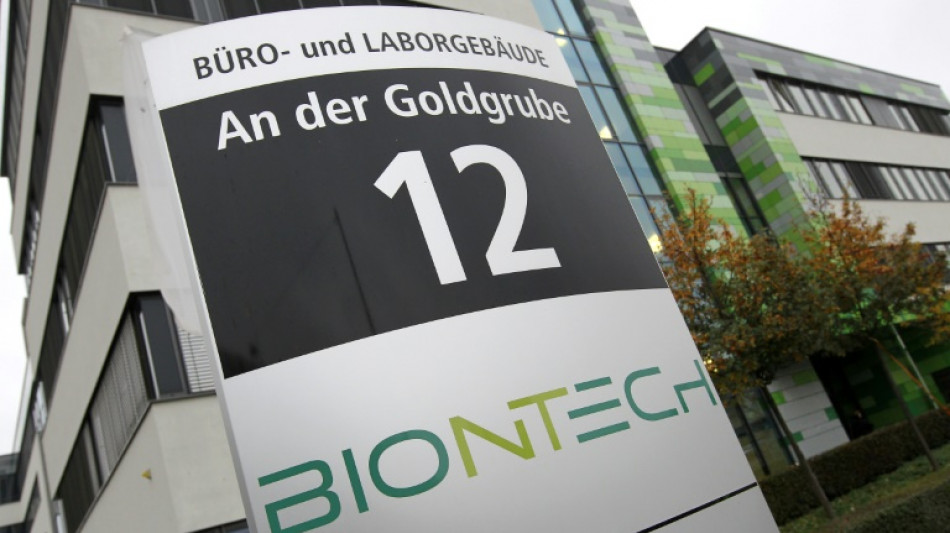
Germany's BioNTech plans UK trial of mRNA cancer therapy / Photo: Daniel ROLAND - AFP/File

 ANC’s Renewal Rhetoric Fades as Voters Reject Party in 2026 Local Elections

 Foreign Investors Return to Indian Markets After 10-Month Selloff

 Honda CR-V and Toyota RAV4 Lead Canada’s Most Stolen Vehicles List for 2025

 China Extends Tariff Suspension on US Imports to Stabilize Trade Ties

 JR East Launches 'teppay' to Integrate Suica Balance with Mobile Payments
German pharmaceutical company BioNTech, which developed a trailblazing Covid-19 vaccine, will trial a cancer treatment in Britain using the same mRNA technology, the company said on Friday.
Up to 10,000 people will receive the immunotherapy tailored to individual tumours by the end of 2030, either in trials or as an approved treatment, BioNTech said in a statement.
The project is part of a new agreement with the British government focused on "cancer immunotherapies, infectious disease vaccines, and expansion of BioNTech's footprint in the UK", the company said.
BioNTech will also open a new research and development centre with around 70 staff in Cambridge, as well as setting up a regional headquarters in London.
"Our goal is to accelerate the development of immunotherapies and vaccines using technologies we have been researching for over 20 years," said Ugur Sahin, CEO and co-founder of BioNTech.
The UK "successfully delivered Covid-19 vaccines so quickly", he said, demonstrating "that drug development can be accelerated without cutting corners if everyone works seamlessly together towards the same goal".
The messenger RNA method made its debut with the Pfizer/BioNTech coronavirus vaccine, which was the first jab against Covid to be approved in the West in late 2020.
Scientists believe mRNA vaccines, which provoke an immune response by delivering genetic molecules containing the code for key parts of a pathogen into human cells, could be a game-changer against many diseases.
They also take less time to develop than traditional vaccines.
BioNTech's Covid-19 shot was developed and approved by regulators in less than a year.
BioNTech is also working on mRNA-based vaccines against malaria, influenza and shingles.
The company has been developing mRNA-based cancer therapies since it was founded in 2008 and they have been trialled on several hundred people so far.
Ferreira--PC

