ANC’s Renewal Rhetoric Fades as Voters Reject Party in 2026 Local Elections

 ANC’s Renewal Rhetoric Fades as Voters Reject Party in 2026 Local Elections

 Foreign Investors Return to Indian Markets After 10-Month Selloff

 Honda CR-V and Toyota RAV4 Lead Canada’s Most Stolen Vehicles List for 2025

 China Extends Tariff Suspension on US Imports to Stabilize Trade Ties

 JR East Launches 'teppay' to Integrate Suica Balance with Mobile Payments
After nearly twenty years of official pledges to reverse internal decay and restore public trust, the African National Congress (ANC) faces a stark reality check following the 2026 local government elections. The results indicate that South African voters no longer believe in the party's capacity for renewal, marking a significant shift from the era when the ANC maintained overwhelming electoral support despite early warnings of structural crisis.
In April 2012, ahead of its national policy conference scheduled for June of that year, the African National Congress (ANC) published a critical discussion document titled "Organisational Renewal: Building the ANC as a Movement for Transformation and a Strategic Centre of Power." The document addressed deep-seated structural and moral crises threatening the organization's integrity. This publication came in the wake of the 2011 local government elections, which saw a record voter turnout of 57.6 percent. Although the ANC maintained its national majority with 62 percent of the vote—more than 16.5 million voters compared to the Democratic Alliance’s 23.9 percent—the party had registered a 2.82 percent decrease in support since the 2006 local elections.
Despite this decline, the ANC remained the party trusted by the majority of South Africans. The removal of President Thabo Mbeki in 2008 and his replacement by Jacob Zuma, who had stood trial for rape, had dented the party’s image, but public confidence in its governing capacity persisted. The 2012 document sought to engage with serious internal problems, following mandates from the 2007 Polokwane conference and the 2010 national general council. Both gatherings had declared the necessity of organizational renewal to reverse negative tendencies eroding the party’s political integrity and electoral confidence.
The 2012 discussion document focused on three key pillars. The first emphasized returning to the "mass line," urging a revival of activism in ANC branches by shifting them away from factional, self-serving politics toward grassroots developmental work. The second pillar engaged with the concept of the ANC as a strategic center of power, arguing that merely deploying cadres to state institutions was insufficient. The party needed to build its own organizational capacity to provide moral, intellectual, and political leadership across all societal spheres, including the state, economy, civil society, and international relations.
The third pillar addressed combating internal pathology, explicitly confronting the paralysing effects of factionalism, corruption, gate-keeping, and organizational disunity. Beyond these issues, the document reflected on the ANC’s growing alienation from the people, noting a loss of public trust and a sense that leadership had grown distant. It identified the rise of self-serving or "parasitic" politics driven by personal accumulation rather than a service-oriented ethos as a key factor in organizational weakness.
The document contended that these factors set parameters for electoral vulnerability, tying declining support to value system collapse and bureaucratization. Every conference across all structures, including the national general council and national policy conference, held after 2007 addressed the question of moral, ethical, and political decay within the ANC, emphasizing the need for urgent renewal. The term "organisational renewal" became cemented in the party’s lexicon for two decades.
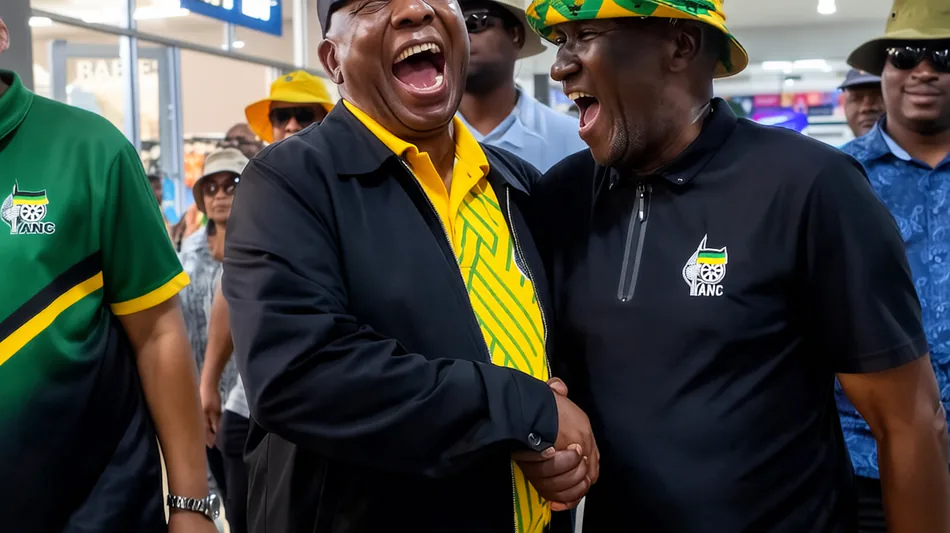
With every election cycle, South Africans were subjected to speeches and think pieces from ANC leaders about the party being on a path of renewal. President Cyril Ramaphosa, who has presided over sustained hollowing out of the state, poor governance, maladministration, corruption, and moral decay under ANC governance—both as a majority party and within coalitions—was elected on the promise of the renewal of the ANC.
That renewal did not materialize. The results from the 2026 local government elections indicate that South Africans have stopped believing it ever will. Voters have collectively decided, after nearly 20 years of listening to "organisational renewal" rhetoric, that the ANC is past the point of renewal. Existing evidence supports this position, marking a definitive end to the party’s long-standing narrative of self-correction and a significant shift in the political landscape.
L.E.Campos--PC