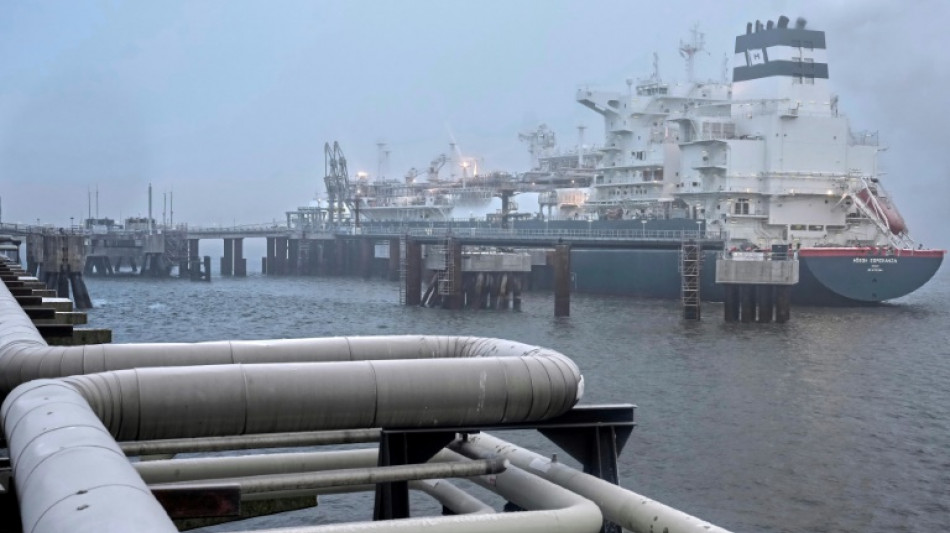
German economy weathering hard winter but risks loom / Photo: Michael Sohn - POOL/AFP

 Funerals in Nepal for missing, a week after deadly floods
 US aircraft carrier arrives in Thailand after months at sea

 US aircraft carrier approaches Thai port after months at sea

 Nepal's young PM faces gravest test after flood catastrophe

 What rainbow? LGBTQ Indonesians on edge as hostility mounts

 O'Connor eyes Wallabies World Cup swansong after Force return

 Syria UXO causing death, injury every six hours: charity
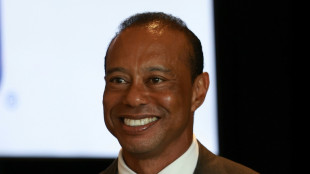 Tiger Woods set to change not guilty plea in DUI case: court documents
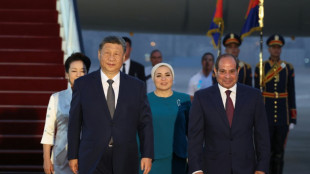
 Zelensky warns airlines Russian skies not safe due to Ukraine drones

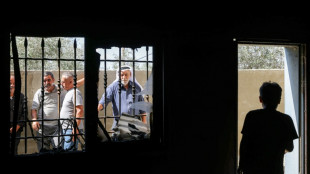 UK vows anti-settler measures as Israel warns of retaliation

 New pro Koivun among US Presidents Cup picks

 G20 finance leaders close talks marked by US welcoming Russia

 From Hollywood to big time tennis: teen makes US Open debut

 Man City secure Premier League record deal to sign Fernandez

 Kaepernick says NFL 'blackballing me' decade after protest

 Atletico loan David from Juve, send Lemar to Elche

 Chelsea 'keeper Sanchez makes deadline-day move to Como

 Kroenke to buy baseball's Los Angeles Angels: statement

 US defends Trump's Venezuela oil deal

 OpenAI to launch new model with 'stronger safeguards' after hack

 Fans mourn 'bittersweet' final Ariana Grande gig in London

 Norway's King Haakon VIII swears allegiance to constitution

 Syria site infrastructure 'consistent with nuclear reactor': IAEA

 Juventus sign Woltemade, Sarr on loan from Premier League

 US strikes Iran in latest tit-for-tat attacks

The surge in energy prices that followed Russia's invasion of Ukraine has pushed Germany to the brink of a recession, but the economic pain appears to be less severe than originally feared.
German statistics authority Destatis will publish GDP figures for the last three months of 2022 at 10:00 am (0900 GMT) on Friday, with analysts expecting any contraction to remain limited after the unexpected growth of 0.4 percent in the third quarter.
"The German economy was or is more resilient than was maybe feared in the autumn," said Jan-Christopher Scherer, economist at the DIW think tank in Berlin.
"There will not be a deep recession," Scherer told AFP.
The soaring cost of gas and electricity has stoked inflation and weighed on industry and consumers in Europe's largest economy.
But substantial government interventions and a mild European winter have cushioned the blow and allayed fears of a major downturn.
"In the areas where production is particularly energy intensive, we saw very sharp declines last year," said Michael Groemling, head of macroeconomic research at the IW Cologne institute.
But the outlook was "much better overall in December than it was in the autumn" thanks to an improved supply of energy, Groemling told AFP.
With most indicators flashing red, the government itself had forecast in October that the economy would shrink 0.4 percent over the whole of this year.
But efforts to build up gas reserves in preparation for the winter have allowed Germany to skirt acute shortages.
A massive 200-billion-euro ($216 billion) support package announced in September to limit household energy bills and support businesses has also taken the sting out of price rises, Groemling said.
After the initial shock of seeing prices shoot up, consumers largely came to terms with higher prices while industry found "innovative" ways to save energy, Scherer added.
Costs were nonetheless markedly higher than in recent years, a "burdensome factor" for industry, he said.
- 'Losing out?' -
Some analysts warn the reprieve may prove temporary given significant risks that lie ahead.
Germany will likely be unable to dodge a recession -- two consecutive quarters in which the economy shrinks -- a prospect that was likely around the turn of the year, said Oliver Holtemoeller, deputy chief of the economic think tank IWH.
"The coming months will be difficult," he said, noting that the sharp increase in energy prices as Russia throttled gas supplies to Germany had pushed inflation to a peak of 10.4 percent in October last year.
Such a rapid increase in consumer prices -- a pace not seen in decades -- would not leave Europe's largest economy "unaffected", Holtemoeller said.
The German auto industry association VDA has warned about the long-term consequences of higher energy prices for the flagship sector.
"Industry is the engine of Germany's prosperity and that engine needs energy," VDA president Hildegard Mueller said Wednesday.
Germany risks "permanently losing out" if it does not find a way to supply industry with affordable energy, she said.
Despite apparent robustness, "industrial production is still some four percent below its pre-pandemic level" of 2019, said Carsten Brzeski, head of macroeconomics at ING.
Drops in new orders, persistent high energy costs and China's shaky exit from its strict zero-Covid restrictions "all bode ill for the short-term outlook", Brzeski said.
"The former growth engine of the German economy is stuttering and improvement is not really in sight," he said.
M.Gameiro--PC