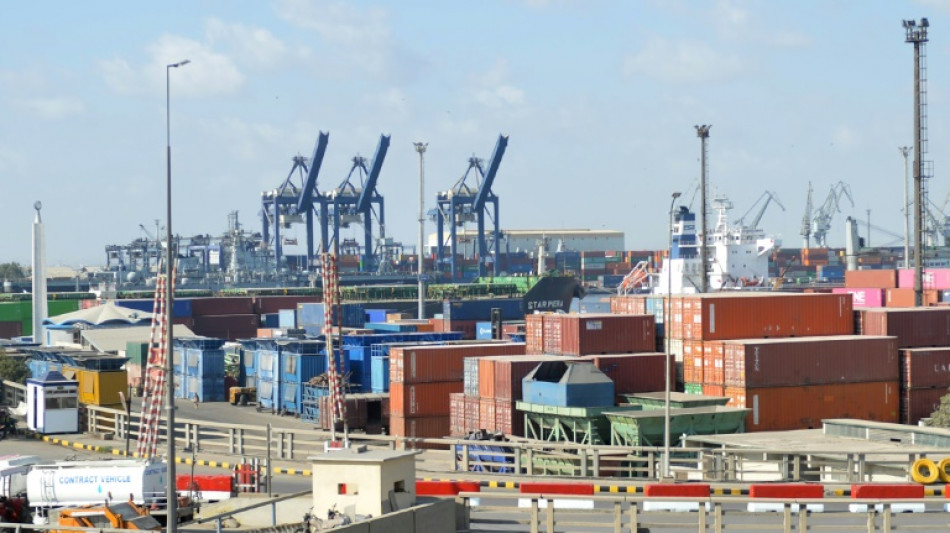
Pakistan's economy grinding to a halt as dollars dry up / Photo: Rizwan TABASSUM - AFP

 Nepal's young PM faces gravest test after flood catastrophe

 What rainbow? LGBTQ Indonesians on edge as hostility mounts

 O'Connor eyes Wallabies World Cup swansong after Force return

 Syria UXO causing death, injury every six hours: charity
 Tiger Woods set to change not guilty plea in DUI case: court documents
 Zelensky warns airlines Russian skies not safe due to Ukraine drones

 UK vows anti-settler measures as Israel warns of retaliation

 New pro Koivun among US Presidents Cup picks

 G20 finance leaders close talks marked by US welcoming Russia

 From Hollywood to big time tennis: teen makes US Open debut

 Man City secure Premier League record deal to sign Fernandez

 Kaepernick says NFL 'blackballing me' decade after protest

 Atletico loan David from Juve, send Lemar to Elche

 Chelsea 'keeper Sanchez makes deadline-day move to Como

 Kroenke to buy baseball's Los Angeles Angels: statement

 US defends Trump's Venezuela oil deal

 OpenAI to launch new model with 'stronger safeguards' after hack
 Fans mourn 'bittersweet' final Ariana Grande gig in London
 Norway's King Haakon VIII swears allegiance to constitution
 Syria site infrastructure 'consistent with nuclear reactor': IAEA

 Juventus sign Woltemade, Sarr on loan from Premier League
 US strikes Iran in latest tit-for-tat attacks

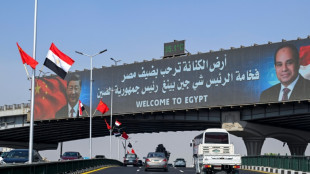 China's Xi arrives in Egypt as US sanctions threat looms over Iran links
 Car bomb at Colombian police station kills one, injures 11
 Rain delays start of play on US Open
Thousands of containers packed with essential food items, raw materials and medical equipment have been held up at Pakistan's Karachi port as the country grapples with a desperate foreign exchange crisis.
A shortage of crucial dollars has left banks refusing to issue new letters of credit for importers, hitting an economy already squeezed by soaring inflation and lacklustre growth.
"I have been in the business for the past 40 years and I have not witnessed a worse time," said Abdul Majeed, an official with the All Pakistan Customs Agents Association.
He was speaking from an office near Karachi port, where shipping containers are stuck waiting for payment guarantees -- packed with lentils, pharmaceuticals, diagnostic equipment and chemicals for Pakistan's manufacturing industries.
"We've got thousands of containers stranded at the port because of the shortage of dollars," said Maqbool Ahmed Malik, chairman of the customs association, adding that operations were down at least 50 percent.
State bank forex reserves this week dwindled to less than $6 billion -- the lowest in nearly nine years -- with obligations of more than $8 billion due in the first quarter alone.
The reserves are enough to pay for around a month of imports, according to analysts.
Pakistan's economy has crumbled alongside a simmering political crisis, with the rupee plummeting and inflation at decades-high levels, while devastating floods and a major shortage of energy have piled on further pressure.
The South Asian nation's enormous national debt –- currently $274 billion, or nearly 90 percent of gross domestic product -- and the endless effort to service it makes Pakistan particularly vulnerable to economic shocks.
- Teetering on a tightrope -
Islamabad has been pinning its hopes on an IMF deal brokered under the last Pakistani leader Imran Khan, but the latest payment has been pending since September.
The global lender is demanding the withdrawal of remaining subsidies on petroleum products and electricity aimed at helping the population of 220 million with the cost of living.
Prime Minister Shehbaz Sharif this week urged the IMF to give Pakistan some breathing space as it tackles the "nightmarish" situation.
Zubair Gul, a 40-year-old father of four and daily wage labourer in Karachi, said it has become "hugely difficult" to live on his earnings.
"I have to queue up for two or three hours to purchase subsidised flour -- the regular prices are not affordable," he told AFP.
For Shah Meer, an office worker, borrowing from relatives or using credit cards are the only ways to get by.
"A common man cannot afford to buy milk, sugar, pulses or any necessity you name," he said.
With an election due at the end of the year, implementing -- or campaigning on -- the tough conditions demanded by the IMF would be political suicide, but Pakistan is unlikely to secure fresh credit without making at least some cutbacks.
On Thursday, the United Arab Emirates agreed to roll over $2 billion owed by Pakistan and provide the country with an extra loan of $1 billion, helping it to avoid immediate default.
Islamabad won some relief last week when donors pledged over $9 billion to help with recovery efforts after devastating monsoon floods left almost a third of the country under water last year.
But that cash, even when it does arrive, will not help the current forex crisis, so Sharif continues to press allies -- including Saudi Arabia, Qatar and Beijing -- which has invested billions as part of the China-Pakistan Economic Corridor project.
- Escaping the debt trap -
The forex crisis has deepened the woes of textile manufacturers, which are responsible for around 60 percent of Pakistan's exports.
They have suffered as a result of the country's energy shortages, damage to cotton crops during the floods, and a recent hike in taxes.
The troubles together have led to around 30 percent of power looms in the city of Faisalabad, the centre of the textiles industry, temporarily shutting down, with the remaining ones working on alternate days, said Baba Latif Ansari, head of the Labour Qaumi Movement union.
"More than 150,000 workers who had come from surrounding villages to work here have had to go back because of a lack of work in the past few weeks. Others are just sitting at home hoping the situation improves," he told AFP.
Some factories have complained of a backlog of imported raw materials such as dyes, buttons, zippers and spare parts for machinery held up at the Karachi port.
Abdul Rauf, an importer of grain and pulses, said he has just 25 days of stock left and without the release of dollars, there will be an "immense shortage" during the holy month of Ramadan, which begins in March.
"I've never witnessed a situation where people are so worried," he told AFP.
F.Moura--PC